notes on Burning Silence at Spore, Berlin
April 29, 2026
I was recently invited to join Burning Silence at Spore in Berlin for a discussion with artist Garance Maurer and a listening session on regathering #wildfires.
Curated by Hanna Grześkiewicz and Yasemin Keskintepe, the two-day symposium gathered artists, activists, researchers, musicians, community groups and others. As the symposium blurb put it:
Burning Silence explores the threshold between fire and silence, tracing how environmental destruction and resistance register across material, affective, and media ecologies. Burning manifests as wildfires intensified by extraction, as the combustion of petrocapitalist economies, as the noise and smoke of war and colonialism – but also as burns that regenerate soil and lifeworlds, and as the visceral heat of anger, grief, and demands for justice.
Against and within this burning, silence appears as both violence and refusal: the erasure of voices affected by destruction, but also tactical withdrawal that claims political agency. Silence also becomes the threshold for attuning to more-than-human frequencies – the lower registers that linger in soil, water, and air, pushed beneath perceptibility by dominant modes of listening.
The symposium is a space for cultivating conditions for slow listening, transversal thinking, and situated engagement. It brings together listening sessions, sound and lecture performances and conversations.
Below are some notes on the sessions that I was able to join. They are a bit uneven as sometimes I was taking notes on my laptop, sometimes in a notebook, sometimes I was standing at the back of a packed room and sometimes I was setting up for our sessions.
I’m sharing them so that anyone who wanted to join but couldn’t make it can follow links and find the work of those who were there.
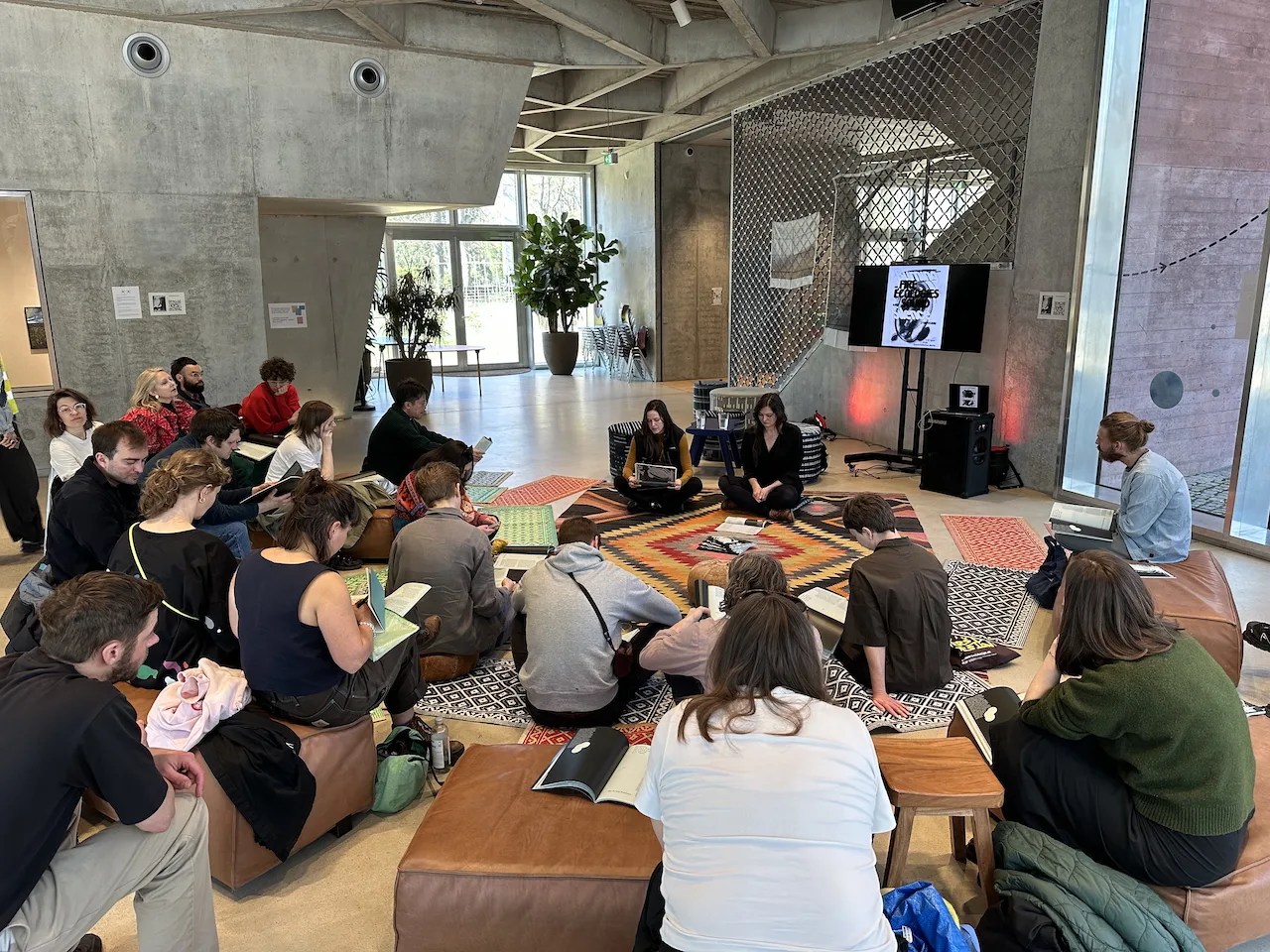
The event began with a collective reading from a symposium reader led by Yasemin and Hanna. This has contributions from Areej Ashhab, Chris Cameron, AM Kanngieser, Brandon LaBelle, Ariel William Orah, Pisitakun, suzan meryem rosita, Yuri Tuma and Mia Yu.
We had a walkthrough of the reader and then everyone was invited to read aloud sections that resonated with them - to “allow concepts to unfold collectively”. This helped to ground the symposium in a shared set of passages, questions, concerns and reference points.
This approach reminded me of the Feminist Duration Reading Group’s practice of reading aloud collectively (rather than people reading individually in advance) - that I learned about through the CEED (Central Eastern European and Diasporic) Feminisms group - as well as collective reading aloud as feminist practice.
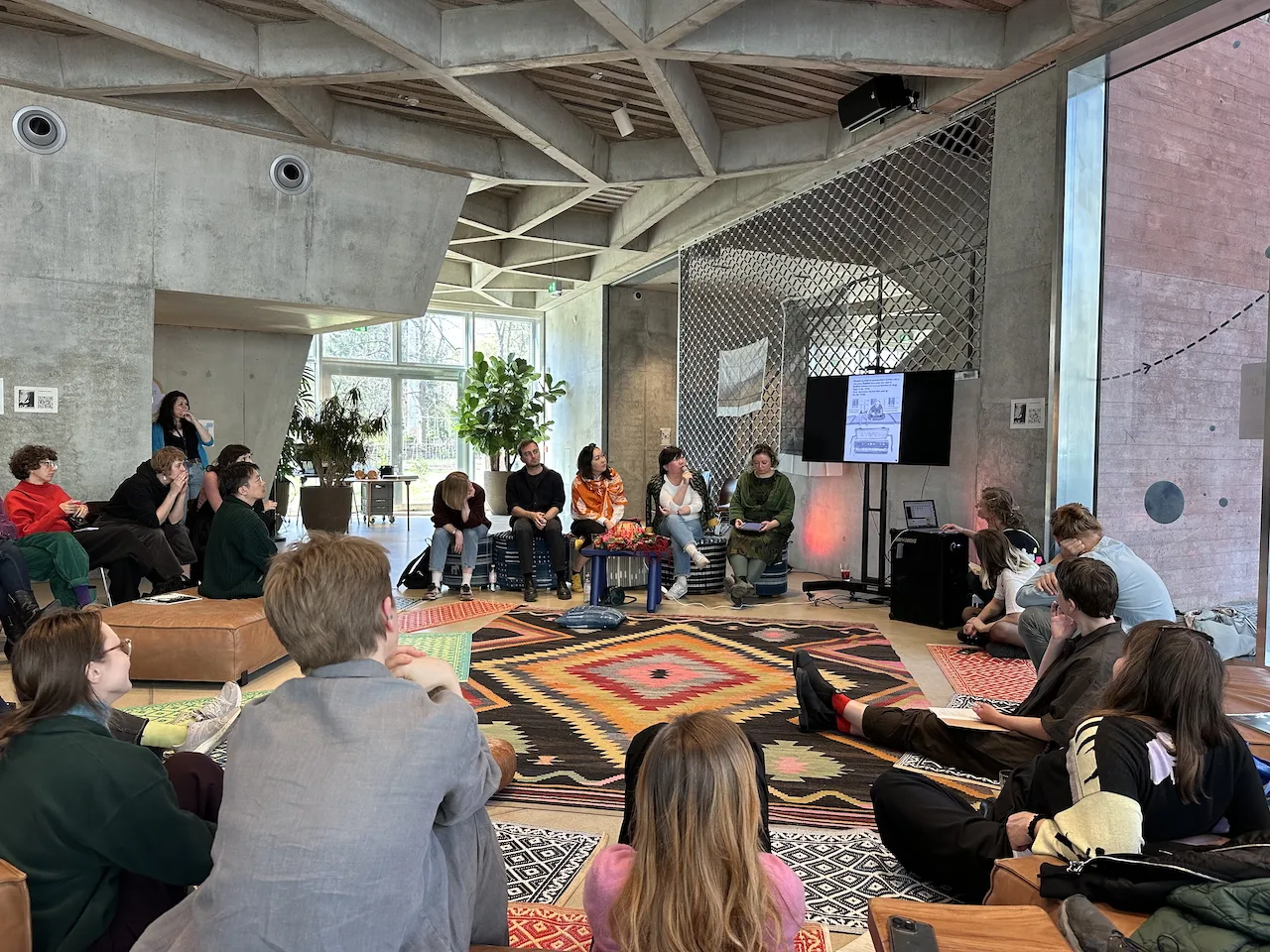
Following this there was a session on “So far, so near. Decolonial Voices from Eastern Europe, Caucasus, North and Central Asia in Polylogue” with Oksana Potapova, Antonina Stebur, Giorgi Rodionov, Seseg Jigjitova and Diana Kudaibergenova.
Oksana spoke about decoloniality as changing the way we relate to each other, and building communities and spaces to unlearn how we have been taught to understand ourselves and the world. She introduced the session as examining violence across borders and territories and possibilities for growing resistance and solidarities.
Seseg spoke about the danger of a one-sided story of Russia. She spoke of the vastness of Russian territory, forced Russification and the elimination of Buryat culture. She spoke about her graphic essay Deep Freeze on Buryat culture and histories of indigenous peoples of Siberia and Russia, and made an offering of bark incense which has a special significance for many peoples across Central Asia.
Giorgi spoke about resistance through “becoming gods”, as a way of “forgetting everything you know” and what you were told about who you are. He spoke about campaigning against queer people and LGBTQ+ rights in Georgia, and fighting this through “reinventing our being”. He spoke about the In the Mountains festival which gathers artists across South Caucasus to support decolonial approaches to gender and sexuality - including erased traditions from times when gods were queer.
Antonina spoke about Belarusian perspectives on the Chernobyl disaster. She spoke of building nuclear power plants in Belarus and Kazakhstan, energy overproduction as colonisation strategy, and how the Chernobyl disaster reactivated and galvanised mass protest against the Soviet Union which had previously been disparate and disorganised.
Diana spoke about racialisation in the Soviet Union which supposedly did not have racism. She spoke about sacred lands being treated as empty and barren, and used for nuclear testing, leading to cancer deaths and disastrous consequences for humans and creatures. She spoke of gulags, settlers, how the USSR masked its colonialism, and the hybrid colonialism using lands, bodies and weapons - connecting this to the war in Ukraine.
After this session, Silvia Dal Dosso gave a lecture performance on “The Weird Whale Song: A Special Preview of Unknown Origins” in which “automated agents offer you work, plants are linked to your bank account, and the bacteria in your mouth somehow generate third-degree loops with shitposting”.
There was a listening session on the “Politics of Silence” with Pisitakun, exploring relations between sound and silence in political protests. In the session Pisitakun recomposed fragments from protest music in Thailand from the 1960s to present.
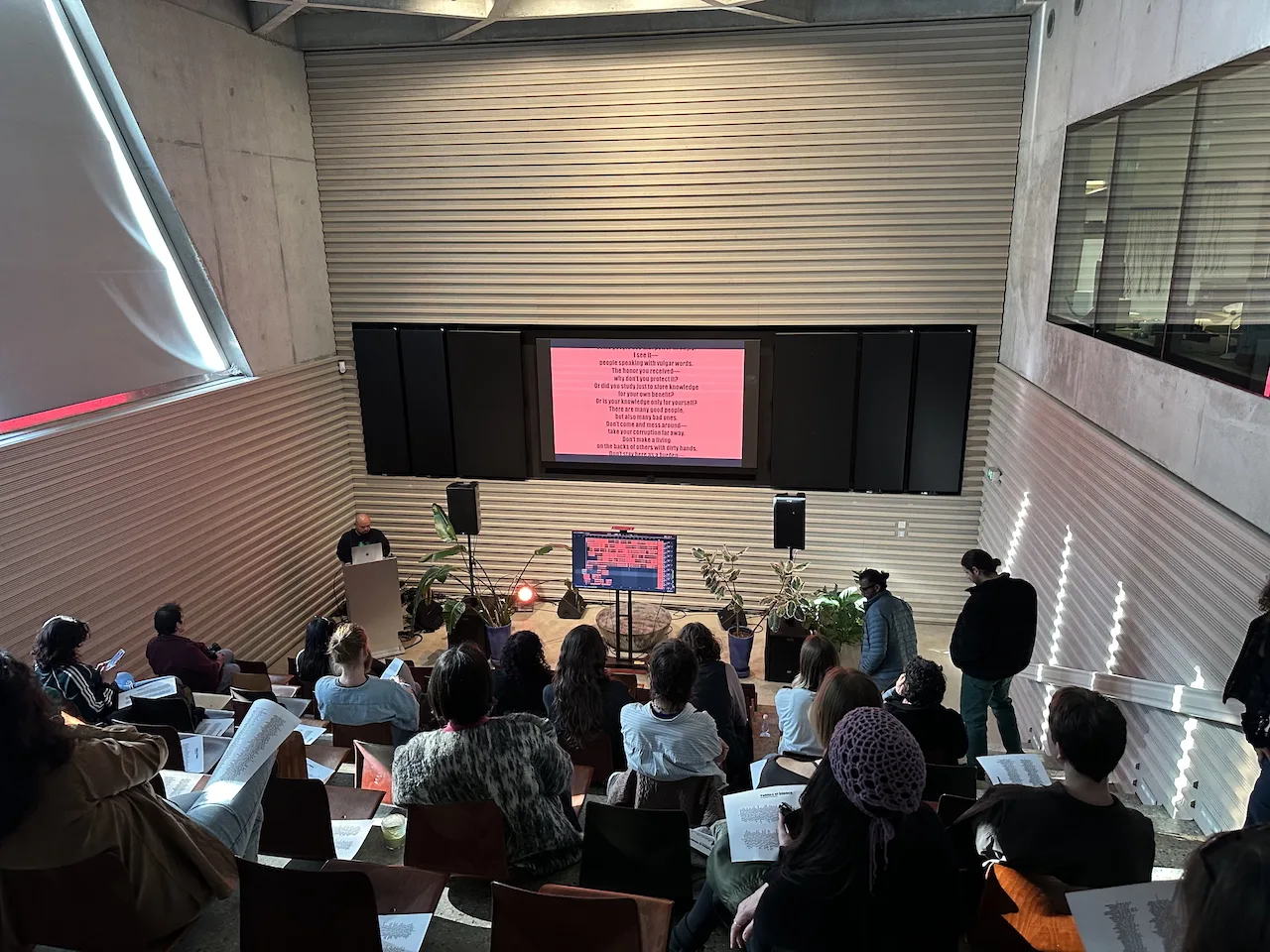
Hanna Grześkiewicz chaired a discussion on the crisis of solidarity with Sanaz Azimipour and Sinthujan Varatharajah. Amongst many other things, the panel spoke of Sudanese, Palestinian and Kurdish struggles, of asymmetries of attention, of frustrations and failures of organising to bring change, of the politics and problems of mediatised visibility, of the expectations and effects of protest as method, of disillusionment with states and of formats for organising differently.
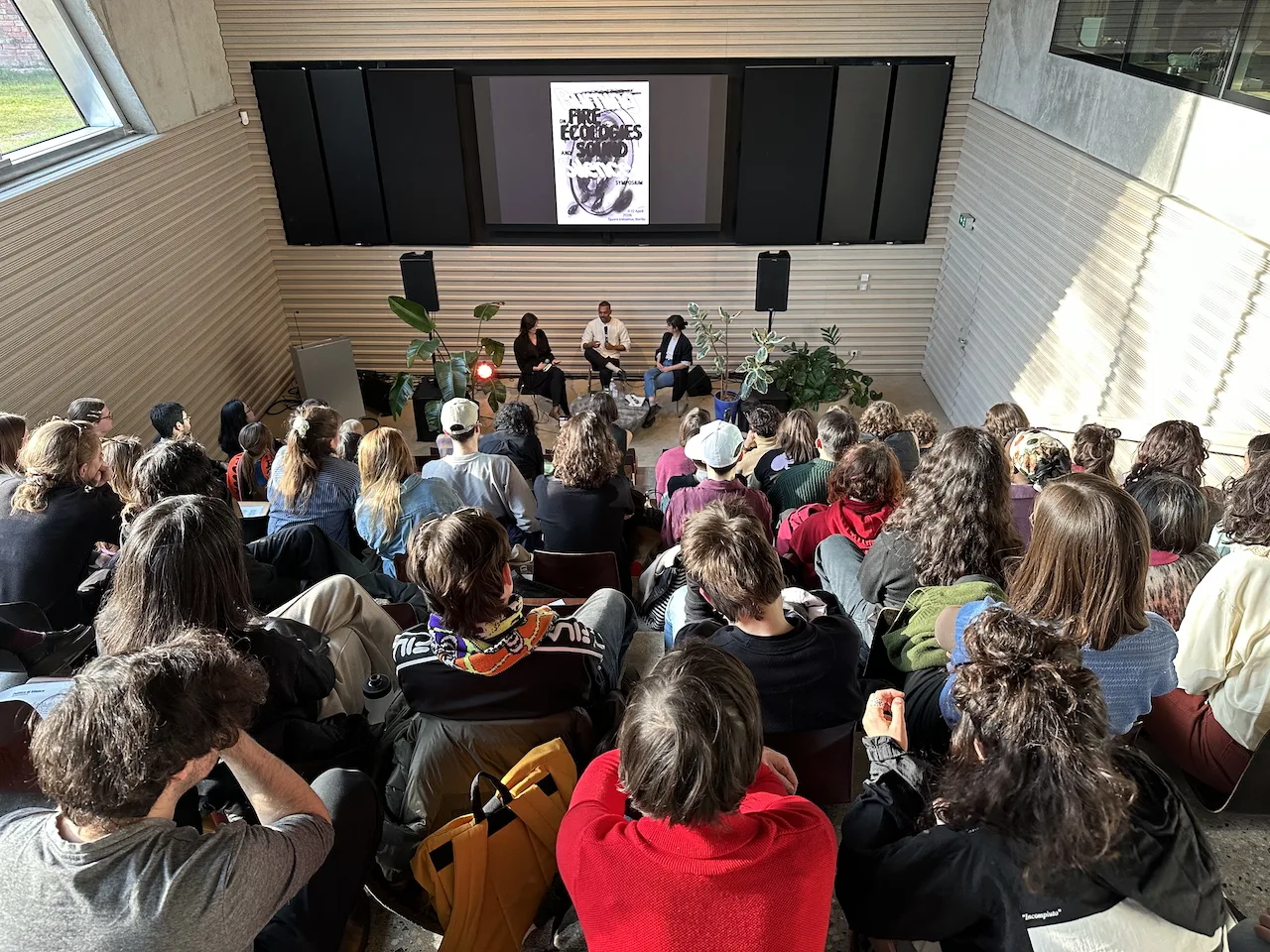
The evening began with Edka Jarząb’s “You’ll go up the mountain, I’ll go through the valley” in which reclaimed speakers vibrated with materials collected from a melaphyre mine, exploring tensions between extraction, infrastructure and living landscapes. As the speakers hummed, shards of rock and particles of earth formed circles and shapes - sometimes breaking out into small clouds and arcs of dust.
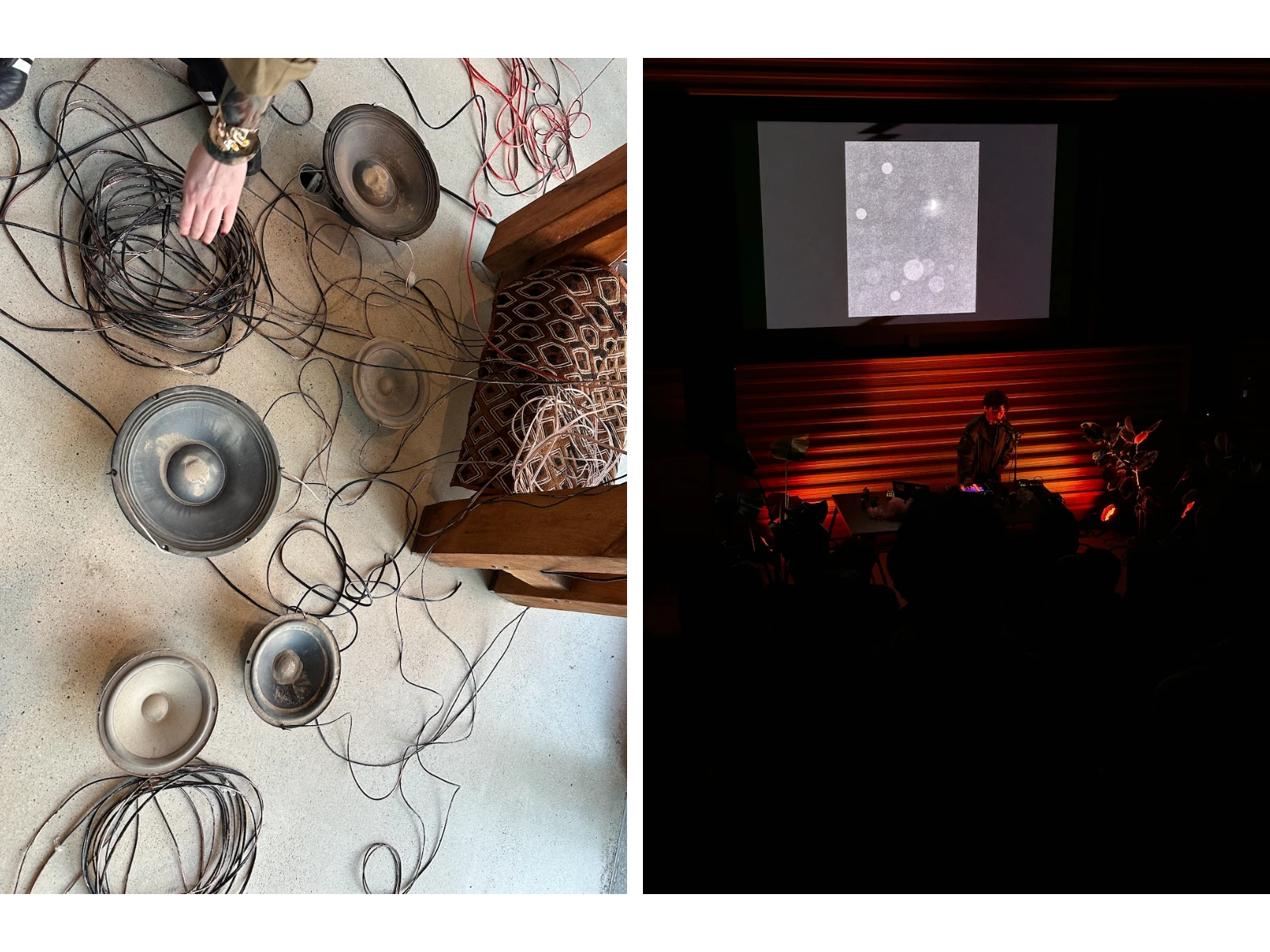
The day closed with a moving intervention from Nour Sokhon on “Revisiting: Resisting Turbulence”, an audiovisual performance interweaving photographs from Myriam Bolous with street interviews from Beirut - moving from revolution to economic collapse to the recent war, and ending with the prospect of new beginnings.
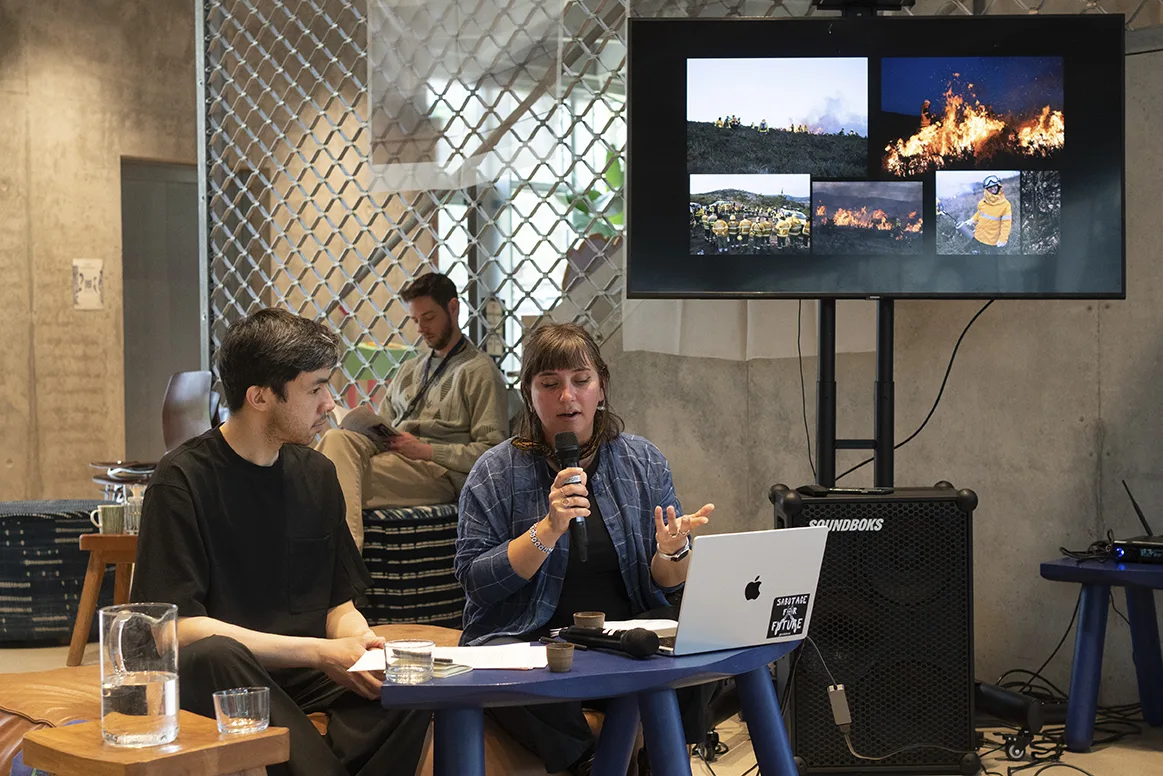
On the second day Garance Maurer and I opened the symposium with a discussion on “Wild Fires: Walking Burn Scars, Listening Across Flames”.
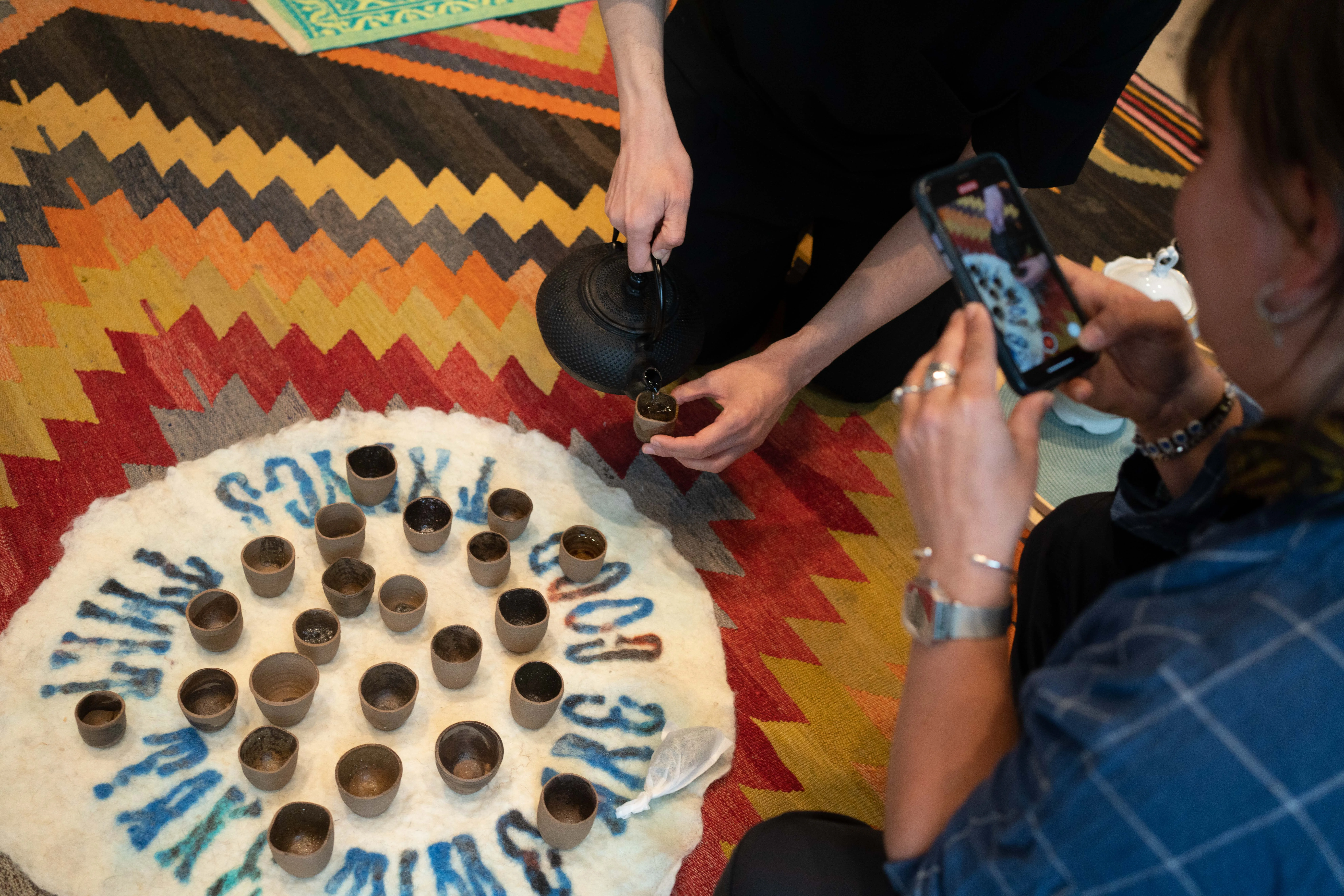
We started with sharing some tea from herbs gathered from gardens near the event as well as from sites that Garance is connected to through her life and work. Garance spoke about the background of her Pyroscapes project - from plant fibres in Corsica to cultural burns in California. She spoke about her installation at Burning Silence “I am soaking in the thickness of fires”, about walking burning scars, about fires as negotiation and as dance.
I spoke about the background of the regathering wildfires as a speculative experiment in collective listening across wildfires, about forest fires as mediatised events and about the background to this work - including research on #amazonfires and the online composition of ecological politics, ways of listening to forests and the forestscapes project.
Then we had a discussion weaving together shared threads across our work. This included reconsidering what is a forest and what is a fire - and pluralising and situating fires and burning practices. We spoke about practices of gathering and regathering - from wool, fibre and ashes, to images, sounds and videos, to the various groups we work with. We spoke of reweaving relations - from textiles to soundscapes.
We spoke of walking as method - from walking burn sites to screen walking to walking with diasporic and marginalised groups. And we spoke of world-making, presence, restoration, regeneration, the politics of shaping ecological futures on past baselines, colonial landscaping, changing legislation on cultural burns, basket weaving with flames and fire as resistance, renewal, carnival and spirituality.
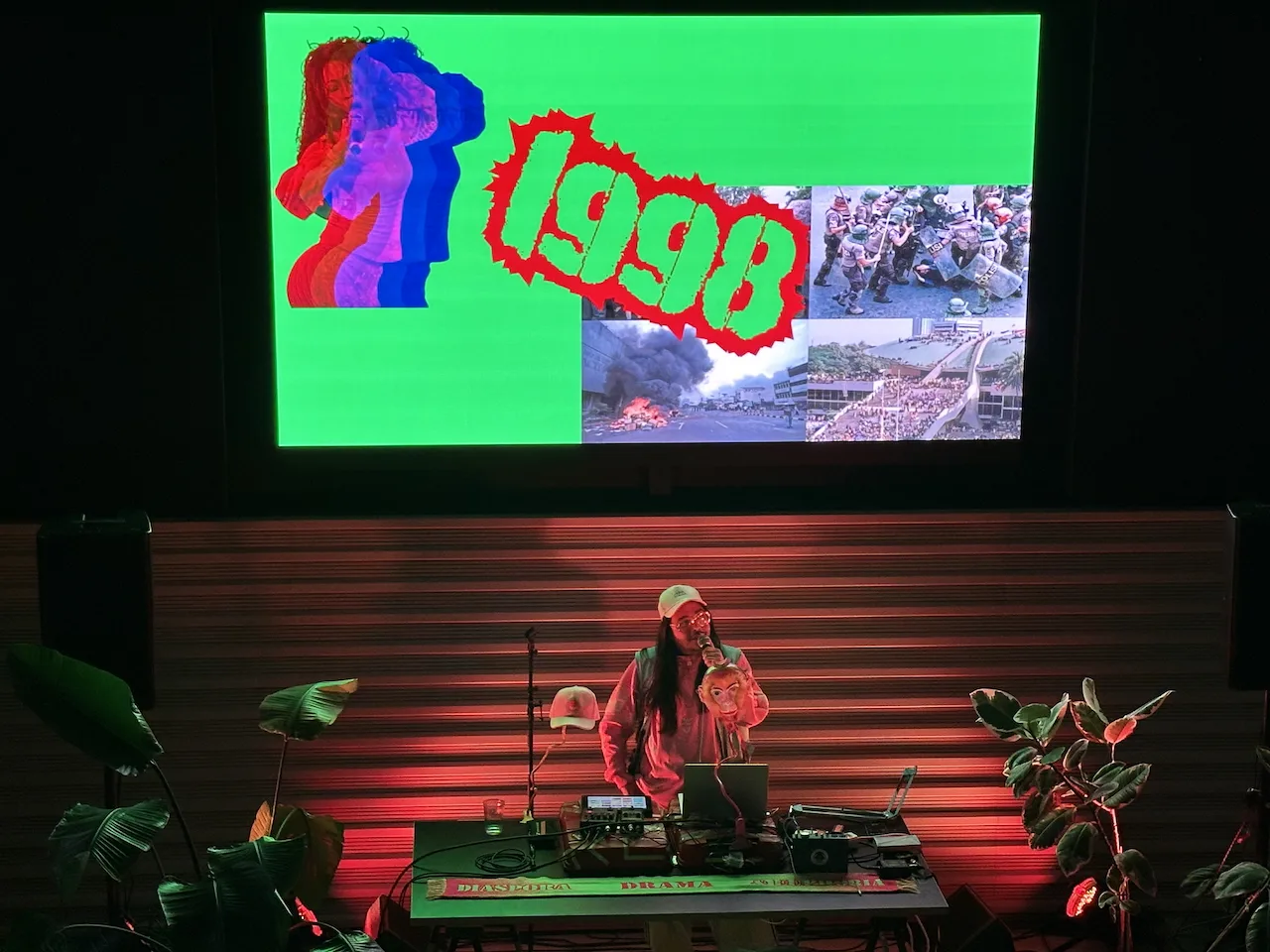
After our discussion Ariel William Orah gave an incredible singing lecture performance on “Subdued Residue: Listening After Geneva (1967)” which explored histories of colonisation, extraction (from nutmeg to nickel) and ecological breakdown in Indonesia from 1955 Bandung conference to present, interwoven with histories of Dangdut music, decade by decade.
This spanned from longer histories of colonisation to the 1955 Bandung conference, the political contexts of corruption, trade wars, discrimination against diasporas and the dystopian consequences of the mineral extraction underpinning green transitions.
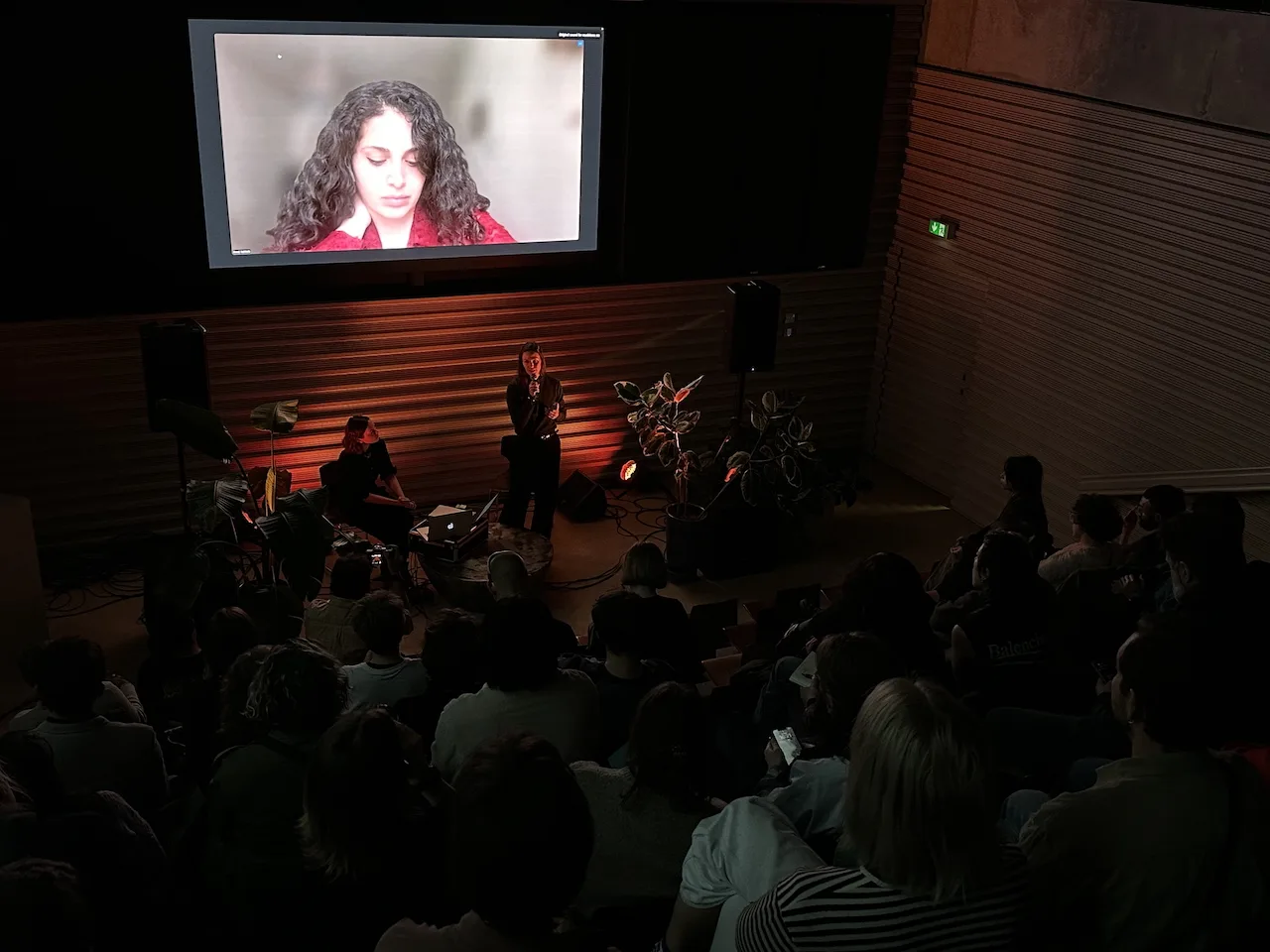
Next Yasemin Keskintepe chaired a conversation with Asia Bazdyrieva and Areej Ashhab on “What Burns Through Colonial Infrastructures”. Asia spoke about Micro, Meso, Macro and her research on the longer histories of making deserts and deserts as laboratories - from green energy to nuclear test sites and places of potential catastrophe. She spoke of projects to hydrate deserts and colonial logics of seeing complex ecosystems as resources rather than worlds.
Areej spoke about how landscapes were reshaped by settler colonialism and how villages surfaced beneath planted forests. She spoke of histories of afforestation as a technique of colonisation in Palestine, about the “Black Goat Act” and the catastrophic consequences of banning goats from grazing. She spoke of walking as counter-mapping and her artistic walking logs Diaries from Wadi Al-Sarar, using walking and writing to document the lost histories of Palestinian landscapes. She spoke of constructing kilns, the labour of keeping fire alive, embodied learning processes and how wildfires could sustain life as well as destroy.
Then eeefff had a performance on Bar “POTASSIUM” - on “flavor enhancers, crystal growing kits, fireworks, food preservatives, artificial tears, dishwashing liquid, the smell of bad cosmetics, electrolytes, agricultural fertilisers, anti-anxiety medication, ingredients for salt therapy, gunpowder”. The session examined supply chains, strikes, war machines and uprisings associated with mineral extraction sites.
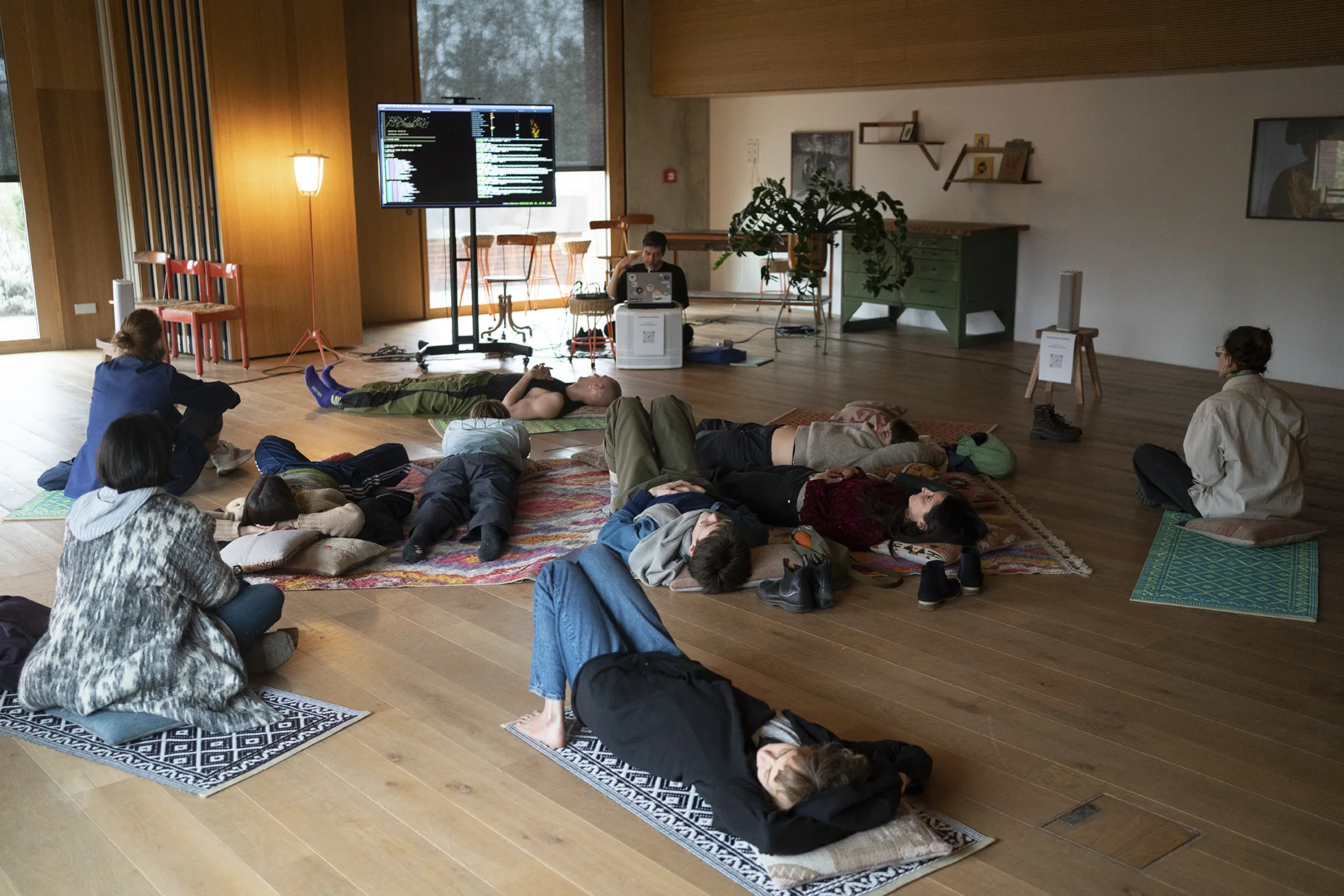
I gave a listening session on regathering #wildfires. This was collective both in the sense that the room became a temporary group listening formation, as well as in the sense that we were listening across many sounds from many sites and situations. The session explored algorithmic looping, layering, weaving, scripting and texturing as ways of listening across collections of sounds. The scripts served as miniature machines for composing with coincidence. Listening served as a way to surface many ways of knowing and living with fire.
We began with a walkthrough of folders of wildfire sounds from online archives, field recording communities, machine learning datasets, conservation groups, cultural burns with Indigenous groups, everyday practices of living with fires, research on wildfire management, forest fire ASMR and online reporting on megafires.
After listening to soundscapes from each of these folders, we listened across the different folders, seeing if we could collectively experience them as livelihood and nourishment, as catastrophe and clearing, as hope and danger, resource and recovery, spectacle, spirit and breathlessness. This was an experiment in the forms of presence that might be nourished by troubling, situating and pluralising fires, and holding together many modes and meanings of burning.
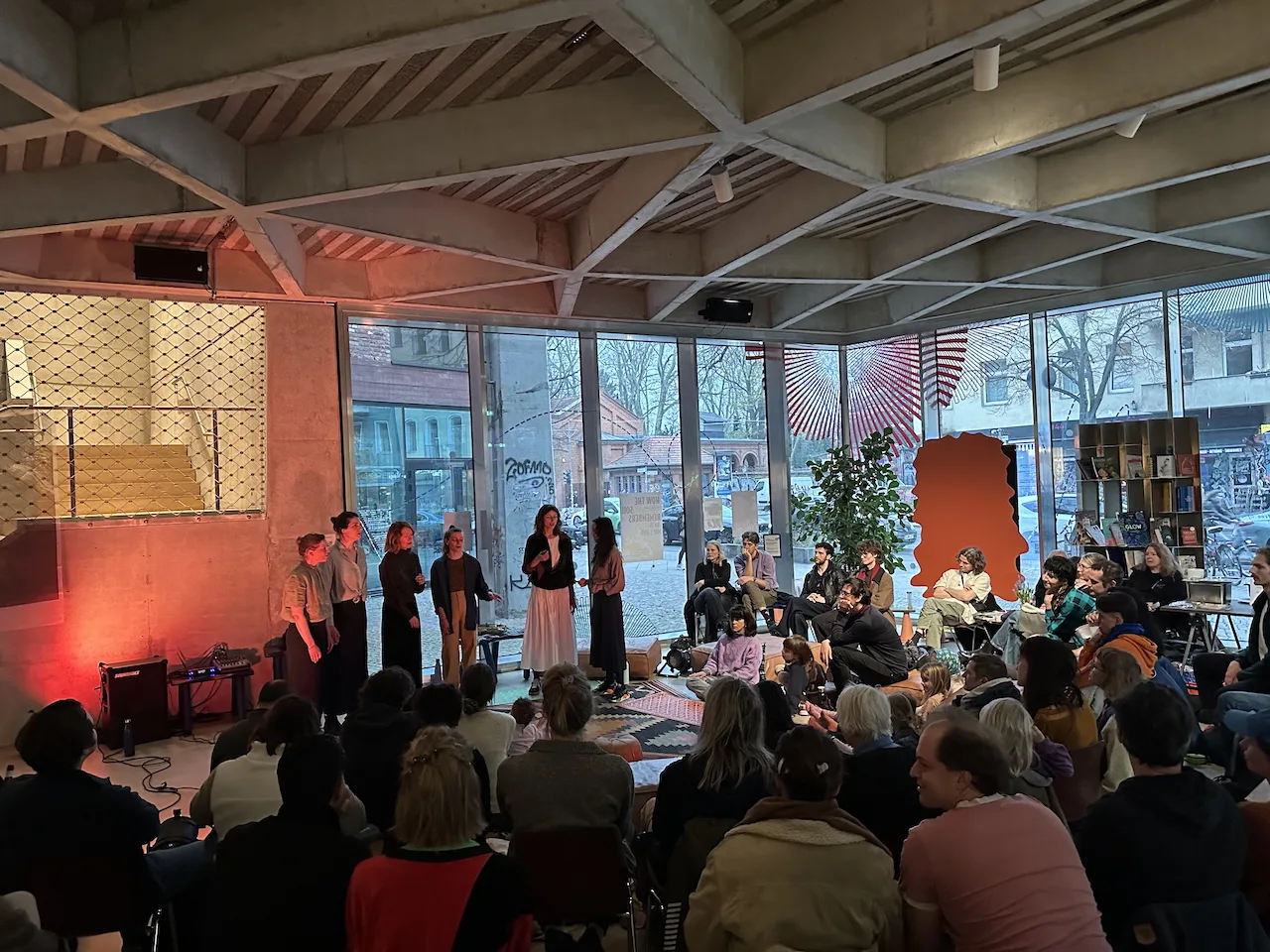
After this there was a performance from the Otucha Collective, including Mina Dordević, Magda Jaroszewicz, Agnieszka Kucharska, Julia Legeżyńska, Doro Michalak, Liene Šilde and Ola Zielińska. Otucha means “act of care between beings”, and the collective reworks Eastern European singing traditions as a form of public intervention. They sang as the sun set in the street outside Spore.
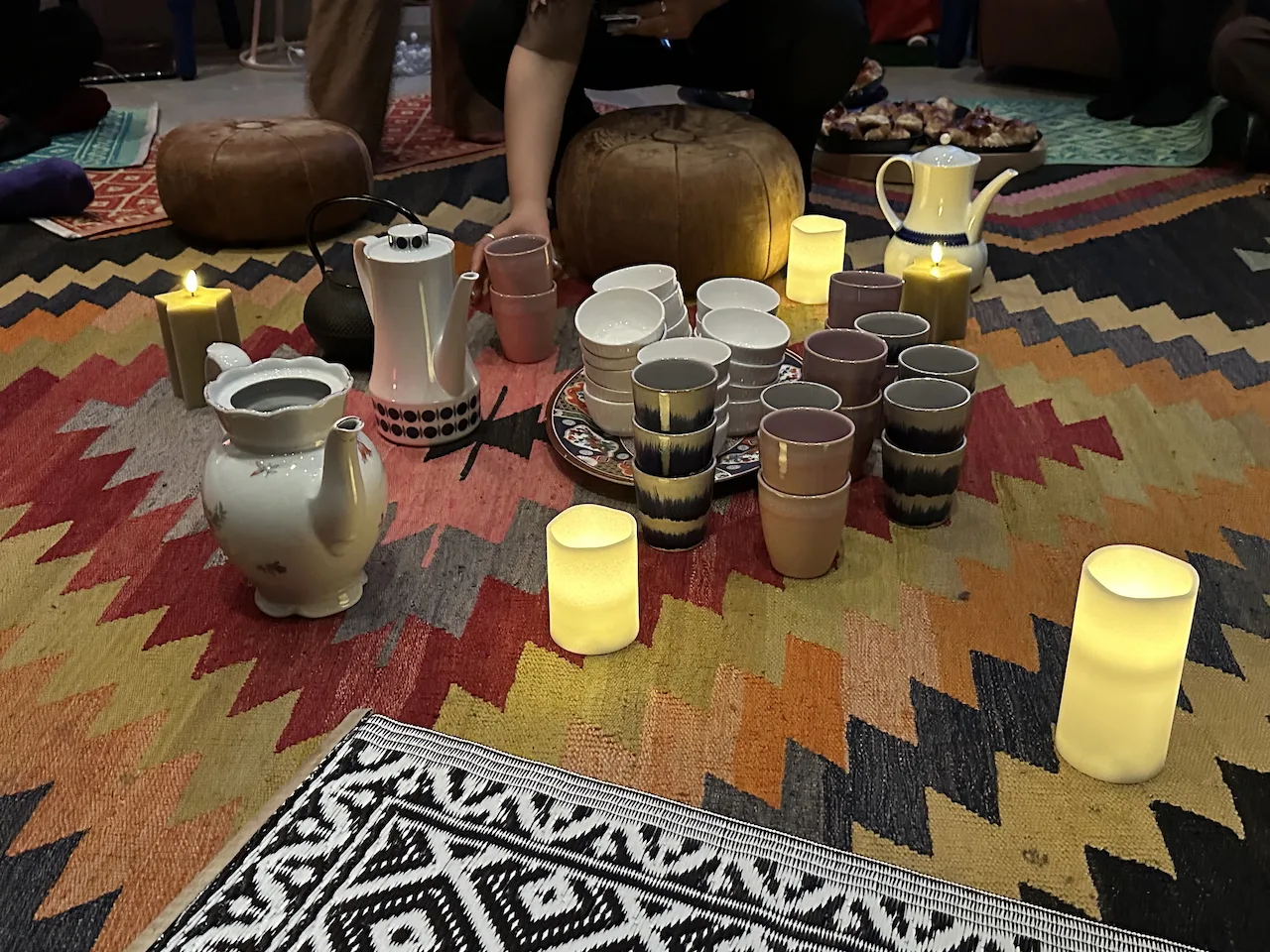
The last session of Burning Silence was “Cooking with Mama” - a part of a series of gatherings in Berlin focusing on sharing stories which are underrepresented, overlooked, or erased from Eastern Europe, the Caucasus, Northern and Central Asia. This gathering focused on Kurdish-Ukrainian solidarities. There was sharing of bread and tea, passing of photographs, listening to tape recordings and layering up fabrics into a pyre of shared wishes.
Coincidentally at this point I saw and sat next to cristina cochior from varia.zone, who had just arrived from Cables of Resistance which was also in Berlin that weekend. Despite a near miss in Rotterdam, we hadn’t seen each other since an event on collective infrastructures in London last autumn - so it was a nice way to end the event.
Thanks so much to Hanna and Yasemin for the invitation and to all involved in organising and being part of this special and memorable gathering. 🌌
More about Burning Silence
- Spore programme for Burning Silence day 1 and day 2
- Burning silence programme overview from Free Radicals project