notes on transmediale 2026 - By the Mango Belt & Tamarind Road: Compassing, Protocoling, Metaphoring
February 15, 2026
A couple of weeks ago I went to transmediale 2026 in Berlin. I think I first went to the festival over 15 years ago but haven’t been able to make it for a while. So it was nice that it worked out to combine a book talk at Humboldt with catching the festival and seeing friends and colleagues there.
It was good timing with my research leave, as part of which I’m spending time exploring intersections between Internet research and Internet art, as well as practices and cultures of recomposition.
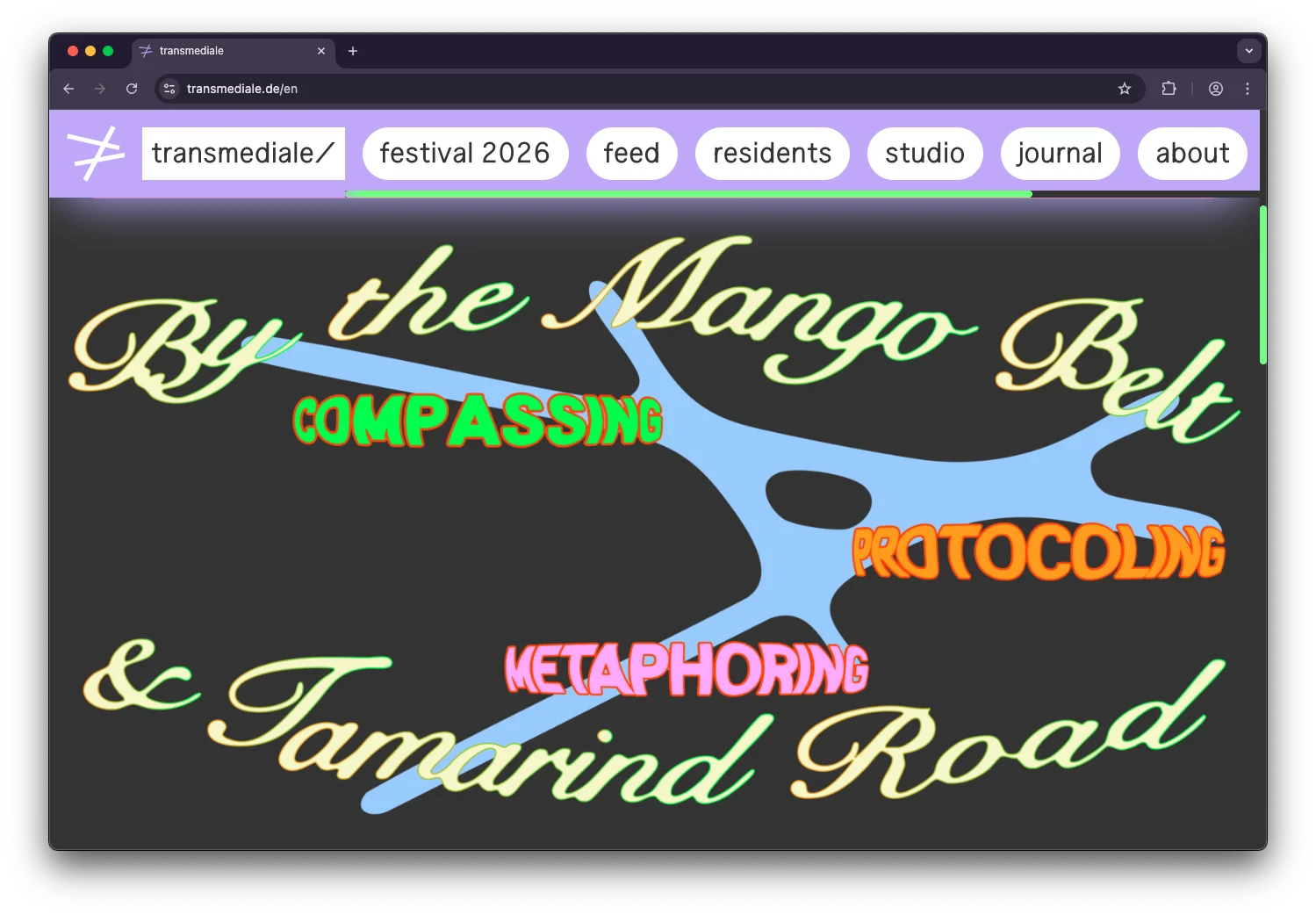
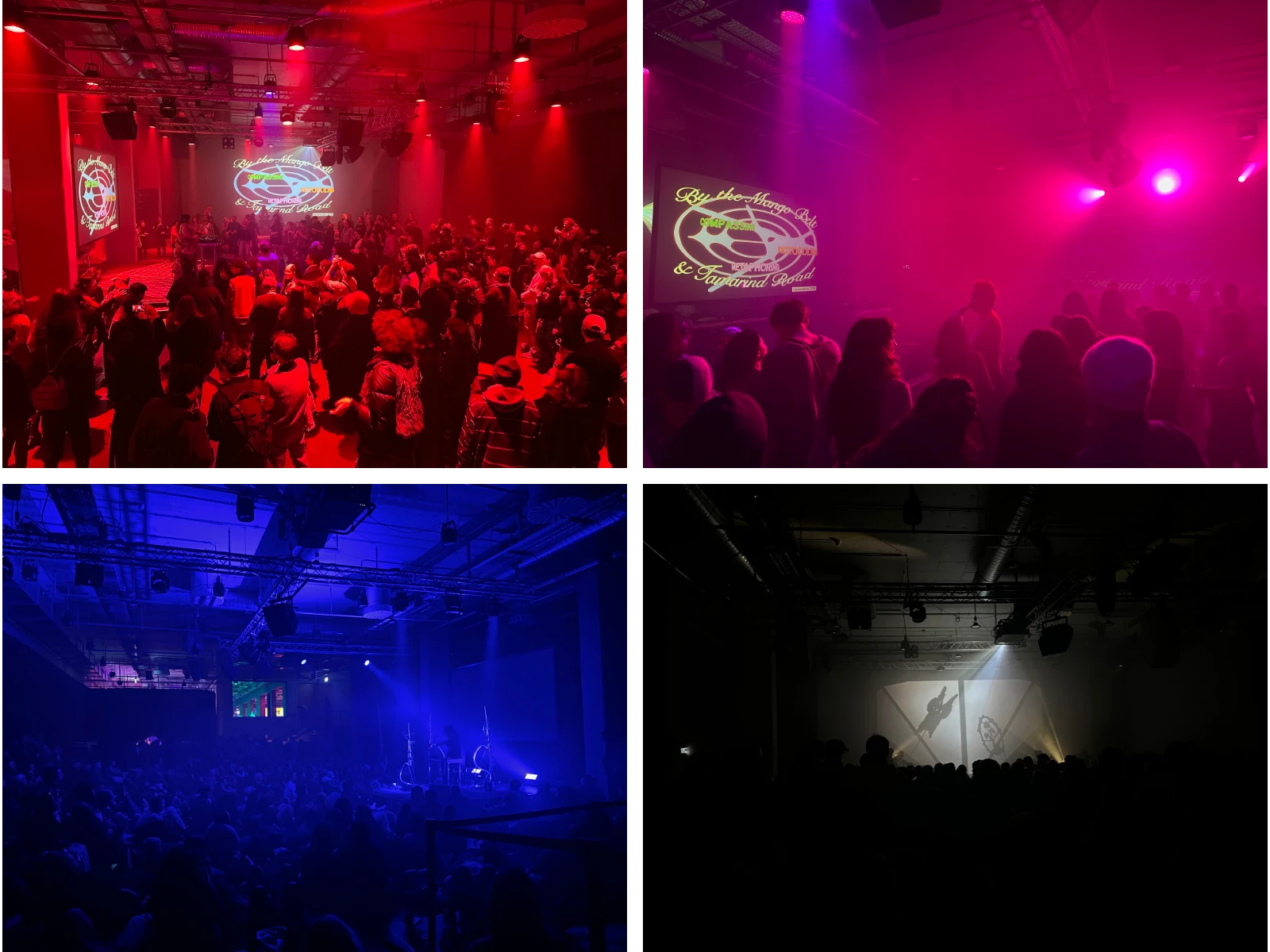
Co-curated by Neema Githere and Juan Pablo García Sossa, this year’s theme was “By the Mango Belt & Tamarind Road” which explored the “re-figuration of systems, cosmologies, and technologies”. The intention was to “make space for technologies to be re-wired by the rhythms of relation rather than the logics of extraction”.
Drawing on a capacious understanding of technology, the festival was “reimagined as a living recursive carrier net” and “a hammock of relational technologies in practice that stretch across latitudes, rhythms, and systems”. The curators quoted Ursula K. Le Guin:
“Technology is the active human interface with the material world. But the word is consistently misused to mean only the enormously complex and specialised technologies of the past few decades, supported by massive exploitation both of natural and human resources.”
The festival was developed through meetings with “Research Netting Groups”. These gatherings sought to surface “longstanding ways of holding space, stretching time, and netting together”. Drawing on these different understandings of netting and networking, the festival sought to explore:
What are ways of netting otherwise? How could we re-wire the root-codes of our systems and condition us differently? What forms of infra-structuring, holding-structuring, and hanging·structuring can emerge when we step outside extractive paradigms?
It was organised around the notions of “compassing”, “metaphoring”, and “protocoling”:
Compassing is about re·orienting, maneuvering, and pacing our algo-rhythms. Rather than seeking fixed direction or optimisation, compassing attunes us to shifting currents and relational velocities - moving with the tides, not against them. Together with our Local Curriculum Designers (affectionately called LCDs circulating imageries), we gather in Netting Groups to attune the compass - setting directions and rhythms in Pasifika, the Swahili Coast, SEA (South East Asia) and Abya Yala. This curatorial compass is a living compass that might change form and length over time.
Metaphoring is the practice of bypassing inherited logics and re-routing our technological imaginaries through vehicles of transport: stories, metaphors, and carriers that hold knowledge across distances. To metaphor is to re-code by way of imagery and relation, opening portals between systems that rarely speak.
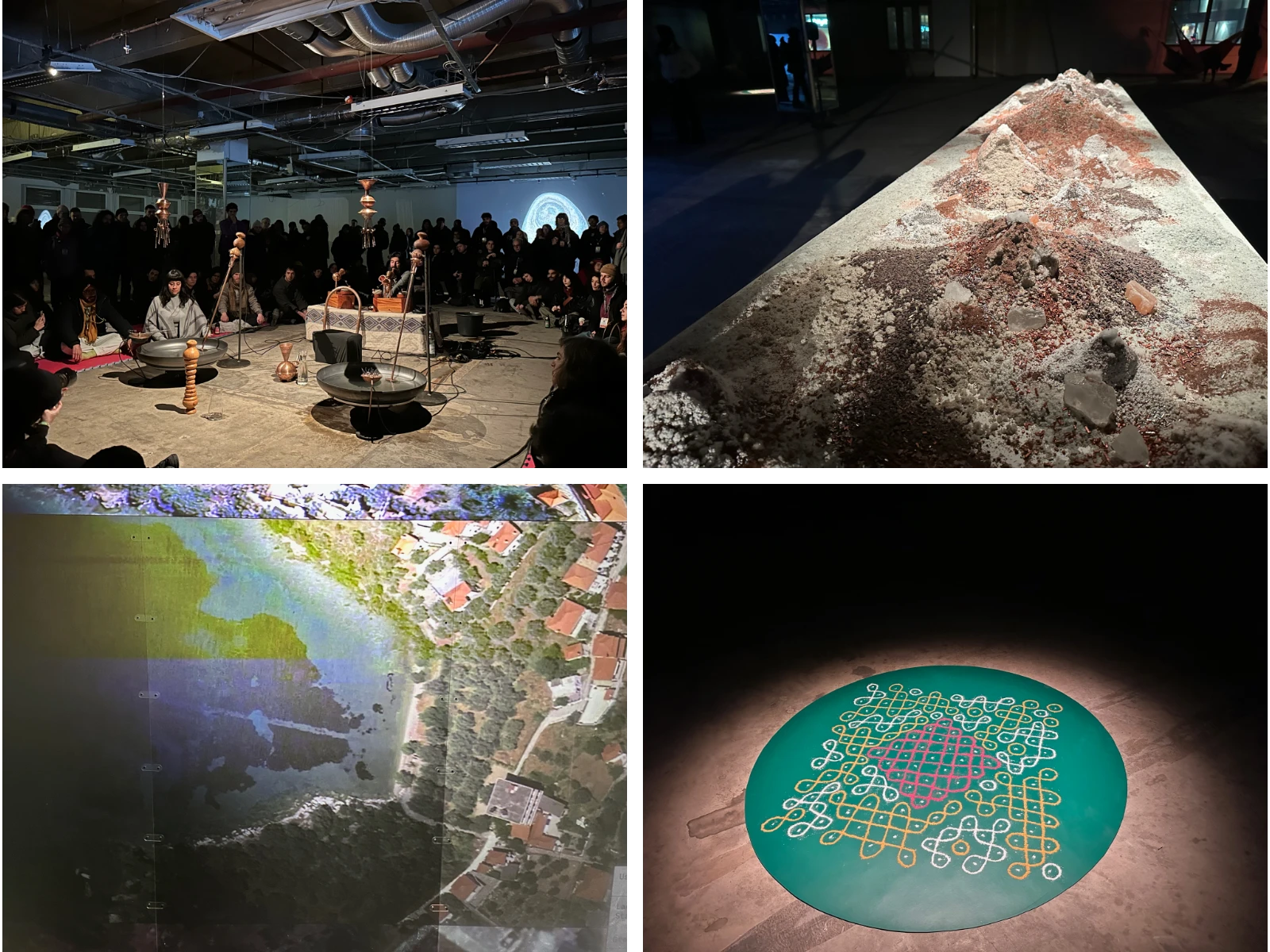
Protocoling refers to translating situated practices into technological protocols. It is about developing pocket infrastructures, holding·structures, and hanging·structures - small yet resilient architectures that enable collective use, reciprocity, and ongoing relation. In Berlin, these protocols take shape as installations, sonic experiments, and multi-specific assemblies, resonating with the Netting Groups’ ongoing processes.
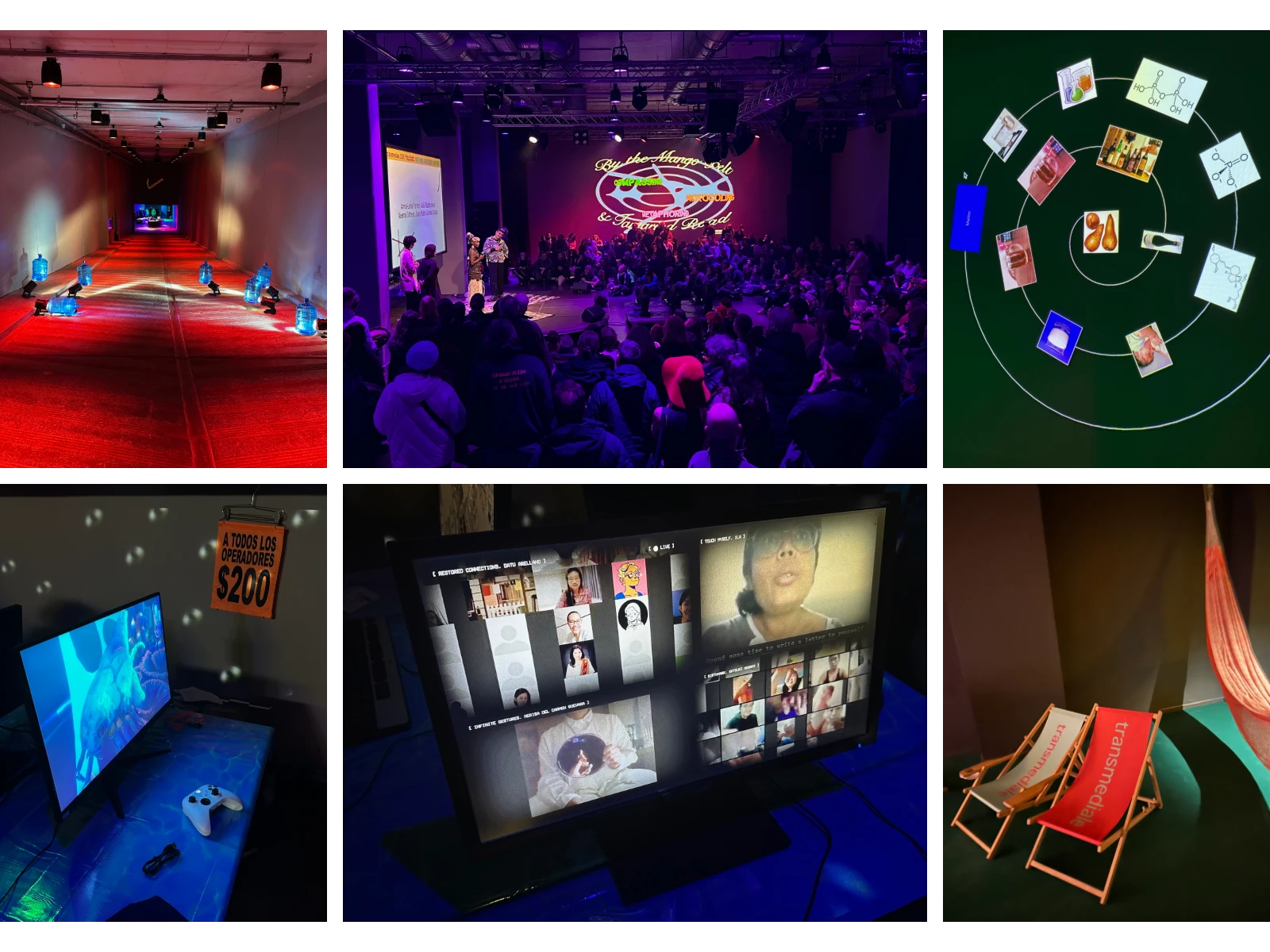
There were so many interesting talks, performances, installations and sessions. I was only able to take notes on a few of them. What follows are links, accounts and reflections on just some of the things that I managed to scribble about and which stayed with me.
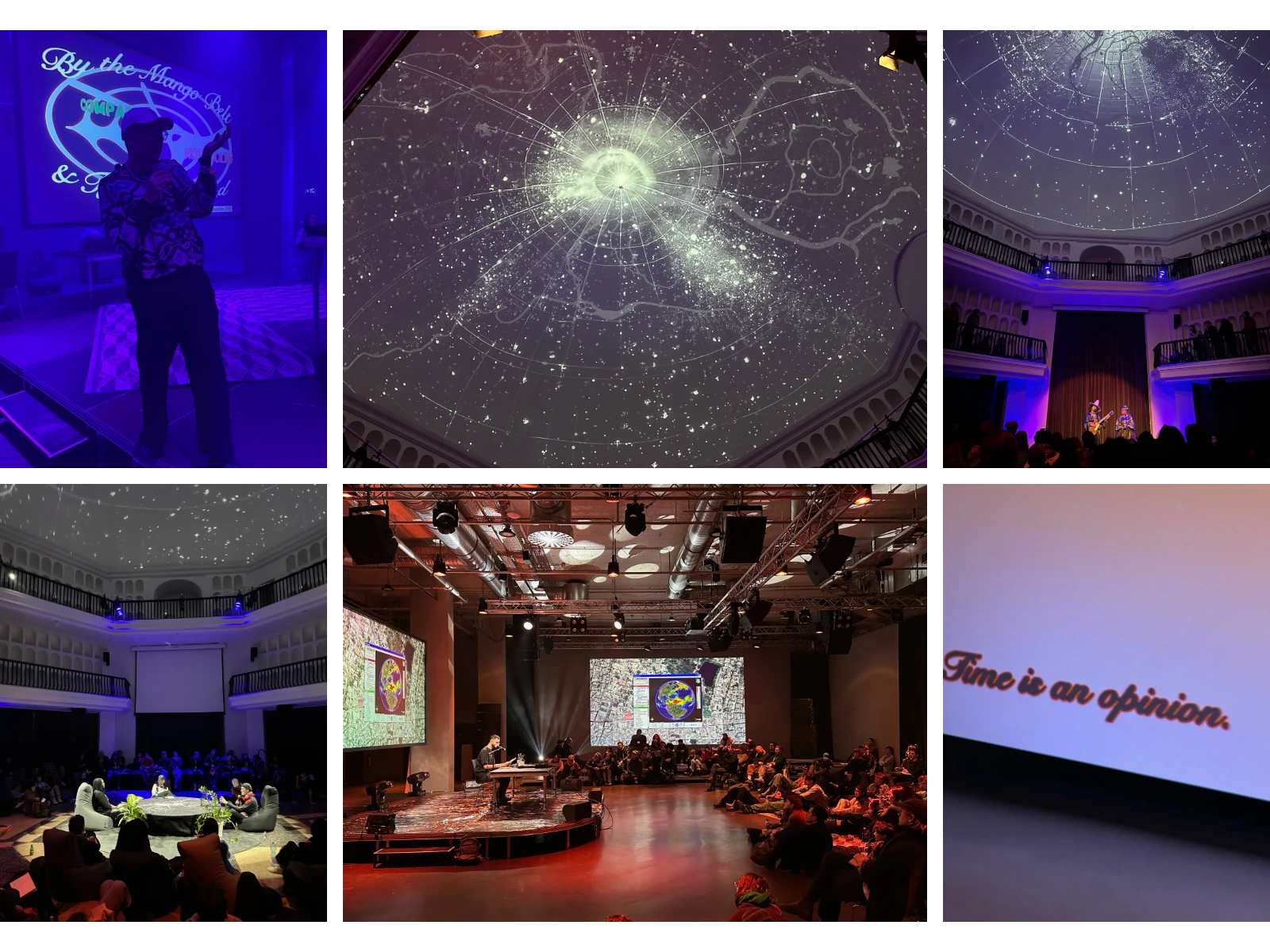
For the opening night on Wednesday, curators Neema and Juan introduced the festival. They spoke about infrastructures as “holding space together”, beyond commodification and governance. Hence many of the hanging fabrics, enclaves and areas to rest and meet with people at the festival.
They spoke of the three themes (compassing, metaphoring, protocoling), of “modifying root code”, of grief as part of the ecosystem, of everything crumbling around us and their approach to the festival as an “attempt at a pluriversal map”. They told us about their intentions with the festival, moving between “high tides” (larger scale gatherings) and “low tides” (quieter and more intimate moments).
The festival was intended to invite people as people, not as workers or professionals - with an ethos of guerrilla theory. They set aside free tickets for gig workers, and encouraged people to bring children and grandparents to make it a more intergenerational festival.
This year’s edition was inspired by “rede”: the Portuguese word for both Internet and hammock. It brought together threads such as ecosystemic thinking, sonifying minerals, water touching water everywhere, alternative currencies, channelling spirits and algorithms, liquid assets, textiles, singing rugs, call and response and African intelligences.
After the introduction there were some moving and absorbing opening performances from wordsofAzia, Interspecifics and Miss Tacacá.
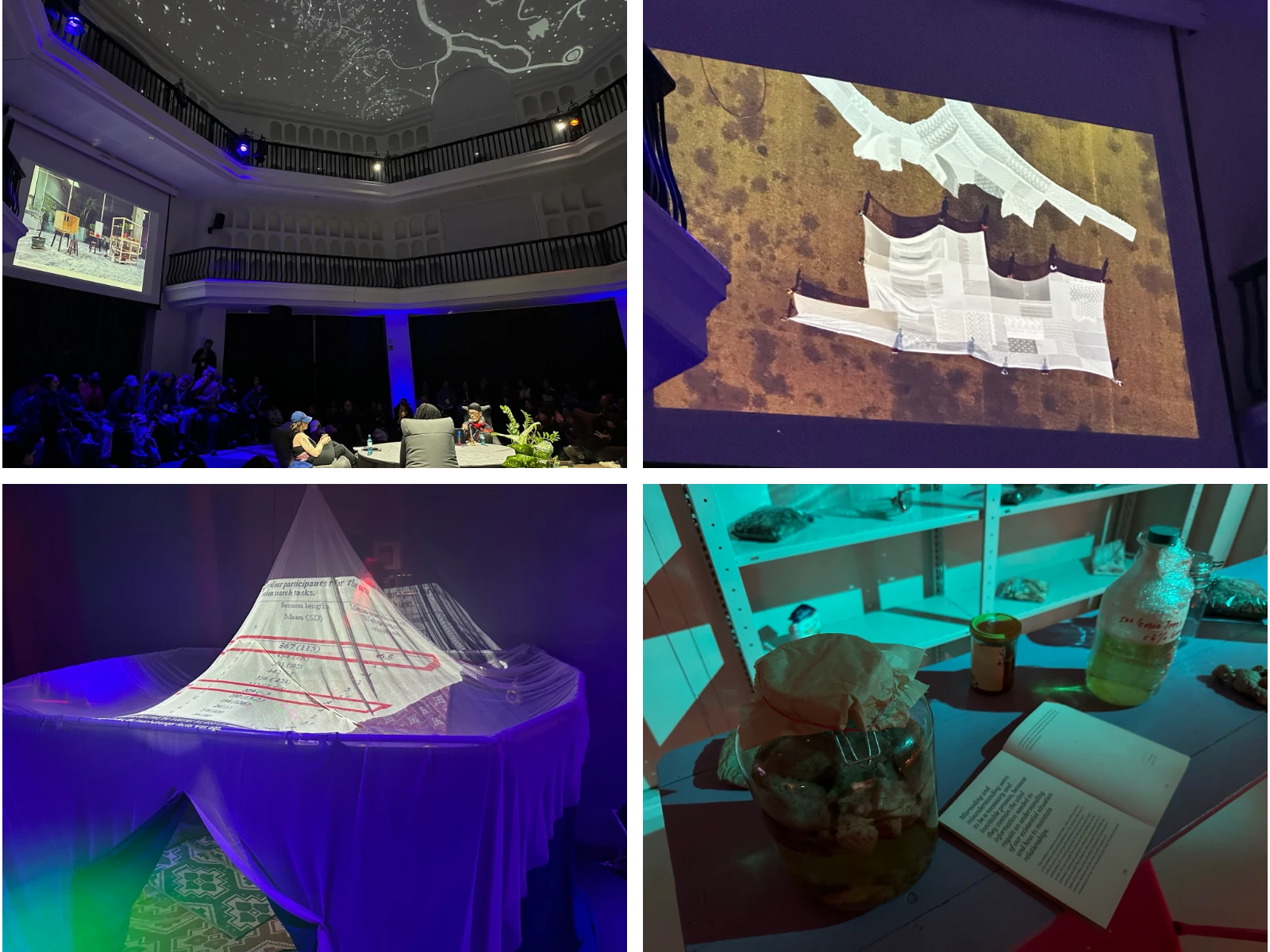
On Thursday I saw Shaheer Tarar - whose work I have followed online for a while, and who I recently met at Monday Chatroom in London, organised by Clara Che Wei Peh. He presented his work on The Compression Zone, a “video-game essay” exploring “compression algorithms as one of the primary engines of world-making in our era”. The talk examined the history of compression algorithms as turning areas of land into pixels, “filtered through algorithmic vision subject to imperial regimes”. He spoke about the history of V2 ballistic missiles - and how the “first pictures of Earth present the Earth as a target”.
There was a session on Current-Seas: Alternate Economies, Rotating Savings Systems & Social Coins with Gladys Kalichini, Huang Po-Chih and Nat Skoczylas. The session explored “alternate economic practices shaped by circulation, trust, and collective rhythm” and “how value is generated, held, and redistributed through relation rather than accumulation”.
Approaching economy as “living infrastructure”, discussion opened with feminist histories of beer-making, and Nat’s brewing attempts to “change attitudes towards value, production, reproductive care”. Huang spoke about his work growing lemon trees, making lemon spirits and patience as a currency to exchange with each other.
Gladys spoke about her interest in the histories of women’s movements and the use of rotating funding systems in her work. This approach meant that the funding was embedded in mutual support systems - which helped her to grow relations with women to source fabrics from second hand markets, and then to collectively wash and stitch them. This process involved women coming together to tell stories - which would not have been the case if there was a different funding model. Her work embodied a different approach to art production, collaboration and cooperation.
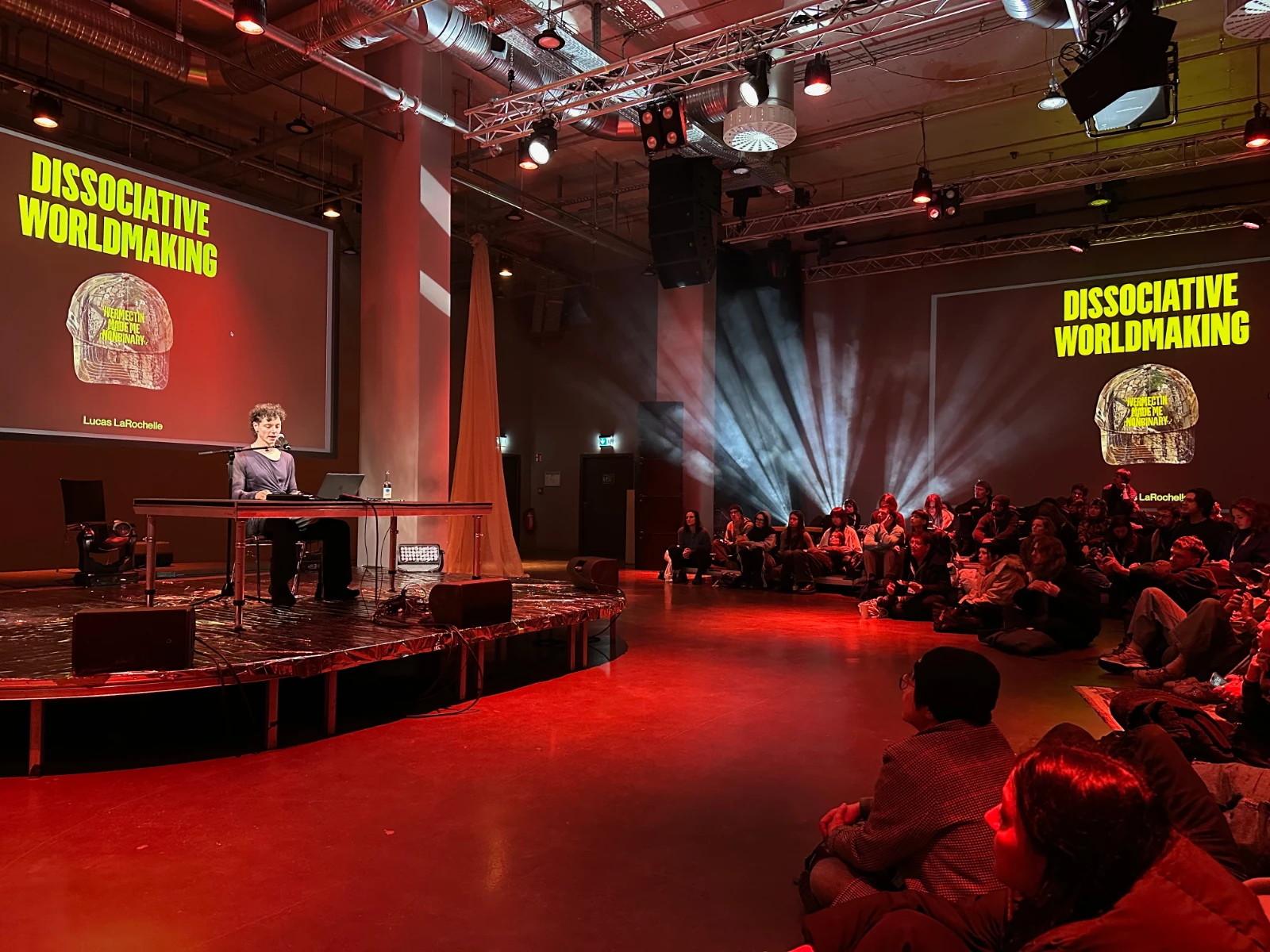
Next I saw a lecture-performance by Lucas LaRochelle which sought to elaborate the concept of “dissociative worldmaking”. This drew on their longstanding work with Queering the Map - a counter-archive of geo-located LGBTQ2IA+ experiences and feelings, with over 850,000 submissions in 28 languages. This counter-archive offered not a “unified set of answers” but a “series of situated knowledges”. In this sense queering data “undoes universality to prioritise partial ways of knowing” - inviting “a relational ethic without fixed meaning of conclusion”. (I wish I could retrospectively reference this formulation in the section on “queer data” in Public Data Cultures!)
QT.bot grew out of machine learning algorithms trained on textual and visual data from Queering the Map. It presents as a “deep dream haunted by the residue of queer affect” and “fabulates on absences of archives”, “away from what is and has been, towards what might be”. In unpacking this work, Lucas spoke about Ketamine usage in raves and trans communities, experiences of dissociation, fractured worldings and how these can bring comfort in relation to dysmorphia and multiple things existing simultaneously.
Drawing on experiences of crisis and the work of Lauren Berlant, they spoke about “loosening attachments” and, like QT.bot, “recursively wandering the map, returning to experiences [they] were unable to make sense of, oriented to pathways of moments that never came”.
Throughout the day there were screenings of Neptune Frost and Air Conditioner. Then we moved to CANK for a High Tide Evening with Aarati Akkapeddi, Diamin, Zufu, Colectivo Werebere, Hanaby and others. This included Sentimiento Océanico, a performance with the hydraulic sculptures of Colectivo Werebere.
On Friday I went to the book launch for Violent Images with Eva Leitolf and Giulia Cordin. The discussion explored how “images don’t only document, but also produce violence”. Eva and Giulia spoke about how images might avoid stereotypical representations of marginalisation and how they might invite us to look harder and deeper at what they represent. In response to spectacularisation, they sought to promote slower responses.
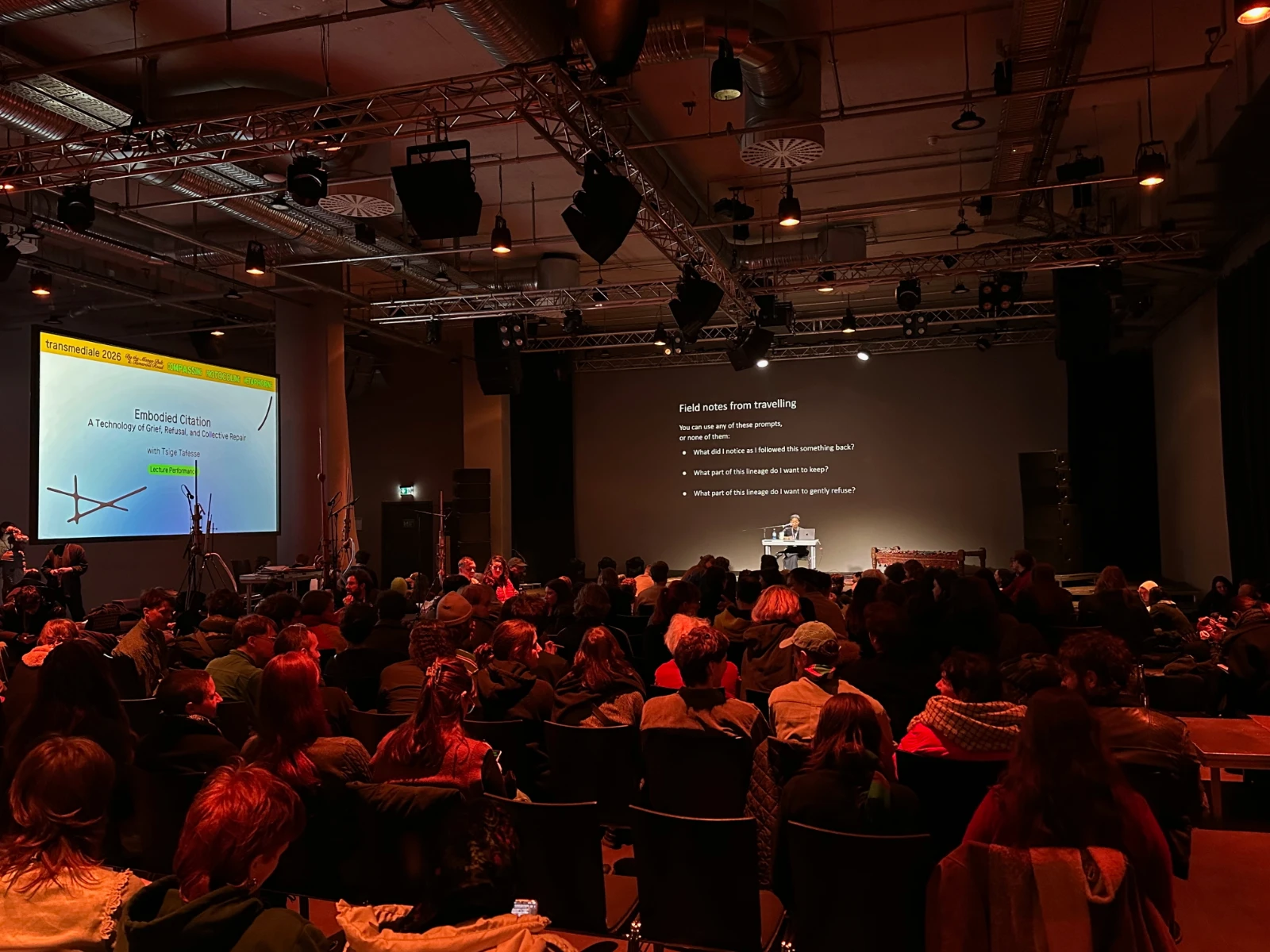
A session on Embodied Citation: A Technology of Grief, Refusal, and Collective Repair with Tsige Tafesse explored “what it means to build anti extractive worlds from the inside out”. We went through a series of guided exercises - with listening, writing and collective reflection. Through these activities we considered practices of extracting and being extracted from, before proceeding to create and share anti-extractive micro-gestures.
A panel on Channeling Minerals with Yadira Sanchez, Harshini J. Karunaratne and Leonel Vásquez explored mineral cultures beyond mines and mining. Yadira spoke about “technologies which could be made collectively” and technologies for “relating collectively to each other and the land”. She talked about the passage of nitrogen from green beans to maize, and moving from monocultures to polycultures.
Leonel spoke about rock cycles over 170 million years, and the memories that rocks carry. They spoke about waters flowing and sculpting rocks. Harshini spoke of their father telling them that “if you touch a stone you can hear its stories”, and asked what are the stories and moments that we don’t see.
Leonel spoke of intersecting cycles of biospheres, geospheres and technospheres. They considered the calcium in our bones, in the inner-ear structures which enable us to listen, and how the sun shapes minerals which we eat, how these minerals become part of us, and how they endure after we die.
Yadira read a poem about ice and ICE in the US - and returning ice back to water. She spoke of the role of minerals in encryption, connection, solidarity and response. The conversation turned to the role of copper wires in connectivity and the Internet, pollution, sacrifice zones and how “if we want to live in peace, we need to make peace with waters”. A closing performance explored how listening might reconnect us to waters.
Then there was a session on ritualistic cinema with Montika Kham-on, Laura Huertas Millán and Tianzhuo Chen, moderated by Djamila Grandits. Laura spoke about counter-narratives of the coca plant and its agencies. Tianzhuo spoke about his Ocean Cage and drawing inspiration from island cultures, rituals and complex interrelationships in his video and performance work. Montika spoke about Southeast Asian cosmologies, post-tropical futures, the Ghost Festival in Thailand and the notion of “living inside someone else’s dream that doesn’t belong to us”. Djamila spoke of rituals of attunement, which can “disassemble and reassemble the body and soul”.
Throughout the day there were screenings of Recorder: The Marion Stokes Project and Seeking Mavis Beacon.
The day closed with Transhemispheric Resonances. We heard Nursalim Yadi Anugerah playing mouth-organs of Borneo with air blowing machines, and Vica Pacheco’s experimental compositions with ceramic instruments inspired by Mesoamerican whistling vessels.
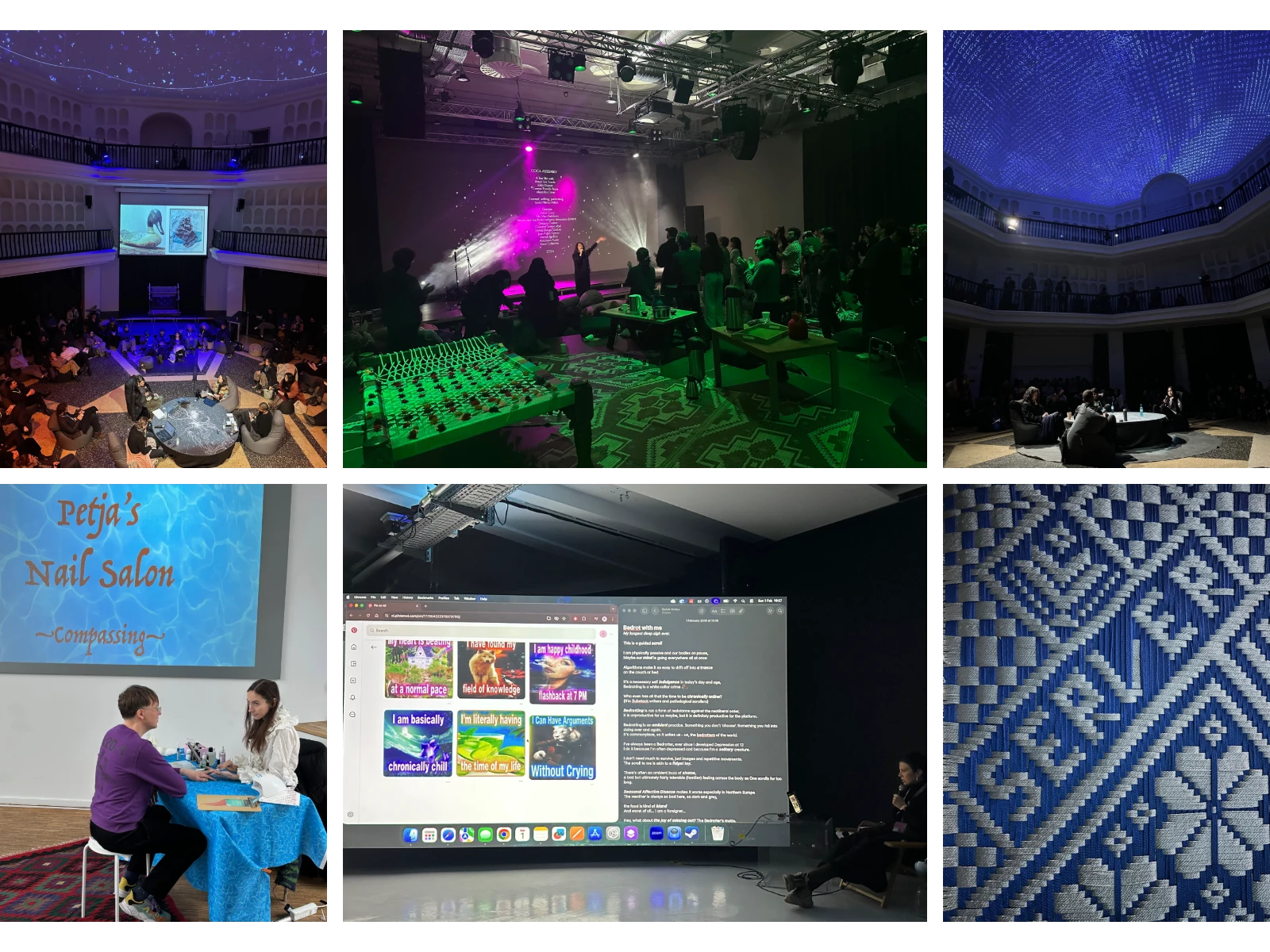
On Saturday, I dropped by Petja Ivanova’s Paprika Nails salon, exploring how “nails function as talismans and as interfaces within interfaces”.
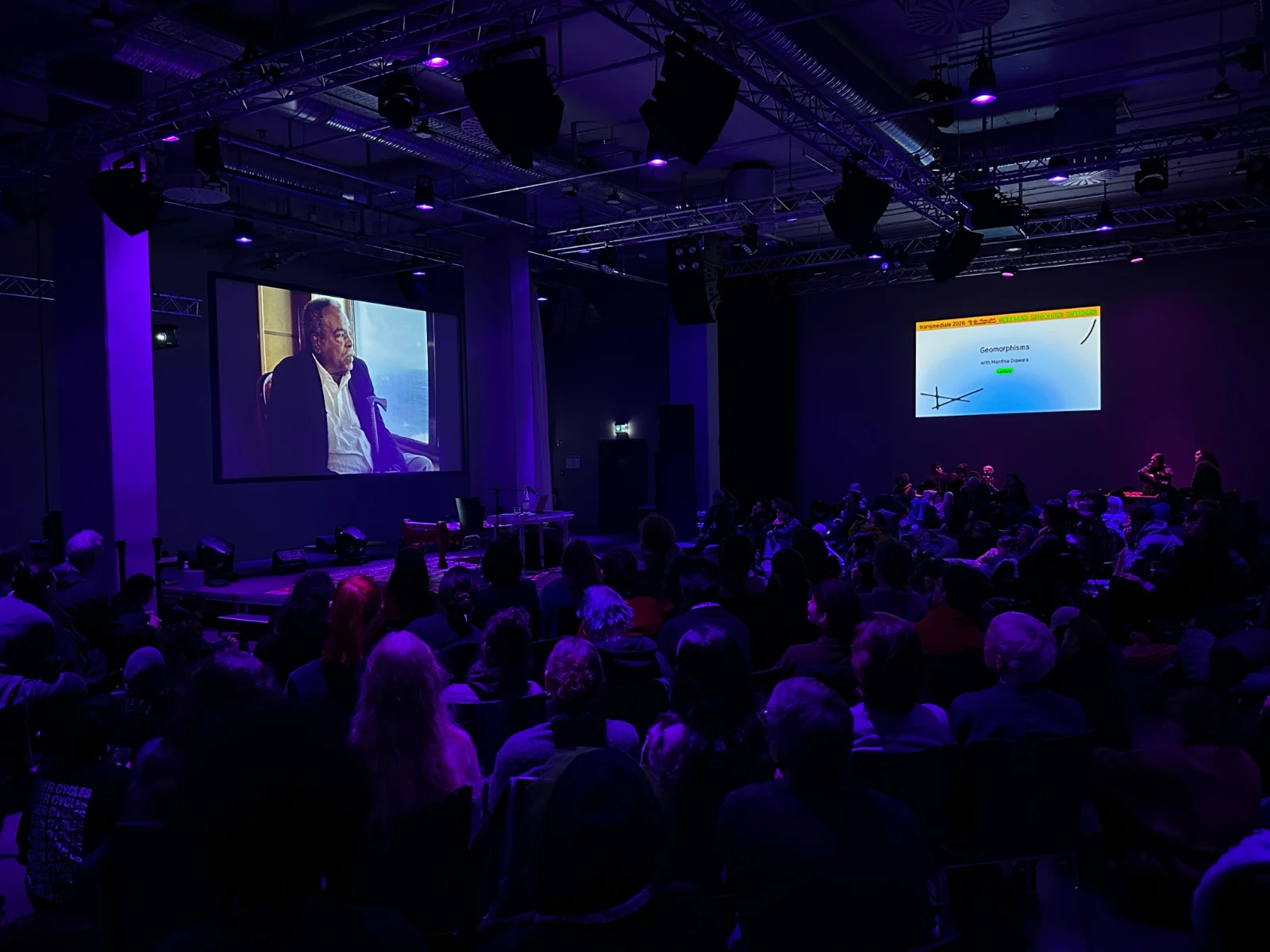
Geomorphisms with Manthia Diawara drew on the poetics of Édouard Glissant to explore landscapes, water and terrains as “living presences - capable of feeling, intention, and shared trembling”. Manthia played clips of his film work, including Edouard Glissant: One World in Relation.
Laura Huertas Millán’s Coca Assembly was a speculative performance lecture retracing and retelling stories of the coca plant and its associated cultures and spiritual practices. It incorporated video pieces, recordings of stories of coca plant experiences, and a coca tea sharing ceremony.
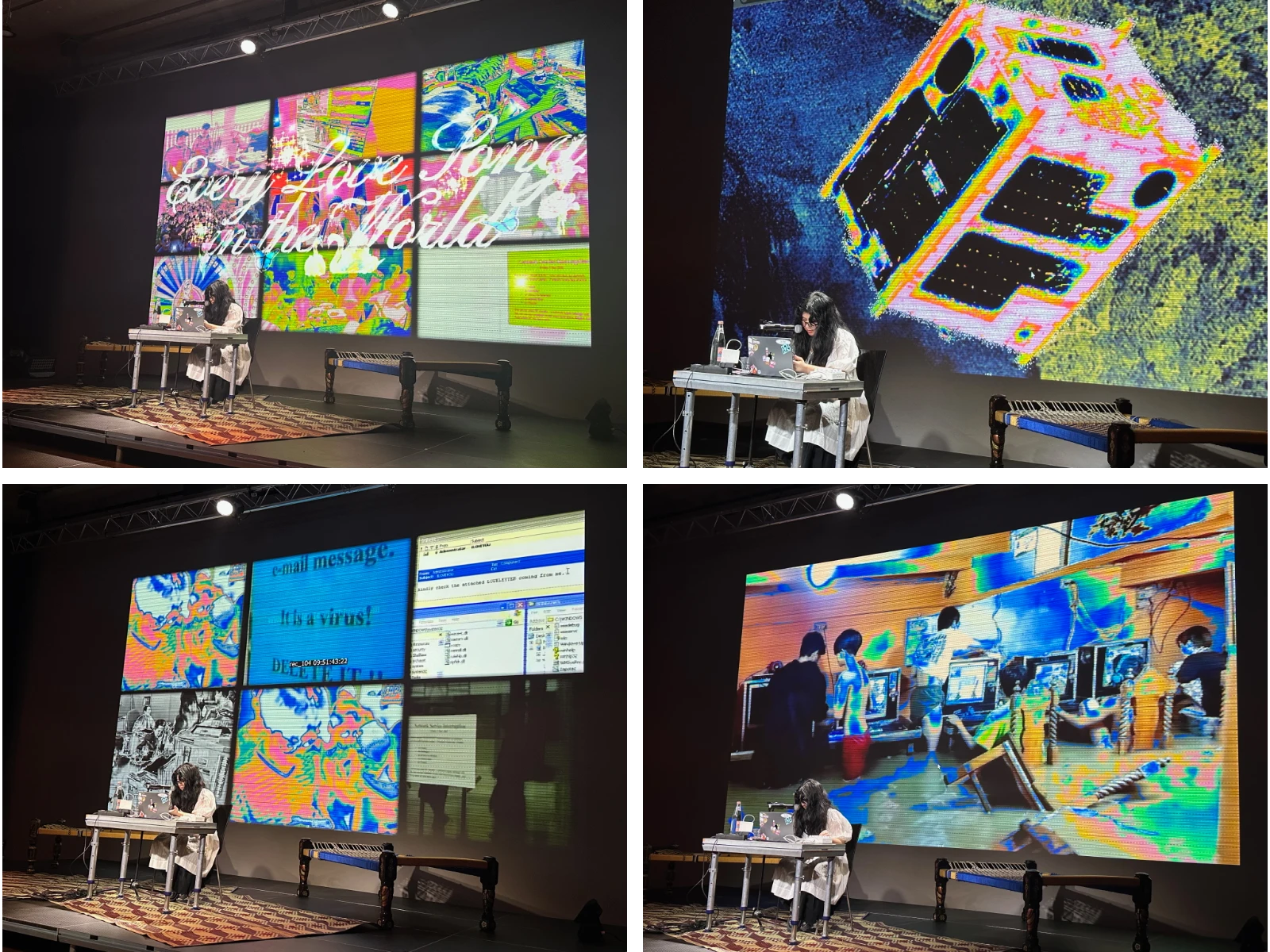
One of my transmediale highlights was Every Love Song in the World, a new piece of work by Chia Amisola. I recently wrote about Chia’s Internet Ambient, and it was nice to see many threads from many years coming together in new ways in this piece. Every Love Song in the World drew connections between the ILOVEYOU virus, call centres, karaoke cultures, offshore gaming operators, content moderation, dating forums and continuing to play amidst rising floodwaters. The performance looked at how Filipinos have become machines and interfaces, and considered ways of reclaiming and re-imagining third world relations with technologies and the Internet.
After this there was Tezgah, a musical loom performance with Saba Arat, Karlo Sono and tarxun. Liquid Assets with Gosia Lehmann, Sarah Friend, Arkadiy Kukarkin turned dollars into syrup incorporated into cocktails. The day closed with a series of performances with Animistic Beliefs & Jeisson Drenth and mobilegirl.
On Sunday, the final day of the festival, I went to a session on sensing and more than human cognition with Teresa Castro, Katja Davar, Rainer Mühlhoff and Djamila Grandits. Then there was a screening of Manthia Diawara’s essay film AI: African Intelligence.
I enjoyed the format of İdil Galip’s Bedrot With Me, a “guided scroll” through bedrotting as an “ambient practice” - which invited participants to join her on an algorithmically mediated collective journey into rabbit holes of images.
Then I joined Tech-Styles: Advanced Secret Keeping with Olivia M. Ross, an information worker and documentarian who collaborated in making Seeking Mavis Beacon, and whose work I know through a session she ran last year with the School for Poetic Computation. The session explored lattice-based cryptography through a Black cyberfeminist analysis of toolmaking.
The festival closed with a performance from Afrotronix.
Overall I left feeling inspired and energised by many performances, artworks, connections and conversations over the course of the festival.
I really appreciated the concept and process for this year’s transmediale - which emphasised more expansive conceptions of technologies and rethinking infrastructure by drawing on a series of exchanges in regions beyond Europe and North America.
It invited collective re-orientation in thinking about who and what artistic engagements with technology are for, about who and what are missing, about alternative systems of production and distribution, and about care and solidarity through art and technology.
I hope this spirit will carry into future editions, and that this year will help to shape what kinds of gatherings transmediale could give rise to in the future.