notes and pictures from growing feminist technocultures workshop
July 08, 2026
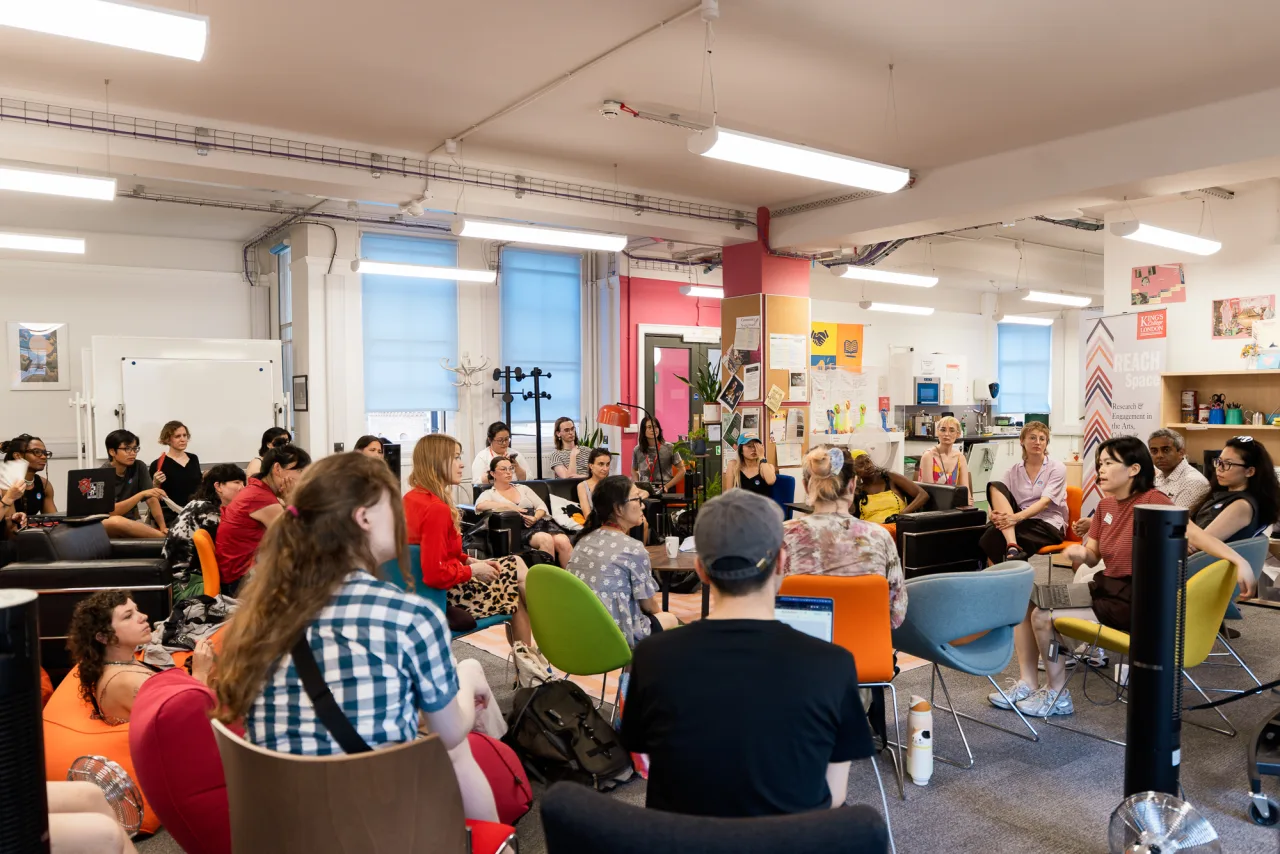
Following a trip to South Korea as part of the K-platforms project, we recently organised an evening on growing feminist technocultures with Youjin Jeon from Woman Open Tech Lab in Seoul. The event circulated widely and sold out quickly. So we were a little apprehensive about how things would go, especially as it was during a heat wave.
We arranged all the fans we could find into an improvised cooling circle (🪭🪭🪭🪭🪭), ordered some tasty snacks and prepared a format with a good amount of time for intros, chatting and hanging out. It ended up being a special and memorable gathering for everyone to meet Youjin and grow connections amongst spaces and scenes with shared commitments.
Below are some notes and pictures that we’re sharing for those who wanted to join but couldn’t make it…
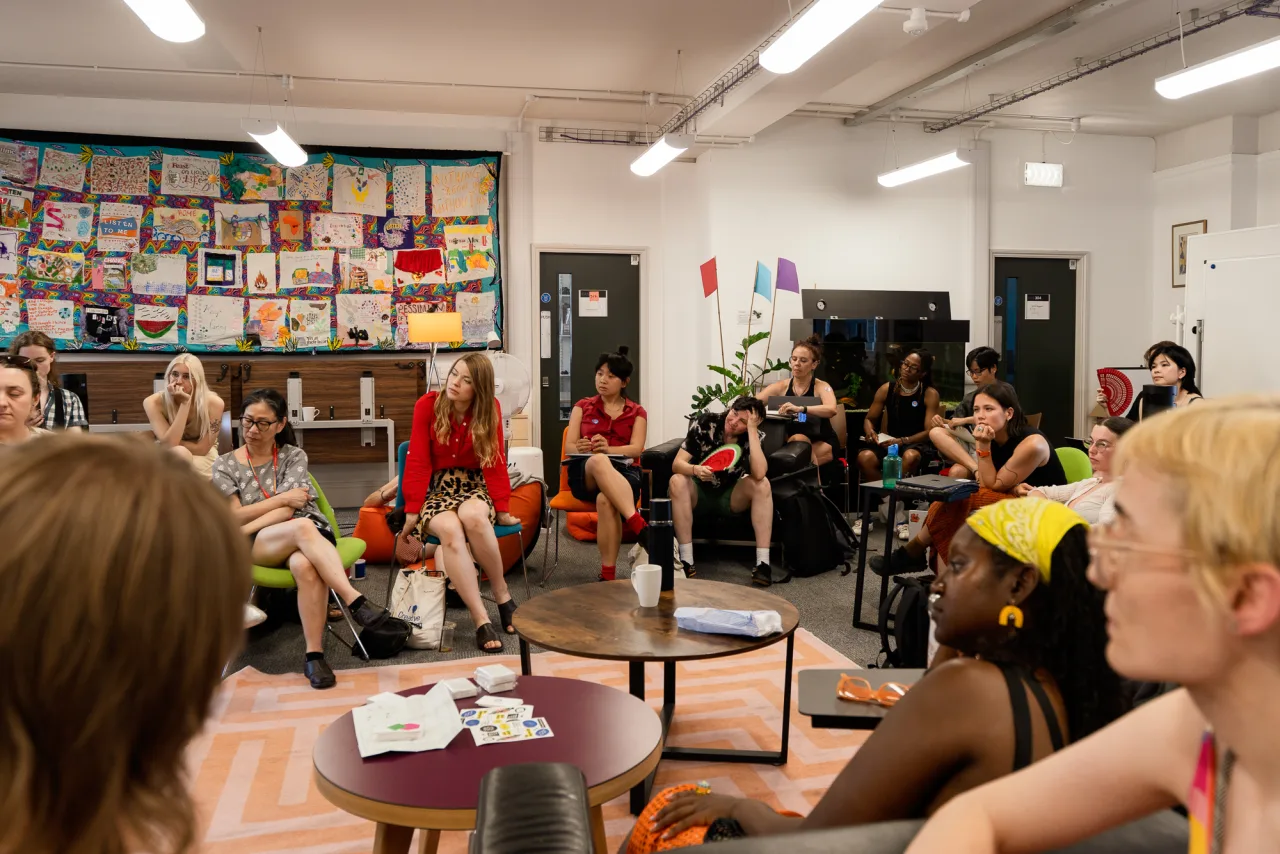
We started by introducing ourselves to each other - sharing our names and emojis that represented us in the moment, links, what brought us there, what we hoped for and our current curiosities/interests/obsessions in a shared document. Then we went around the room to connect names to faces, so we all knew who was there and surface what we shared.
We were a mix of artists, designers, technologists, game-makers, film-makers, musicians, researchers, educators, students, organisers and archivists. There were people who came to the event from live coding, permacomputing, sound collectives, activist groups, art schools, universities, research projects (e.g. Full Stack Feminism) and festivals (e.g. Peckham Digital).
Our shared interests ranged across speculative fiction, circuit design, poetic computation, DIY tech cultures, repair, minimal computing, microseasons, decolonising archives, woven tech, slow tech, solar servers, walking, climate activism, audio surveillance, feng shui, public and hidden infrastructuring, computing histories, choreography, alternative platforms, self-hosting, counter-cartographies, care, commoning, queering code, urban ecologies, community gardening and computing otherwise.
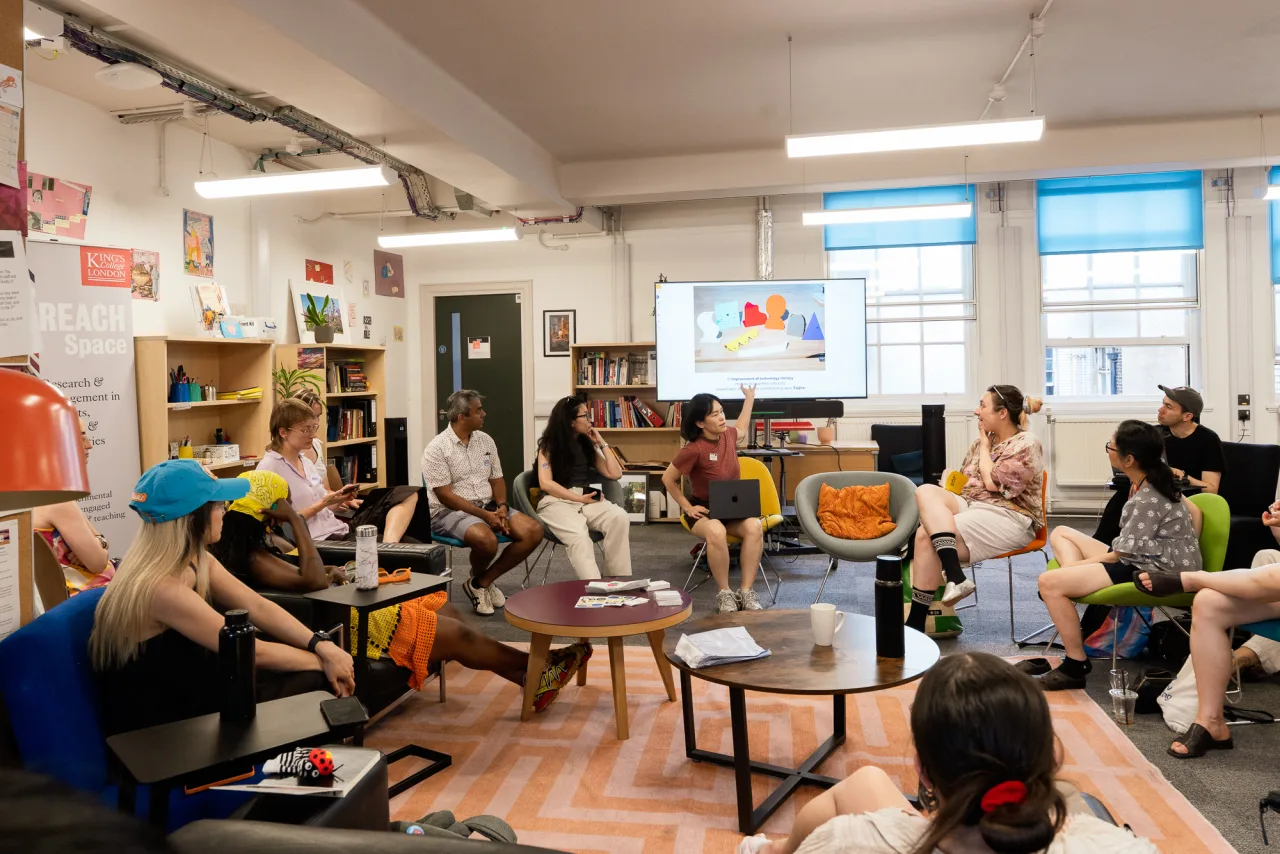
After introducing ourselves Youjin introduced herself and Woman Open Tech Lab. She studied computer music and wanted to start a feminist space in response to gender imbalances and the recurring difficult and uncomfortable experiences for many in male-dominated media fields. She also questioned what openness, inclusion and accessibility meant in technological cultures where a lot of software, documentation and materials were in English - and what forms of exclusion this produces.
She spoke about hierarchies of tech cultures - including what counts as “high tech” and “low tech”. While many people think of tech as “hacking” she suggested a more expansive understanding of technology would include cooking, sewing, and many things which are not considered technological. She spoke of a lack of diversity in perspectives about technologies. In hierarchies of technocultures, who gets to decide what is high and what is low tech?
In starting the lab she was interested in gathering non-male people to learn about technologies - from hand tools to circuit design to machine tools to welding. There were early experiments with haptic musical instruments, e-textile starter kits, heartbeat electronic kits, DIY extension cords and more.
Woman Open Tech Lab was founded in Euljiro, a historical manufacturing area in the centre of Seoul. Following many years of development a lot of this area has gone. Only a small part of it remains how it was. There are still some engineers who have worked there for over 40 years. Most of them are male.
The lab sought to intervene in the male-dominated engineering culture. This was difficult at first. They began collaborations with local workshops, including around working with sheet metal machines, powder coating, and manufacturing things based on 3D models. There were analogue TV hacking workshops with a collaborator of Nam June Paik. There was a synthesiser club.
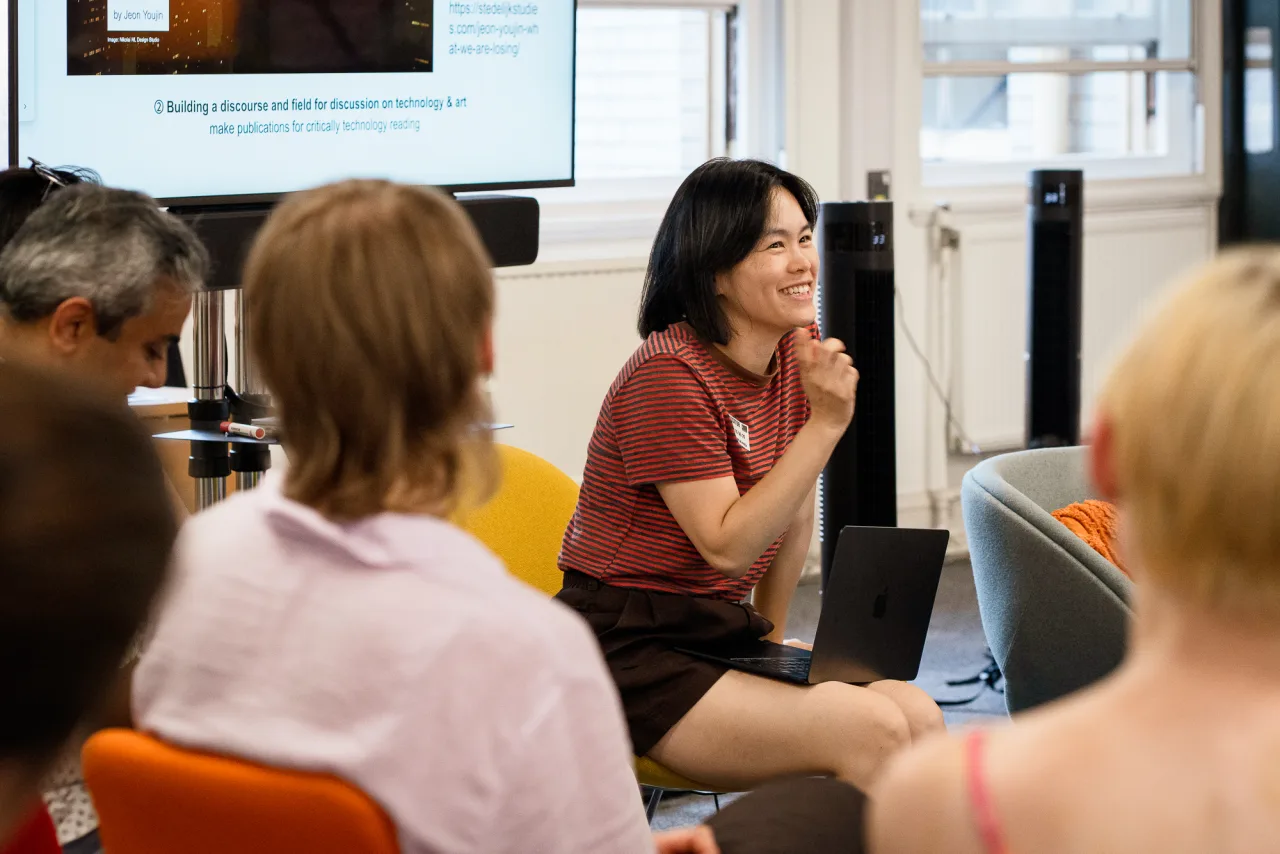
Woman Open Tech Lab has sought to grow a space for more critical and more diverse perspectives on technology and art, including through annual research groups, exhibitions, performances and publications. These address different kinds of issues related to technology - such as data bias, online hate speech, coding crazes and AI uptake.
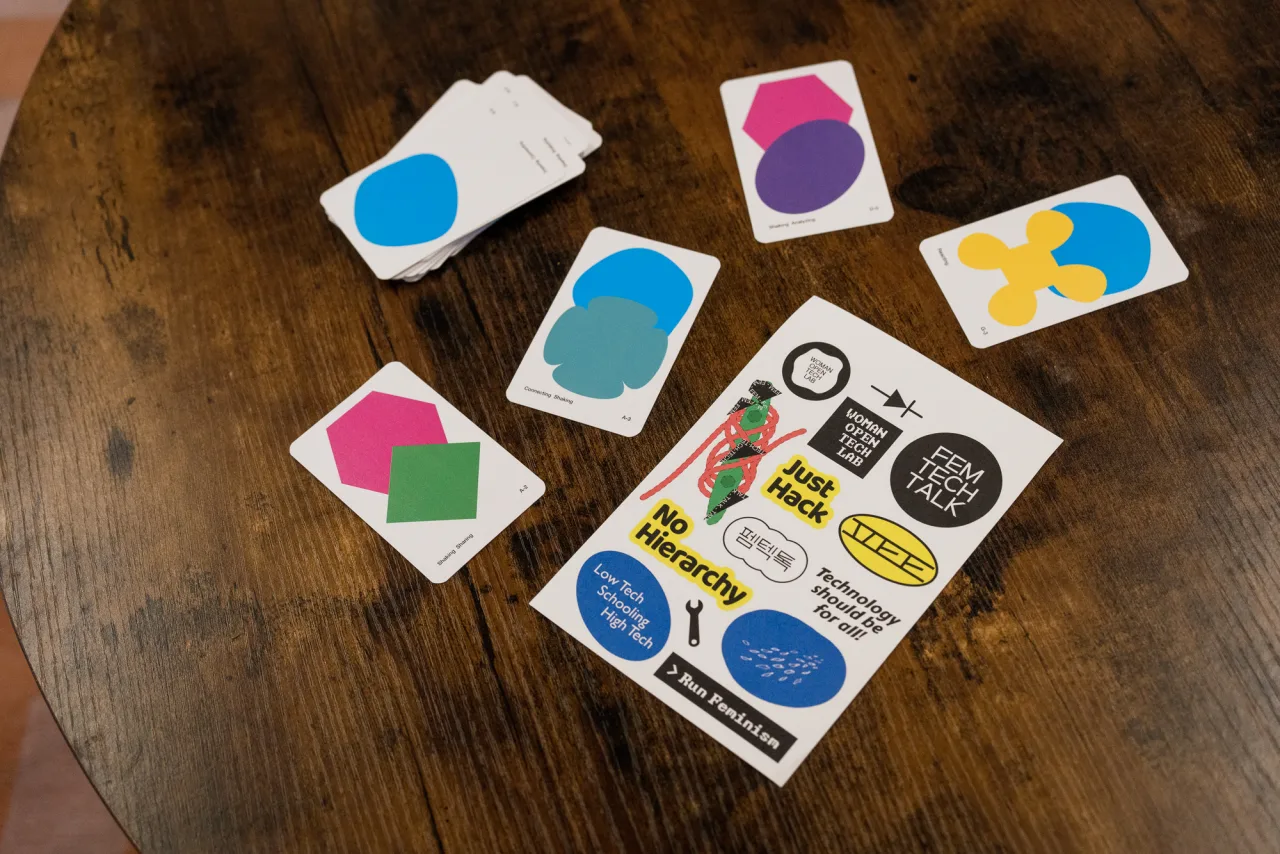
This is part of the context for the Code Meal Kit - which seeks to grow critical exchanges around technological cultures. The lab also publish a FEM TECH TALK zine series to support more critical and diverse perspectives on technological cultures in South Korea, as well as books such as CODE FOR LOVE (on alternative and creative software cultures) and Low Tech Schooling High Tech (on alternative education).
Finally, Youjin spoke about AI dependency in Korea and a piece she wrote on “what we are losing” as part of a series with the National Museum of Modern and Contemporary Art, Korea (MMCA) and the Stedelijk Museum Amsterdam (SMA). She spoke about how AI uptake and AI dependency in South Korea are really serious - with significant social, cultural and emotional consequences.
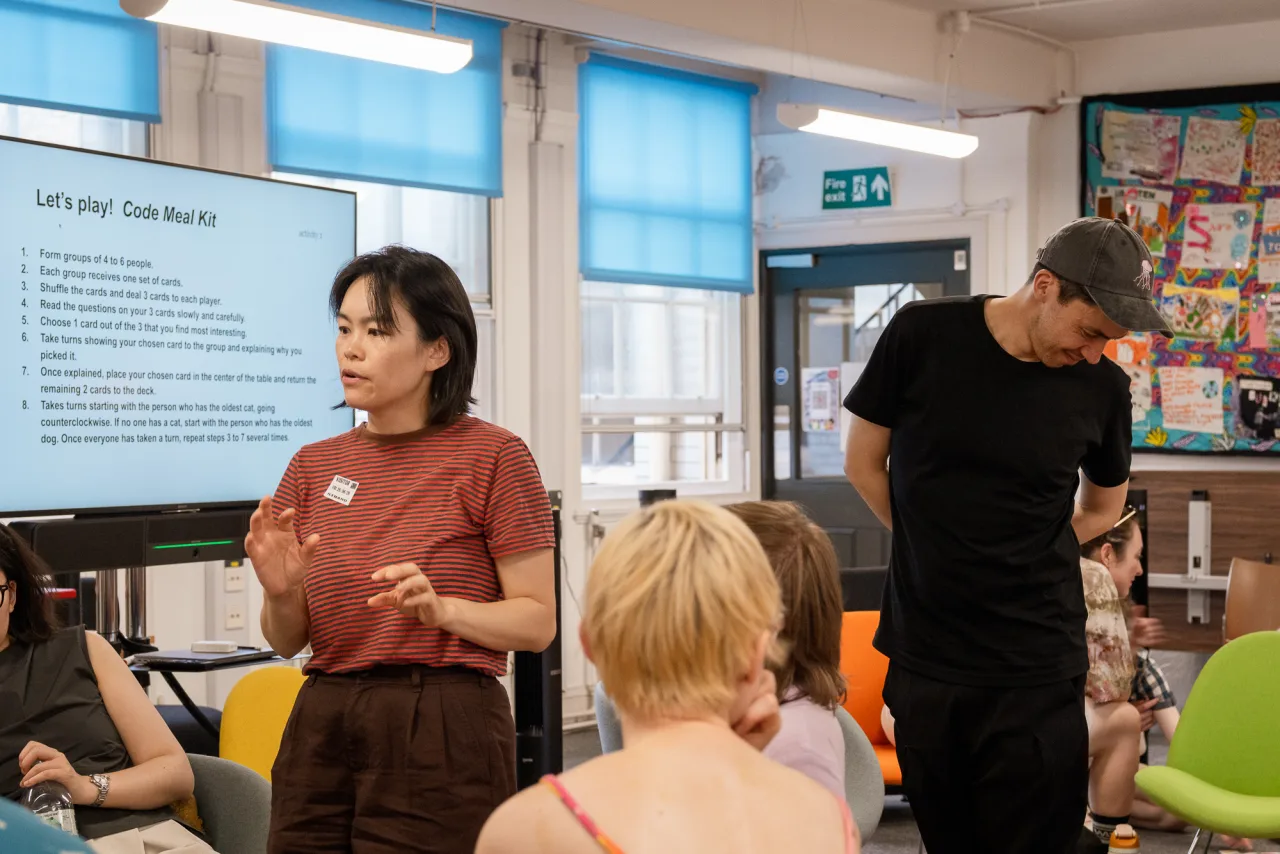
After this introduction to the lab, its history and activities - and after a short break (🍵), Youjin invited us to explore the Code Meal Kit together. We gathered into small groups and she created a special new protocol for us, blending several different activities together.
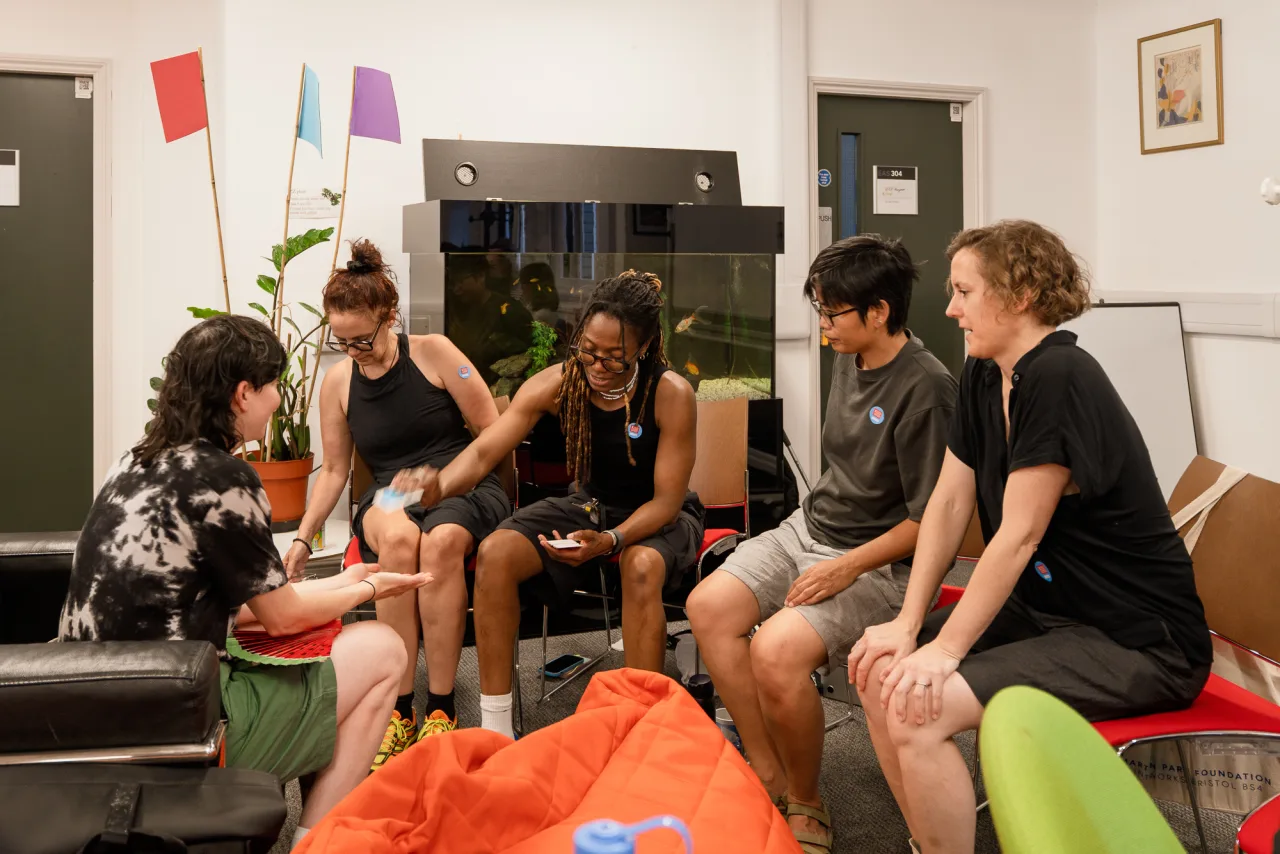
We took it in turns to draw and review cards, selecting questions and prompts which resonated with us. This meant we collectively accumulated invitations to critically and imaginatively engage with technological cultures - and created space for ruminating on (but not resolving) the concerns and possibilities that opened up.
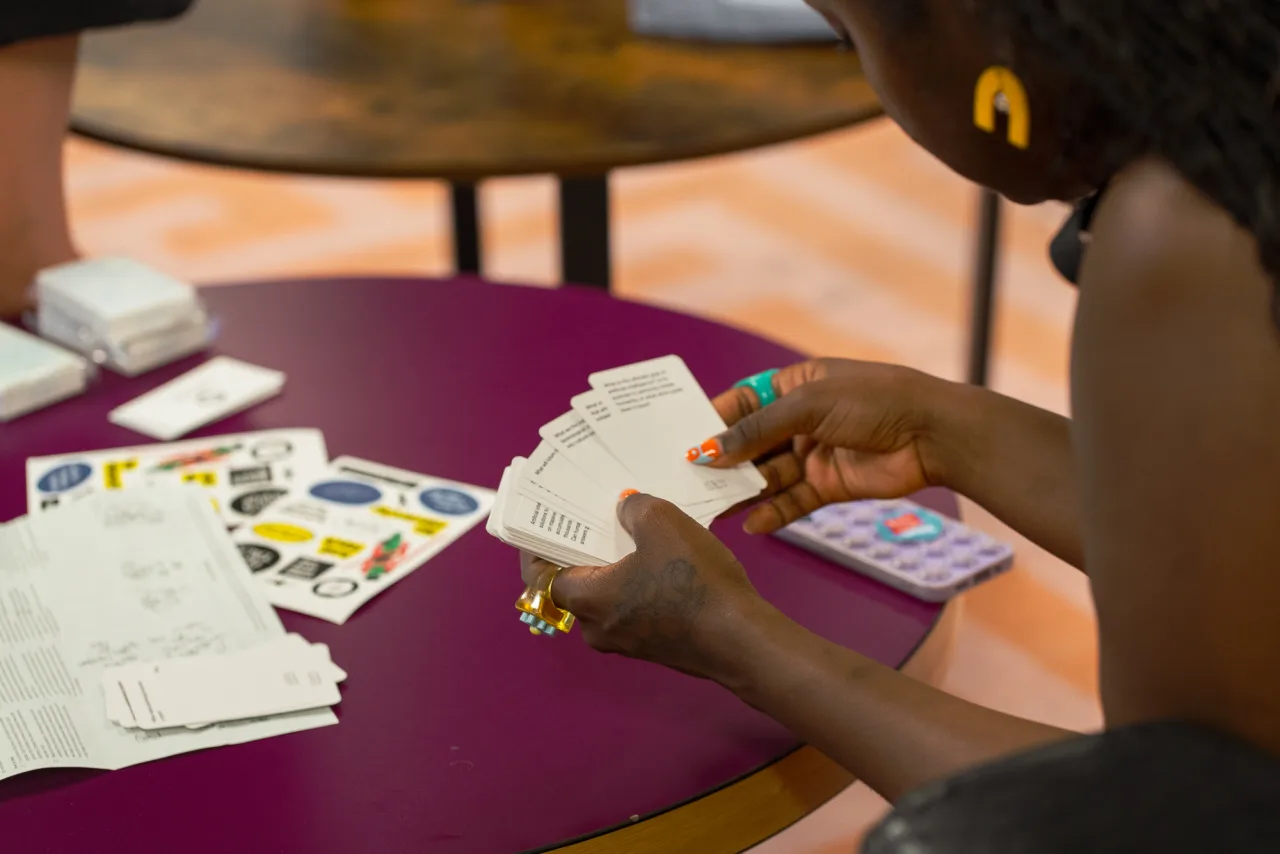
What technologies bring you joy? What technologies would you like to resist? What is the political potential of code? What is the role of art and artists in an age of technology? When does technology become a myth? How does natural language affect code? How can we misread code? What issues arise when translating technological terms? What can’t AI do? What kind of countercultures can technology create?

At least in our group, the cards had the effect of growing questioning and surfacing shared curiosities and commitments - listening across our situations and practices, with an orientation towards thinking and unfolding things together rather than focusing on fixes, solutions or conclusions. The turn-taking and passing reminded me of string figures.
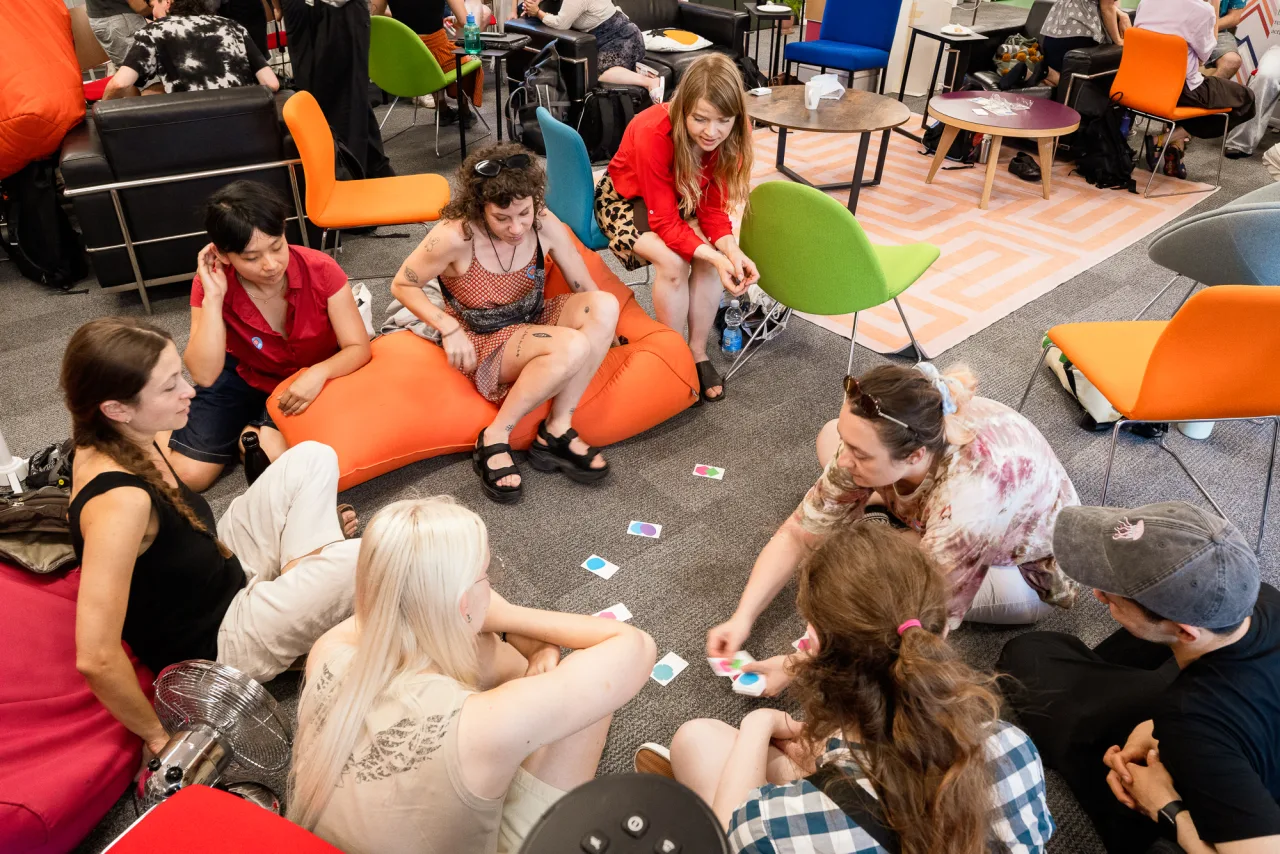
Youjin came around to chat with each of our groups, then we had a moment to regather and catch up as a room. 🍵
Afterwards, a group of us went on to see Chia Amisola (whose work I love) giving a performance lecture on PAGASA (Hope) at a V&A Late on Rituals of Becoming, organised by Carrie Chan. The piece explores “anthropomorphized calamities, satellite mythologies, Diwata-1, heavenly sensing, and animist belief”. A good way to end the day together. 🌕
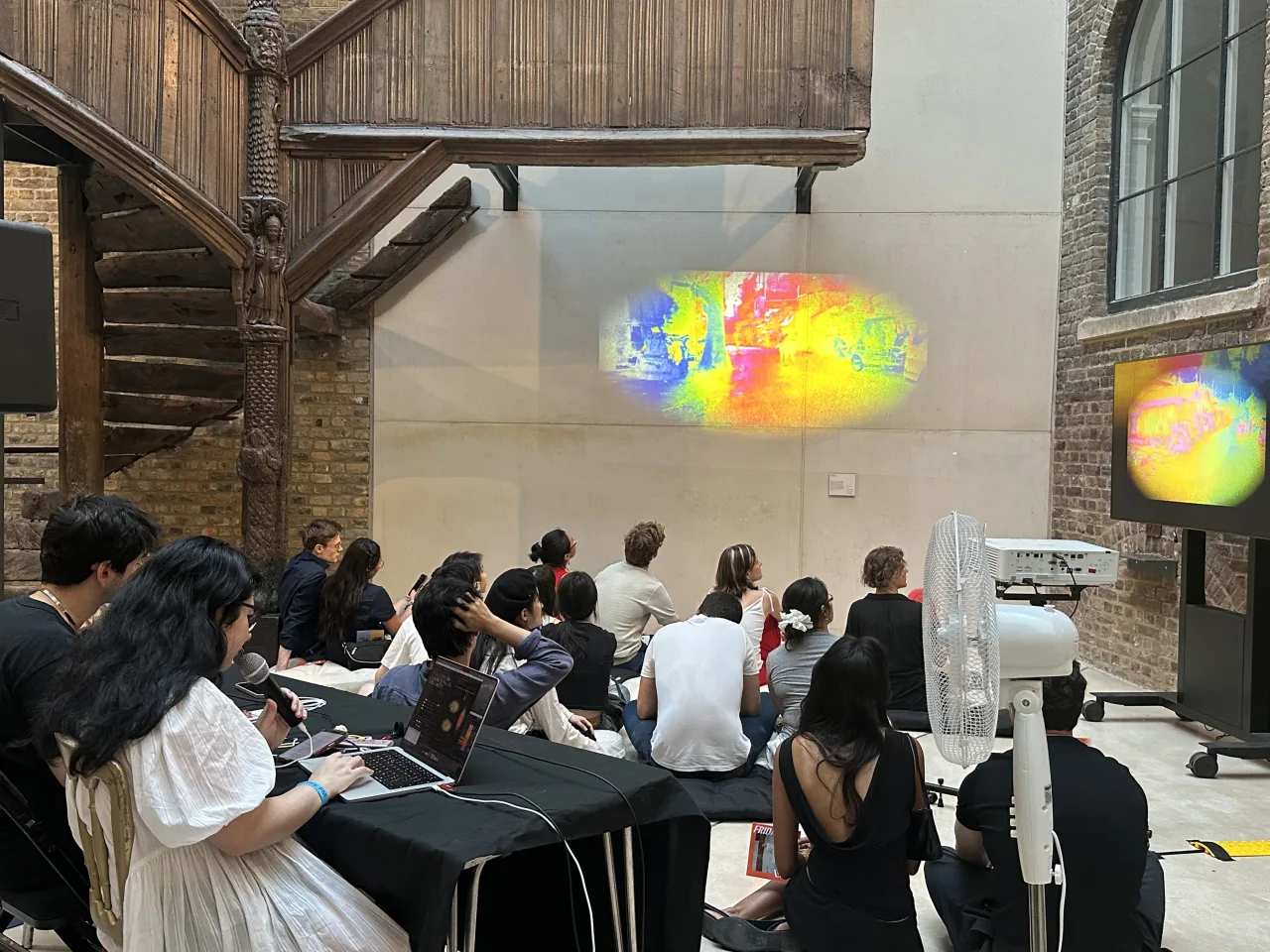
With many thank yous always to JY Mak for the wonderful pictures, cold brew tea and bringing care (in many ways), to the REACH space for hosting and supporting the workshop (and for the many fans we borrowed from many rooms), to friends, colleagues and comrades at the Centre for Digital Culture, the Digital Investigations Lab and London Permacomputing Club for co-organising the event with us, to everyone who came for joining us, chatting and hanging out (especially on a hot day) - and for Youjin for making the trip to see us, for the inspiration, the exchanges, the cards and the activities, and for providing us with an occasion to gather. 🪭💜🌌✨
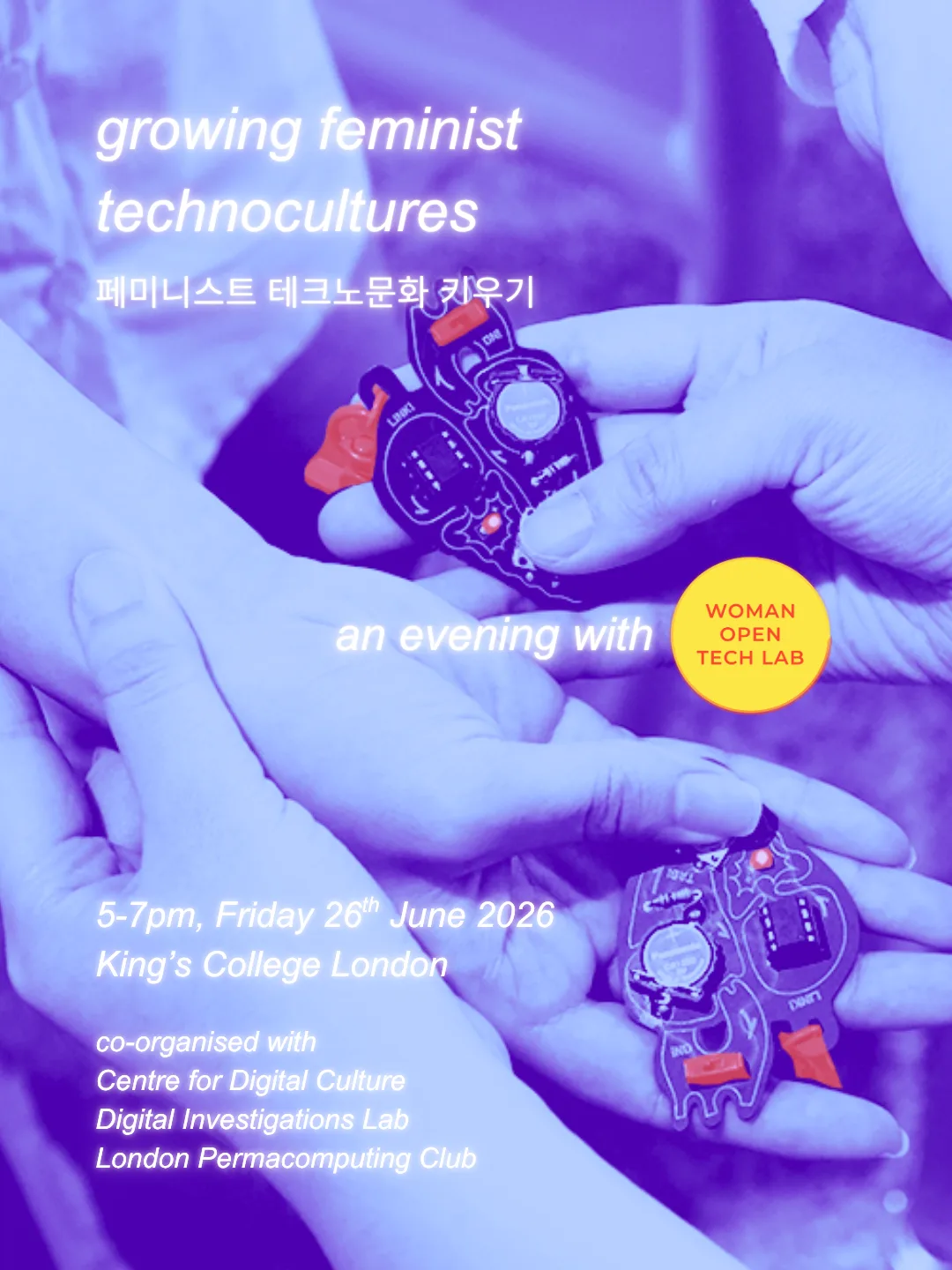
jeon youjin is an artist who began her career in film scoring before expanding her practice into sound art, performance, and sculpture, experimenting with new media technologies. She is a member of Seoul Express, an artist collective that explores new forms of narrative through media-based works. In 2017, she founded WOMAN OPEN TECH LAB in Seoul, which engages with technology from a feminist perspective and seeks to cultivate non-hierarchical technological cultures. She co-curated the public art project *Zero Makes Zero and served as the director of The Technology for Resistance. Since 2021, through the publishing project Fem Tech Talk, she has been producing books and writings that examine technology through an interrogative approach, embracing diverse perspectives.*
WOMAN OPEN TECH LAB. Based in Euljiro, Seoul’s historic manufacturing district, the community organizes exhibitions, lectures, workshops, and collaborative projects that explore the social, cultural, and political dimensions of technology. Bringing together perspectives from art, feminism, critical media studies, and maker culture, it creates opportunities for collective learning, critical discussion, and experimentation. Through public programs and community initiatives, it fosters dialogue around contemporary technological issues and supports more inclusive and equitable approaches to technology.
Code Meal Kit is an interactive workshop convening critical conversations and collecting questions on technocultures that grew out of the 12th Seoul Mediacity pre-Biennale *Station. Code Meal Kit is made to encourage gathering of more than 1 person for finding ways to talk, debate, focus, understand and identify critical issues.*
This workshop is co-hosted by Liliana Bounegru and Jonathan Gray. It grew out of gatherings and exchanges around the K-Platforms project. It aims to support feminist technocultures as well as growing connections between groups and spaces in London and Seoul.