public data cultures and rethinking data sovereignty at University of Sussex
June 24, 2026
I was recently invited to give a keynote on Public Data Cultures at a research symposium on Digital Sovereignty Across Disciplines at the Sussex Humanities Lab, University of Sussex. From the event blurb:
Digital sovereignty is one of the most important topics affecting both our collective research practices and individual dignity. The capacity for individuals, organisations, and nations to control their digital destiny is reshaping our world in profound ways, influencing everything from how we conduct research to questions concerning the trajectory of planetary computation.
From cloud infrastructure dependencies to AI training datasets, from digital archives to laboratory equipment software, from publishing platforms to collaboration tools, every field of research operates within digital ecosystems that are governed, controlled, and shaped by questions of sovereignty. As our digital futures become ever more entangled with the whims of political economy, militaristic output, climate catastrophe, and the continual datafication of everything, how can digital sovereignty be protected in the coming years?
Join us on 16 June 2026 to hear from researchers in this field and join the discussion on how digital sovereignty affects us, as academics and humans alike. The event will begin with a presentation by Jim Killock, executive director of Open Rights Group, and end with a keynote presentation by Jonathan W. Y. Gray, author and co-director of Centre for Digital Culture at King’s College.
After an opening keynote from Jim at Open Rights Group, there were research presentations on topics from China’s growing role in Africa’s data futures, whether digital sovereignty can become a liability, “narrative sovereignty” for SEND families, labour behind federating UK research computing, technodiplomacy and more.
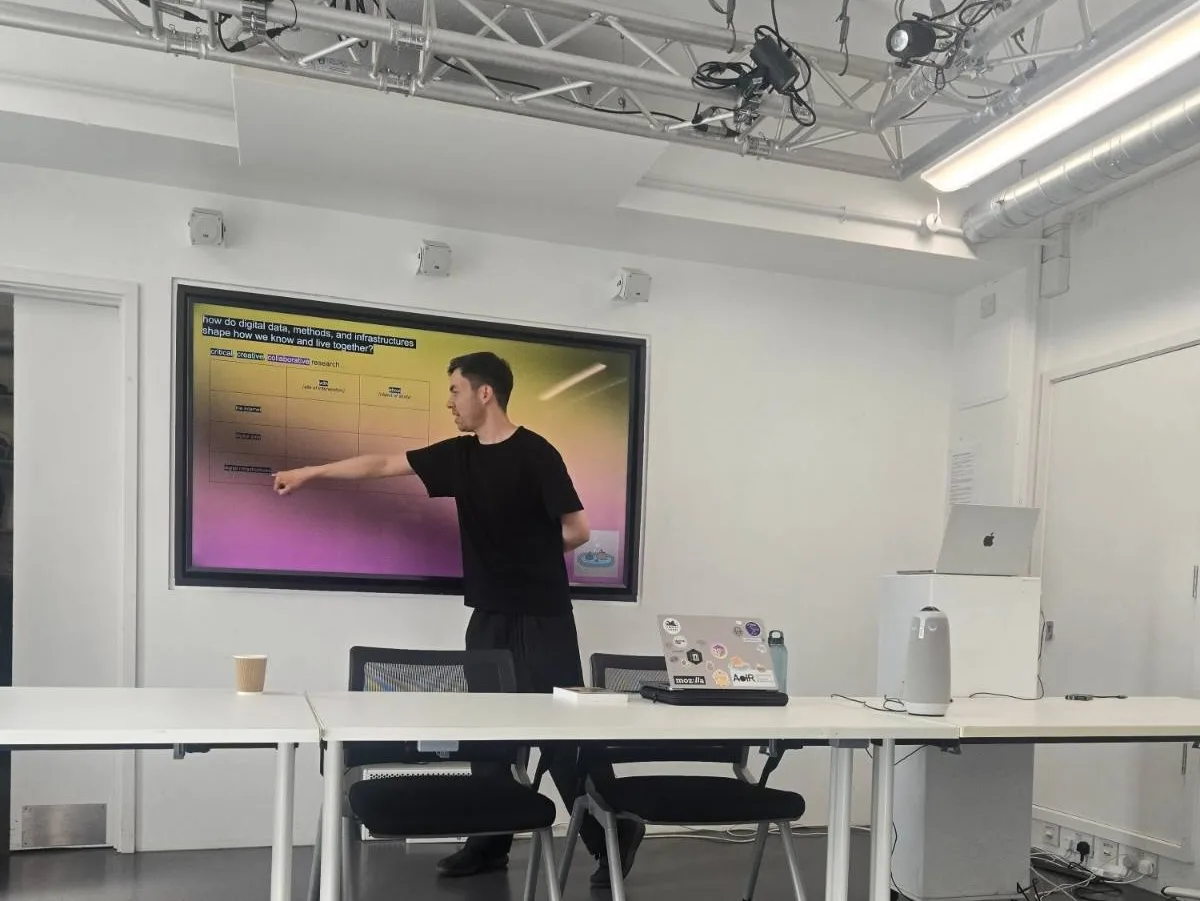
For the closing keynote I spoke about Public Data Cultures. Before talking about the book, I introduced the background of my work and spoke a bit about pluralising, situating and rethinking digital and data sovereignty. Some brief excerpts from remarks on the symposium’s theme:
Before going into the book I wanted to say a bit about what this book has to do with this symposium’s theme of digital and data sovereignty. While the book is not framed in terms of sovereignty, there are several parts of the book which mention it. There are three seeds I’d propose to plant at the outset when it comes to thinking about digital and data sovereignty: to pluralise, to situate and to rethink data sovereignty.
What does pluralising data sovereignty mean? There are many ways of thinking about sovereignty, which comes to matter in different ways - from European tech sovereignty to Indigenous data sovereignty. It feels important to reflect on what these different articulations of sovereignty are doing, their politics and stakes, who is doing what to whom, why, and with which consequences.
There have been various useful reviews of data and digital sovereignty (e.g. this and this) - including how these terms are used in academic, practitioner and public contexts.
Notions of sovereignty are entangled with histories of the state and the notion of the sovereign, as we see in the figure of the sovereign from the frontispiece to Thomas Hobbes’s Leviathan. We can trace genealogies of digital sovereignty to genealogies of sovereignty in politics and public life.
As Donna Haraway, puts it, “it matters what matters we use to think other matters with”. What does it mean to invoke the sovereign when we think about entangled relations? What baggage are we bringing when we think about technological relations in this way? Who and what does this foreground and displace? How can we use this term intentionally, critically and reflectively? For example - sovereignty can emphasise “power over”. What about other kinds of relations of care, reciprocity, solidarity, interdependence? Who and what composes the bodies which have and exert power?
In an era of climate catastrophe, biodiversity collapse, tech nationalism, militarisms, conflict and genocide, what does it mean to think of technology in relation to states and blocs, and who is involved in shaping and governing the relations which unfold with technology and data. For someone from a mixed diasporic background with family in many places, I also think about who are the “we’s” of sovereignty? What about disaporic, marginalised and undocumented people? What about more-than-human ecologies?
All of which to say we can ask: Whose sovereignty? Which sovereignty? It feels important to situate ideas and politics of sovereignty in relation to the rise and fall and rise of the nation state, including in relation to decolonisation, neoliberal governance and marketisation, fiscal discipline, international institutions and the ascendent forms of nationalism and neo-colonialism that we’ve been seeing in recent years.
To feed critical reflection on how we approach sovereignty a little more:
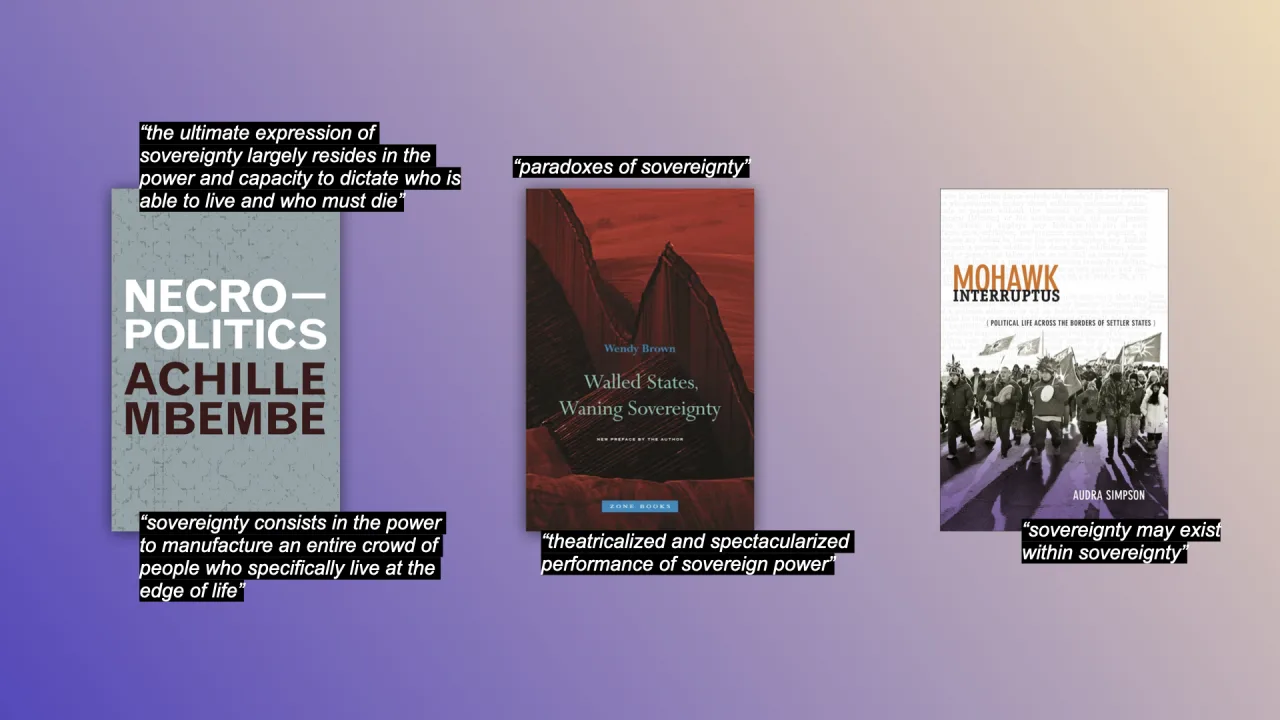
- In his Necropolitics, Achille Mbembe writes that “the ultimate expression of sovereignty resides in the power and capacity to dictate who may live and who must die” and also that “sovereignty consists in the power to manufacture an entire crowd of people who specifically live at the edge of life”.
- In writing about walls and borders, Wendy Brown writes of “paradoxes of sovereignty” and “theatricalized and spectacularized performance of sovereign power”.
- In writing about the Mohawk peoples, Audra Simpson writes about how “sovereignty may exist within sovereignty”, distinguishing between the entangled, contested and sometimes nested sovereignties of states and Indigenous peoples
When we think of what this concept of sovereignty can and cannot do, its possibilities, politics and limits, and how else we can collectively organise and live with data and digital technologies, we might consider:
- Who and what has agency?
- How is agency redistributed (whether through laws, software, servers, supply chains, subcultures, extraction sites)?
- What kinds of worlds are composed, made and remade?
To think along with Grace Lee Boggs, how might we re-imagine, rebuild and respirit relations with technology? Rethinking data sovereignty means not taking it for granted, denaturalising it, reconsidering what kinds of digital and data sovereignties we are talking about, and their politics and capacities.
So I leave you with these three seeds about digital and data sovereignty to sit with, and to come back to later in discussion. 🌱🌱🌱
Then I gave a talk about how the book on public data cultures might open up space for rethinking relations with data - including data as cultural material, medium of participation and site of transnational politics - as well as making data in response to missing data and critical data practices described as decolonial, feminist, Indigenous, more-than-human, queer, speculative and more.
Afterwards we had a discussion with Silvana Fumega and Ceren Yuksel. Silvana spoke about her experiences with transnational data assesssment, the Global Data Barometer and the prospects of assessment from the Global South (which feature in the third chapter of Public Data Cultures) as well as her work on Data Against Feminicide. Ceren described the book as a “hopeful bridge between research and practice”. She spoke about her work with the Office of the United Nations High Commissioner for Refugees (UNHCR) and Refugee Data Minder.
Conversations ranged across the politics of making data, marginalised communities, decolonising knowledge, AI and open data, dismantling corporate formations and extractive infrastructures, and the prospects and politics of public digital infrastructure and knowledge commons. We closed with a moment for drinks and catching up.
The following day I met up with Sharon Webb to talk about her research, including the Full Stack Feminism project and future work in this area.
Then we went to the Sussex Digital Humanities Lab’s Annual Keynote with Anasuya Sengupta and Bareya Khan from Whose Knowledge?. This took the form of a transgenerational conversation on knowledge, technology and justice - including their respective backgrounds and what brought them to intersectional feminist organising around the Internet.
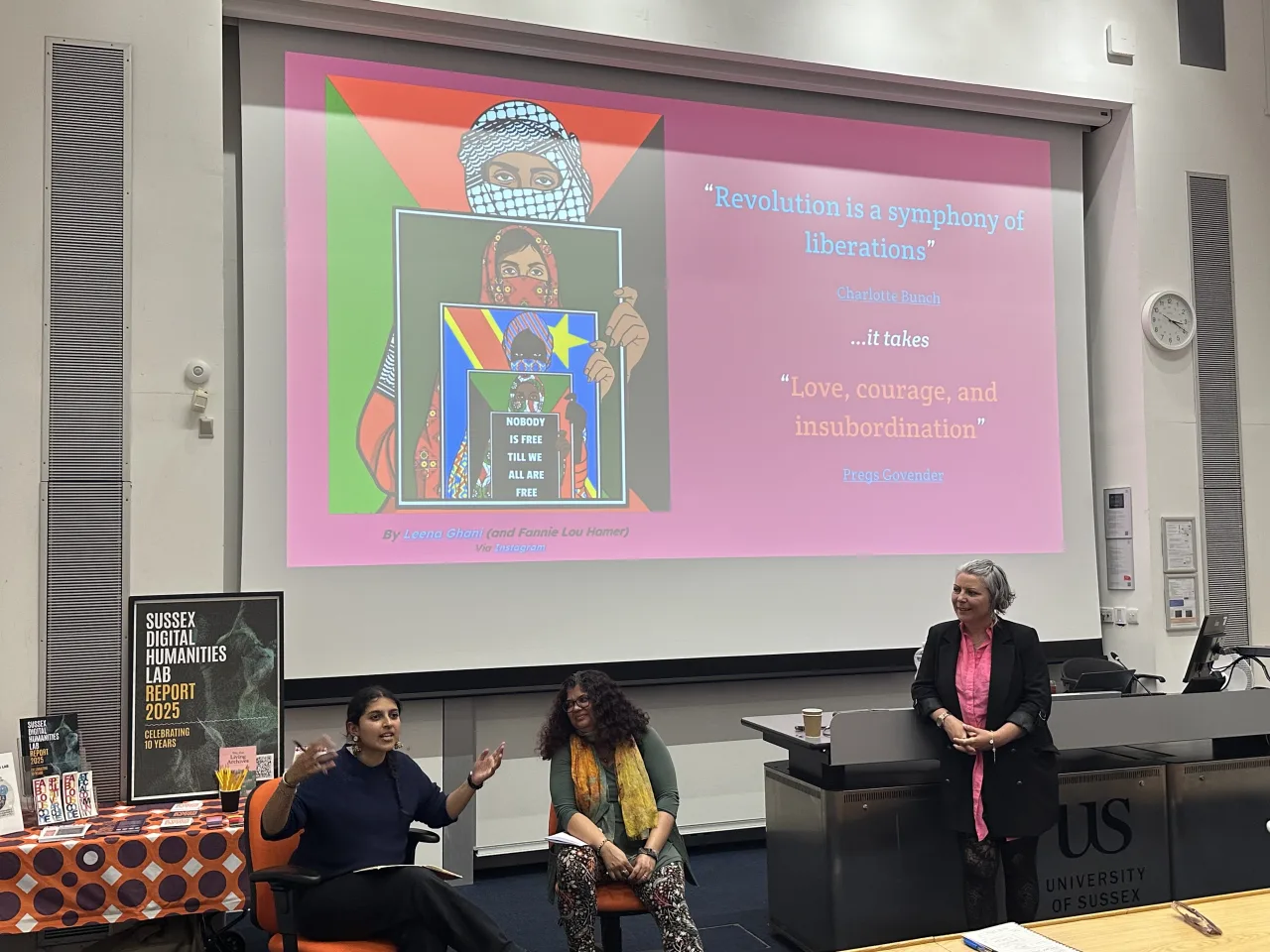
Their intervention proposed “big knowledge” as a counter-point to “big tech” - contrasting the worldviews of cis white men in Europe or North America with a plurality of images, knowledges, ways of knowing, being and doing. They spoke about global majority organising in response to the role of big tech in unfolding polycrisis.
Summarising the background to their work, they mentioned how:
- Of the 7000+ spoken, written and signed languages in the world, only 500 of them are online.
- The top 10 Wikipedias do not correspond to the top 10 most spoken languages in the world.
- 75% of those online are from the Global South (Asia and the Pacific Islands, Africa, Latin America and the Caribbean).
They described Whose Knowledge? as a “community multi-burner stove” of research, action and advocacy focused on four areas: languages and tools, Internet design and architecture, oral and visual archives and Wikipedia+. They grew from naming the problem - colonial capitalism - to supporting ways to decolonise knowledge.
They spoke about their work, including:
- #VisibleWikiWomen and bringing 23k+ images to Wikimedia Commons
- decolonizing the Internet’s structured data
- language justice and the state of the Internet’s languages
- supporting the leadership of Indigenous women activists
- funding feminist technology in the Global South
They reflected on their positionalities, practices and decolonising as an ongoing process. This included re-interpreting cultures that are passed along, letting go, loss, transience and how the group and its work has transformed over the past decade, growing with Bareya and the people who have become part of it.
I was honoured to receive a copy of We, the Living Archives from Anasuya.
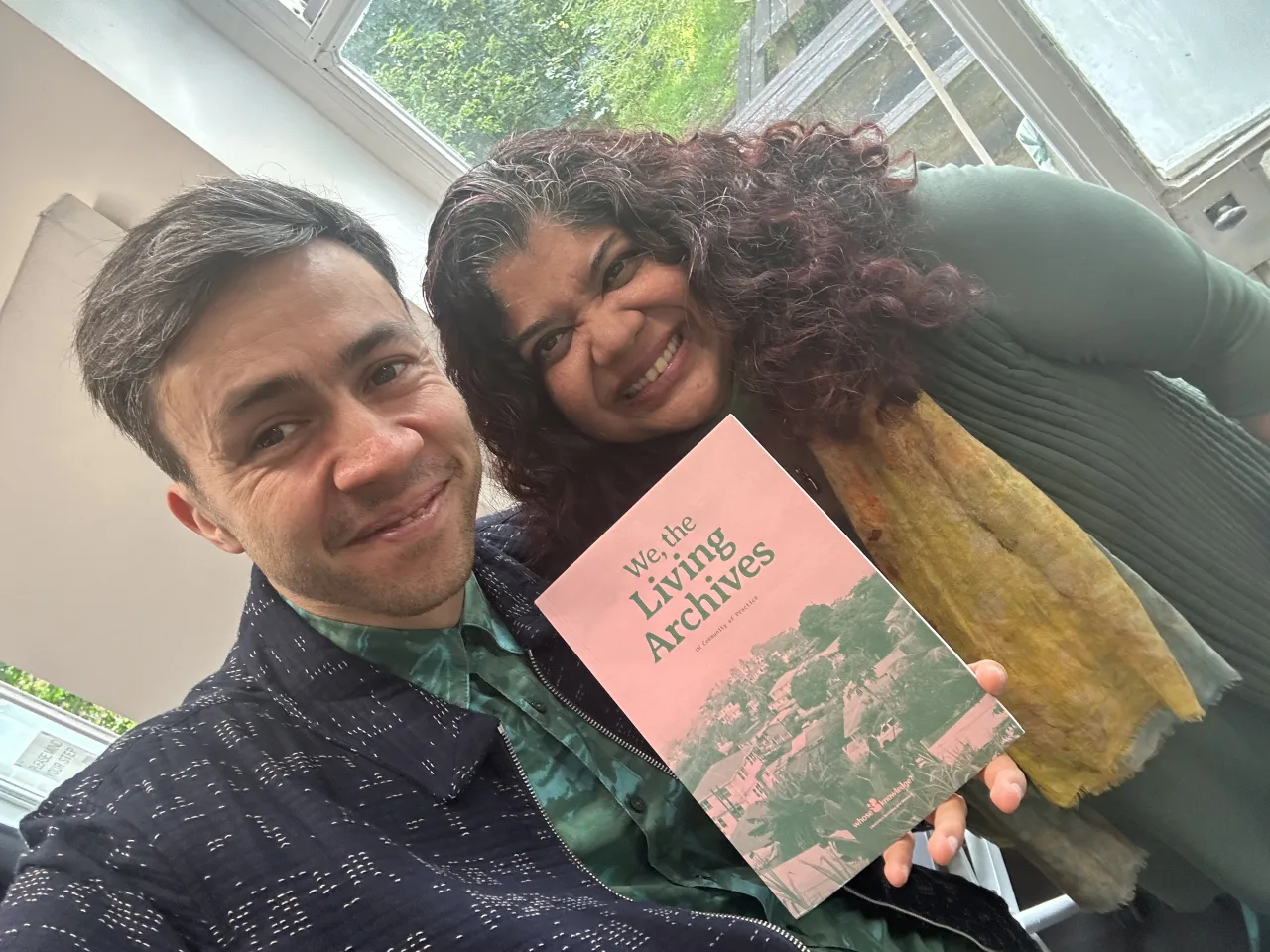
Thanks so much to Sandy for the invitation and organising all the things (!), to Ceren and Silvana for the generous discussions, and to Sharon, Anasuya, Bareya, Cécile, Irene, Sara, Jim, Sacha and to everyone who joined us for their time, company and conversation. 🌌🌕