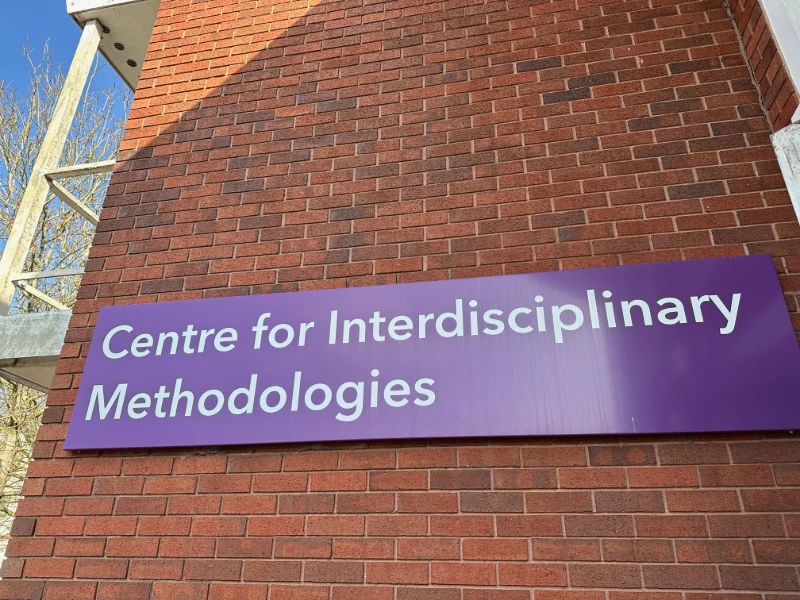
public data cultures at Centre for Interdisciplinary Methodologies, University of Warwick
March 18, 2026
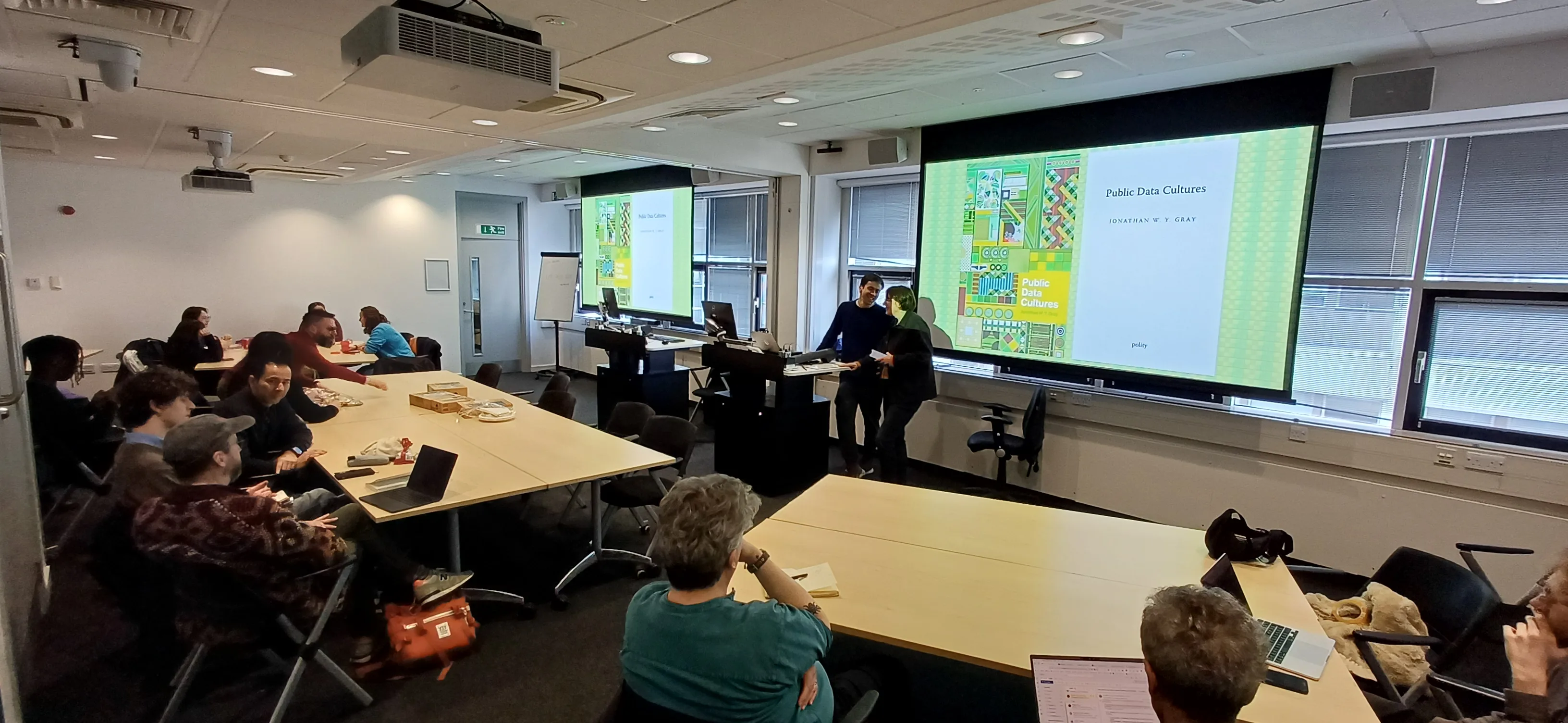
I was recently invited to visit the Centre for Interdisciplinary Methodologies at the University of Warwick for a book launch for Public Data Cultures and to join a PhD symposium.
It was nice to be back there. I think I first visited the Warwick campus in the early 2000s - as I was curious about research at the intersections of philosophy, critical theory and AI (which would have been something quite different back then).
I’m not sure what was happening there at that time, but this would have been in the later years of the Cybernetic Culture Research Unit (CCRU) founded by cyberfeminist scholar Sadie Plant. I later found out that Kodwo Eshun - co-founder of the Otolith Group (who currently have a library-in-residence at Ibraaz in London) - was also associated with the CCRU.
The Centre for Interdisciplinary Methodologies was set up by Celia Lury in 2012, whose Inventive Methods: The Happening of the Social, co-edited with Nina Wakeford, was published the same year. This became an important reference for many of us, exploring methods as a site of invention and experimentation in the unfolding of the social. As it says in the introduction the book aims to provide “an inventory of methods or devices that may be used to conduct research that is explicitly oriented towards an investigation of the open-endedness of the social world”, including its “ongoingness, relationality, contingency and sensuousness”.
This culture of methodological experimentation is also explored in Inventing the Social, co-edited by Noortje Marres (who moved to CIM in 2015) alongside Michael Guggenheim and Alex Wilkie. This book proceeds from the recognition “that social life is always already creative” and explores “different ways of combining representation and intervention in social life”.
Noortje Marres’s work has been an important and ongoing source of inspiration for Public Data Cultures – from her work on issue publics and issue mapping to material participation, digital sociology, the sociology of testing and situational analytics. Over the years I have been lucky to be able to collaborate with her on research about city data, public facts and the politics of COVID-19 testing.
I can’t believe it is already a decade since Streams of Consciousness: Data, Cognition and Intelligent Devices at CIM in 2016, co-organised by Nathaniel Tkacz and Ana Gross. At this event I gave a talk on “ways of seeing data”. Research for this collaborative paper later fed into Public Data Cultures, particularly the chapters on data as cultural material and critical data practices.
***
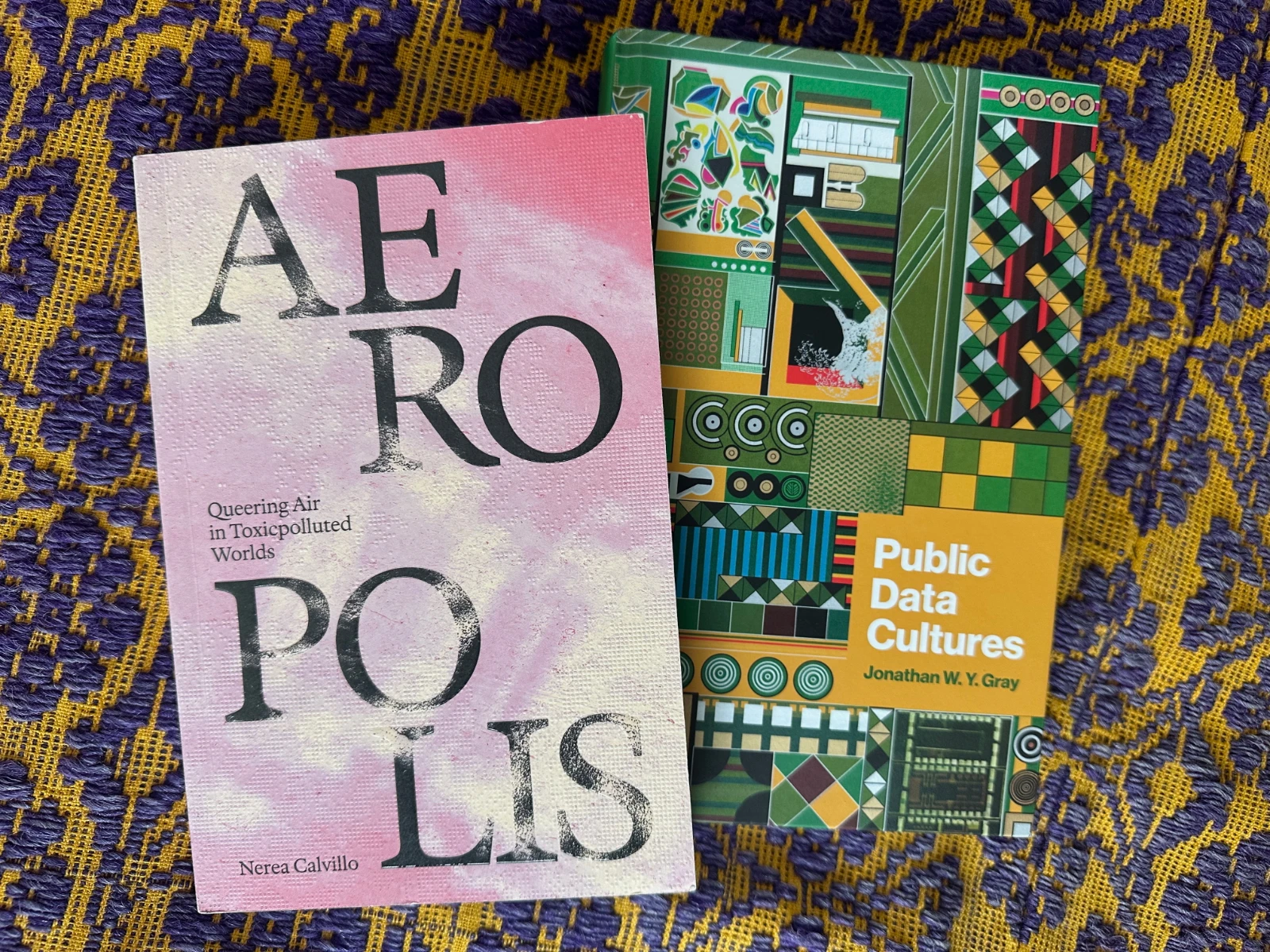
I was thinking of these many memories and connections when Nerea Calvillo invited me for a book launch event at CIM. I’ve appreciated Nerea’s work for many years - from her In the Air and Yellow Dust projects with air pollution data, to her recent book Aeropolis: Queering Air in Toxicpolluted Worlds. Together with Emma Garnett and Angeles Briones, she joined us at King’s for engaged research-led teaching workshops on air pollution data a few years back, where we examined sensing device cultures and related issues through the web, online forums and social media.
Before the book launch, we had a PhD symposium where Nerea, Sanjay Sharma and I read and responded to work in progress from CIM PhD students. Sanjay’s research is always inspiring. We were able to spend time together as part of the ESRC Digital Good Network and I’ve learned a lot from his work on Black Twitter, digital race, data and AI.
Together we looked at chapters exploring Weixin (WeChat) as a super-app, Discord servers in mental health communities and walking as a way to surface movement stories and identity changes amongst migrants in the UK. I really enjoyed learning and chatting about these projects.
These kinds of work-in-progress sharing sessions remind me of Bruno Latour’s L’atelier d’écriture (writing workshops) in Paris, where participants would collectively unpack the composition of a text. I also think of Howard Becker’s work on how we often don’t talk about the process of writing and on creative dimensions of telling about society - which I often share with dissertation students.
I was also thinking of how much researchers can learn from approaches to fiction writing. For example, I’ve found Ursula Le Guin’s writing on writing in Steering the Craft and Matthew Salesses’s Craft in the Real World to be helpful invitations to rethink expectations and conventions of writing and workshopping. I also loved having creative non-fiction sharing and crit sessions with Jessica J. Lee, which were very helpful in the final process of revising and editing Public Data Cultures.
***
Following the PhD workshop we had a book launch. Noortje introduced me and mentioned a recent exchange at CIM where Nerea had highlighted critique as situational, as opposed to a Kantian conception of critique as transcendental.
She said this reminded her of a note she made on “criticality as relational and situational” which can “draw inspiration from many places, communities and practices”, a line from the “critical data practices” chapter in Public Data Cultures.
After the talk, Michael Dieter was respondent to the book. I’ve known Michael from his time teaching at the University of Amsterdam, before he moved to CIM. It was wonderful to have him as respondent, given his wide-ranging expertise in relevant areas - from interface critique to mailing list cultures, postdigital aesthetics to app studies, tactical media to critical technical practices.
He gave a response and a series of interrelated questions based on an attentive and generous reading of the book. Among other things, we spoke about:
- how the book was written - and whether the writing approach reflects modes of subjectification that data presupposes, as well as inviting alternatives
- the politics of data beyond liberation - and tensions between refusal and other forms of collective coordination
- what can be learned from different kinds of failure (e.g. failure to mobilise, to change, to maintain, to avoid capture)
- how and in what circumstances data might become decolonising and pluriversal
- data’s tendencies (what does data want?) - and politics of slowness and acceleration
Then we opened up to other questions and discussion with those joining us - before having drinks to celebrate the launch and catch up.
Thanks to all involved in organising and to everyone who joined. It was great to be back at CIM - and I hope to visit again soon! 🌱🐰