Shapeshifters at Framer Framed, Amsterdam
January 10, 2026
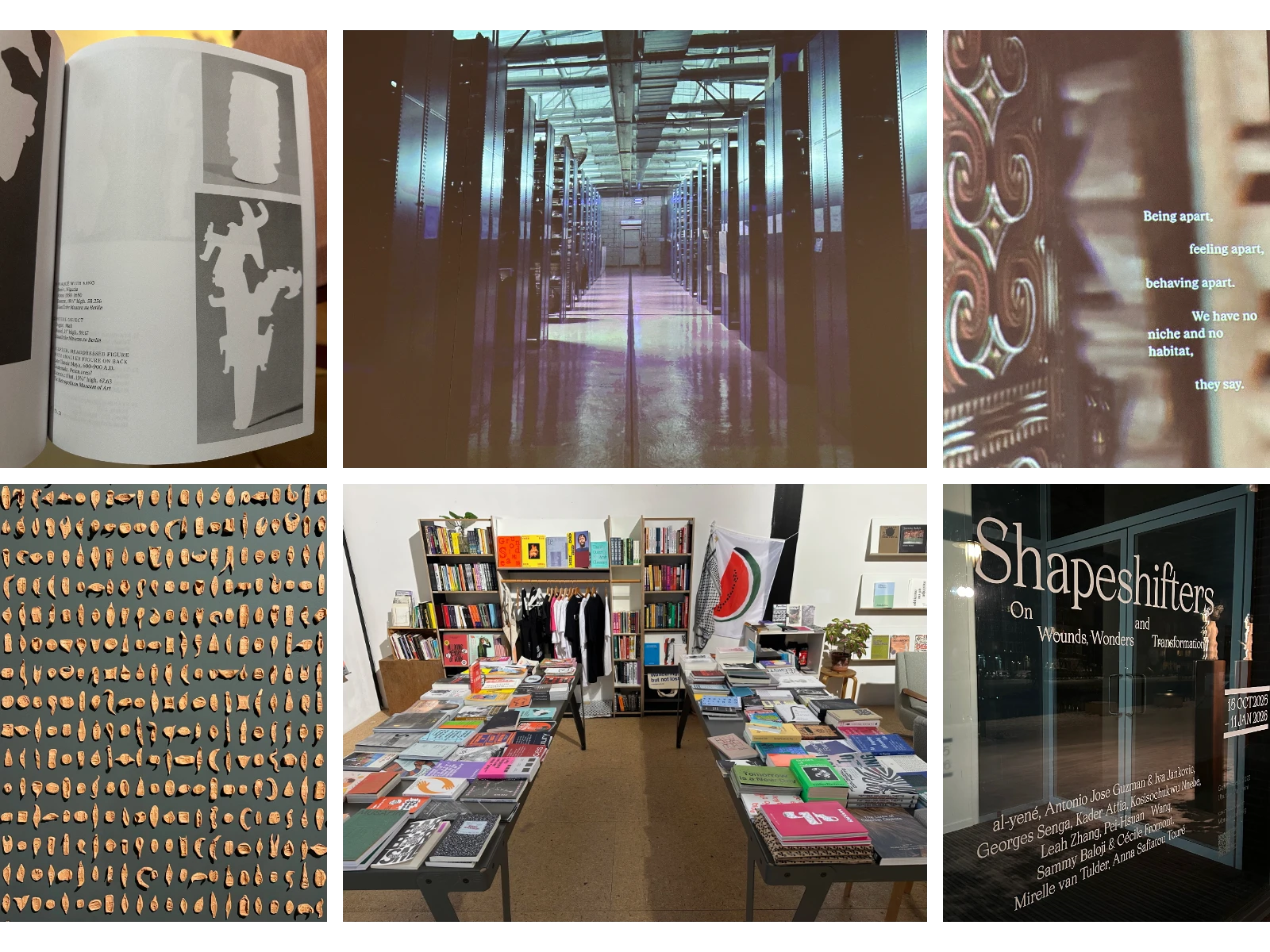
Earlier this week I managed to catch Shapeshifters: On Wounds, Wonders and Transformation at Framer Framed in Amsterdam - just ahead of my book launch.
The exhibition confronts “how colonialism has shaped the ways museums, archives and other institutions of knowledge are perceived and understood”.
Drawing on Octavia E. Butler’s notion of “shapeshifting”, works in the exhibition sought to “unsettle fixed narratives, confront entrenched systems of power and open space for alternative ways of knowing, relating and being in the world”. From the exhibition blurb:
Working across various research-driven practices including film, sonic installation, sculpture, painting and other media, the participating artists trace how stories, identities and objects have been categorised, controlled or erased across different sociopolitical contexts. Just as importantly, their works reclaim and reimagine these subjects, allowing them to shift, resist and take on new forms. Commissioned by Framer Framed, a number of new works by Sammy Baloji, Pei-Hsuan Wang and Georges Senga will be presented for the first time.
At its core, Shapeshifters explores the (im)possibilities for knowledge institutions to evolve and move forward based on care and reciprocity. Questions of ownership, value, loss and repair run through the exhibition. The artworks encourage continuous becoming and challenge what is remembered, who is represented and how institutions might embrace a shape-shifting process: to reorganise space and time for connection, where spirituality and wisdom can grow.
The exhibition’s approach aligned with Rolando Vázquez’s notion of “decolonial aesthesis”. Here is an excerpt from Vázquez’s “Aesthesic Restitution for the Joy of Life” which I found helpful:
Restitution (that we might call recalling, remembering, reclaiming, reconstituting, especially when we ask who restitutes and who recalls?) brings us to the task of transforming the function of art. It questions for us the parameters of exhibition, the vitrine, the hygiene, the conservation, the preservation, the ownership, the non-place of the museum, the artifice of no time. No place, no time seem to be the conditions for the order of exhibition in modern or contemporary museums. Epistemic and aesthesic restitutions/re-constitutions question the desacralization of objects, the violent uprooting, and not in praise of a metaphysical sacrality in the way the West understands it, but in praise of the weave of relations that is still contained in those objects and that we might indeed call ‘sacred’, in the sense that they cannot be reduced to the materiality of ownership and display. Restitution brings about a powerful question against the order of representation and the function of art today.
Thinking of restitution as recalling, as connecting to the heritage of Earth, as recalling Earth, should bring to question the whole edifice of Western aesthetics, its regime of appropriation, the system of representation, its control over temporality, the forceful reduction of telluric, communal, ancestral, relational temporalities, to the now of ownership, display and contemporaneity. It should help us address the colonial wound as something that needs to be healed, but not forgotten. In this movement, we see a movement from the logic of representation that has been dominant in the history of Western aesthetics, to the logic of reception. What would it mean if our museums, if our art schools begin training not in how to become sovereign-self, authors, curators, enunciator, somebody that controls and holds the power of representation, but instead, to become somebody that receives, who is capable of receiving the plurality of Earth and the plurality of worlds, capable of receiving the pluriversality of others and of earth-worlds. Could we move from an age of annunciation to an age of listening? Putting emphasis in listening as a political, communal Earth activity? Can we move from the logic of owning to the logic of owing, from property to gratitude, from indifference to compassion? Beyond the question of the return of the objects, epistemic restitution and aesthesic restitution should bring about the value of relational epistemologies and aesthesis, in order to transform and to overcome the aesthetic and epistemological regimes of the West that are complicit in the destruction of Earth, the destruction of the plurality of worlds and the erasure of our earth-histories.
There were many works in this exhibition which I appreciated. For example - just to mention a few pieces:
- al-yené’s video and textile installation explored the politics of archives and collective memory of the Sakha people.
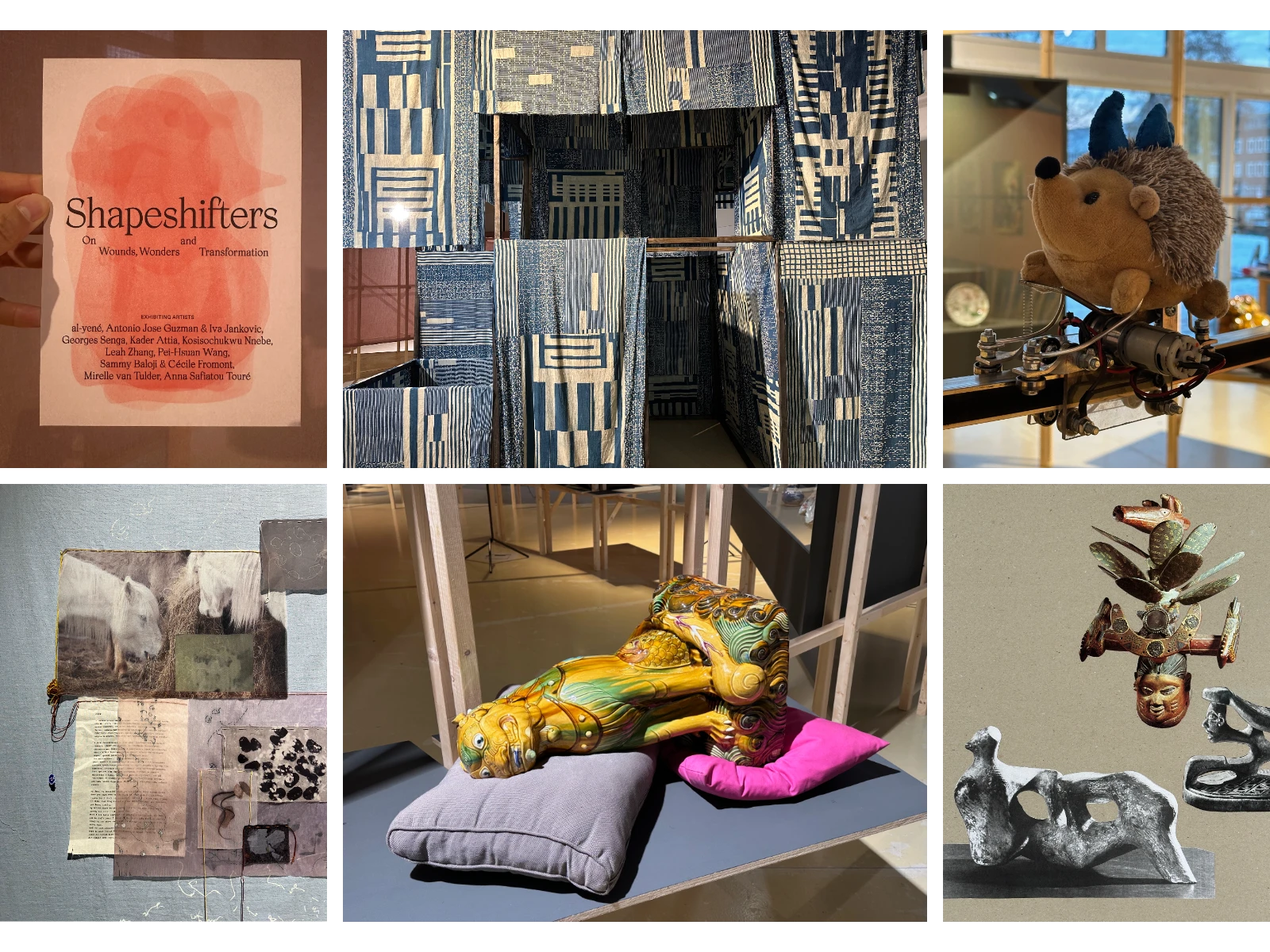
- For his Money Make the World, Georges Senga created a series of speculative paintings of the visually undocumented Dutch colonial presence in the Kingdom of Kongo.
- Pei-Hsuan Wang’s installation combined statues reclining on cushions and a rotating hedgehog-plushie train to reflect on multiple layers of postcolonial movement and experience.
- Mirelle van Tulder’s work explores hidden depots for objects stolen from colonised lands and peoples - including through a “Catalogue of Stolen Objects” showing the negative space of dislocated artefacts.
The full exhibition catalogue can be found in this PDF 🗄️.