notes on regenerative data cultures and "Human Machine: Soil, Sound, Memory" at the Akademie der Künste, Berlin
December 16, 2025
I was recently invited to join the “Human Machine: Soil, Sound, Memory” symposium at Akademie der Künste, Berlin to give a keynote on public data cultures as well as associated research critically engaging with data, digital culture, machine learning and nature-culture relations.
Curated by Clara Herrmann, Helen Turner and Tiara Roxanne, the symposium brought together artists, activists, organisers, researchers, curators and technologists to “explore new ways and practices of thinking, acting and feeling at the intersection of technology with ecology”, taking “soil, sound and memory as points of departure for rediscovering alternative narratives and conceptions of technologies and intelligence in the arts”.
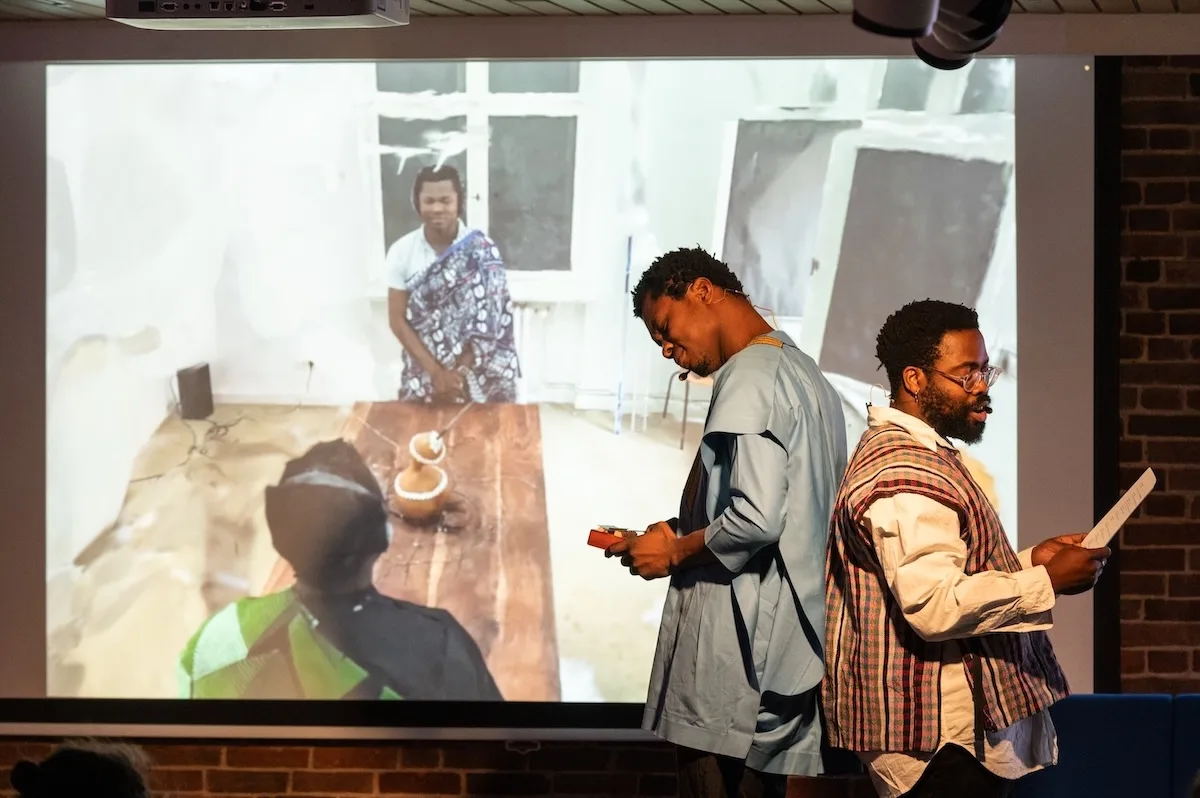
The event opened with hn. lyonga and David Odiase’s “after the wires, our hands remain”. This situated the symposium’s themes within broader contexts of empire, extraction, violence, marginalisation and grief – as well as exploring other kinds of speculative and ancestral technologies.
As hn. lyonga commented in his exhibition text, “these thoughts are not simply theoretical or conceptual […] they are actual ways of living and respiring in certain parts of the world”. Speaking together later on, I learned about BARAZANI.berlin, a collective exploring decolonial practices in art and culture.
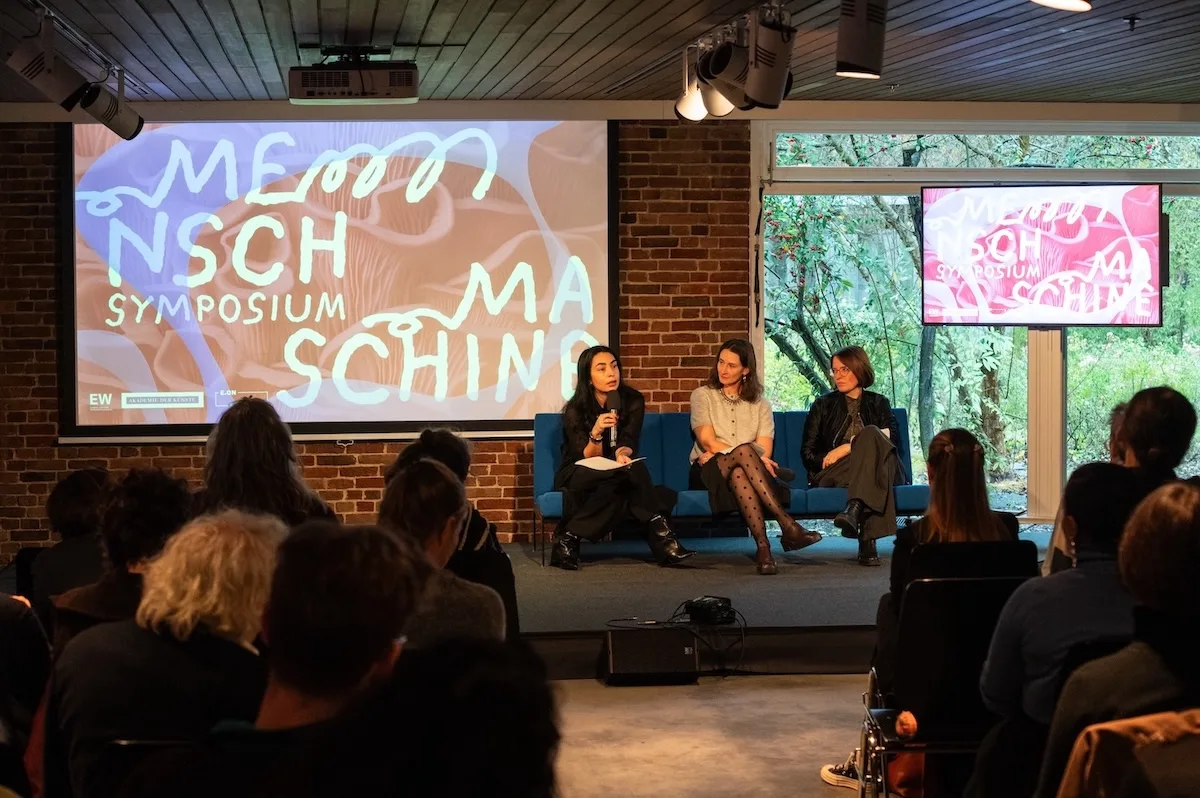
Following a welcome from Anh-Linh Ngo, Clara, Helen and Tiara introduced the symposium as a critical and poetic space, exploring ways of returning to earth as a speculative space between plant, machine, bacterial, ancient and cosmological.
After this I gave a keynote on “regenerative data cultures”. Drawing on Grace Lee Boggs on “rebuilding, redefining, and respiriting”, it considered arrangements of data and computation which might nourish and replenish social and ecological relations.
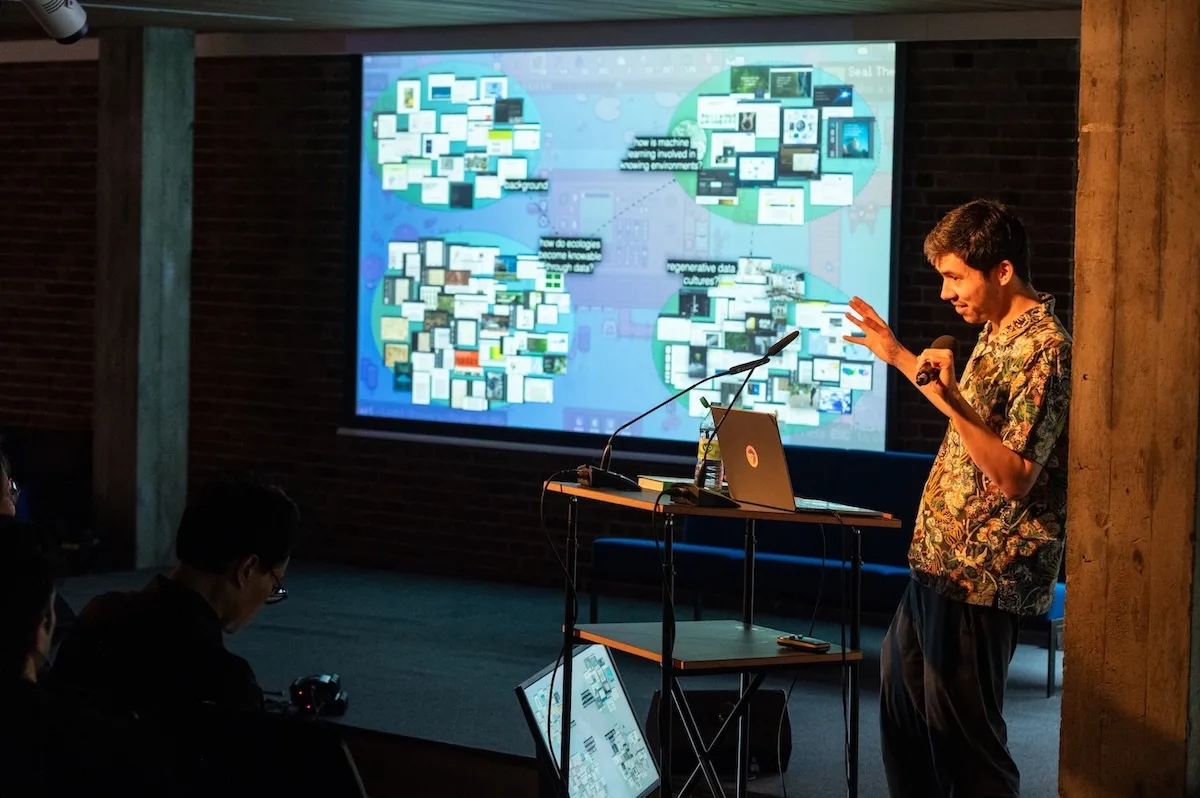
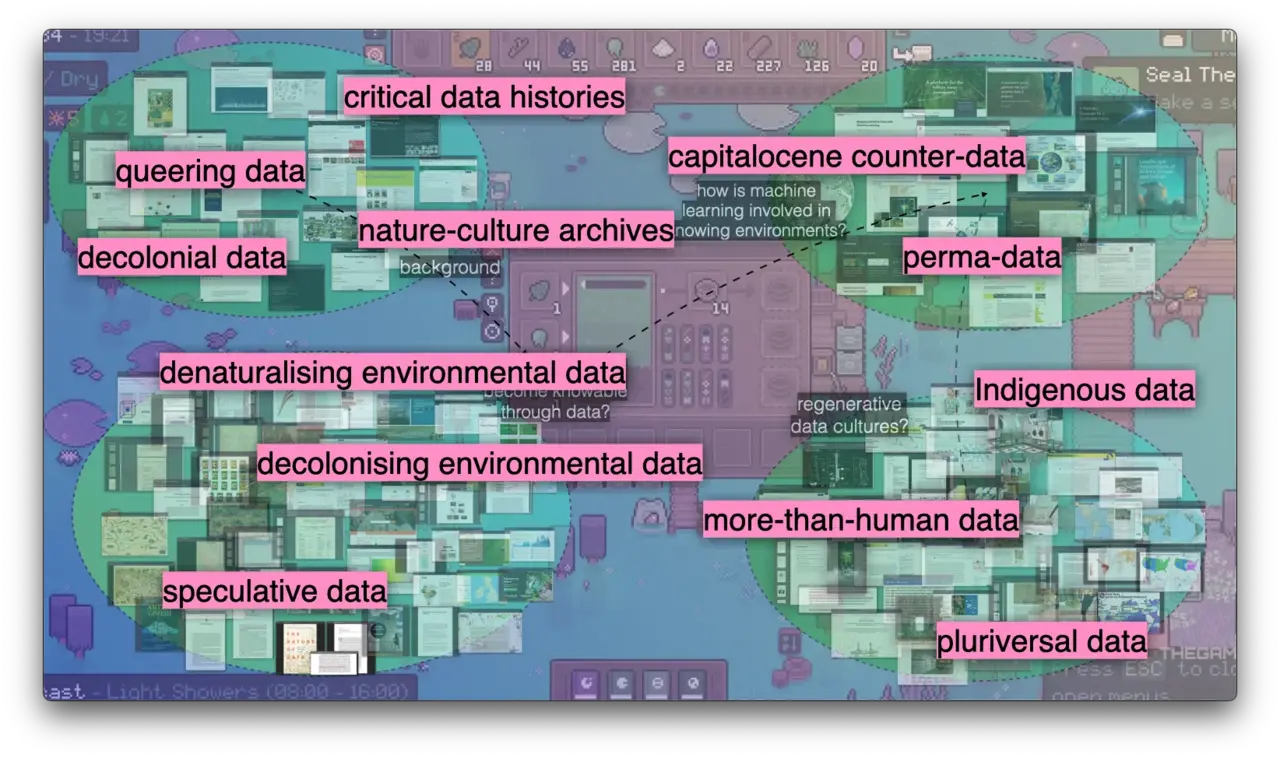
Drawing on intersectional feminist, decolonial and Indigenous thought and practice – the keynote looked at the prospects of dismantling systems of extraction and subjugation and remaking relations, activating worlds of many worlds. It explored how data might be reconfigured to play a role in composing relations which are regenerative, redistributive, pluriversal.
The intervention took the form of a walkthrough of digital compost piles, including: public data cultures and critical data practices; mediating socio-ecological relations through data, machine learning and the internet; and recomposing environmental media - including through soundscaping and video.
To feed exchanges at the symposium, the talk drew together some threads on regenerative data cultures as those which:
- do not take data for granted
- care for how data is created
- care for material consequences
- draw on more of the available range when it comes to data as social, cultural and political medium
- display how ecologies are displayed
- reconsider entangled histories of movement, bordering and belonging
- unsettle colonial biodiversity archives
- support redistribution of lands and resources
- aim not just to map flora and fauna, but to dismantle and unmake what is called the capitalocene
- reimagine and recompose relations
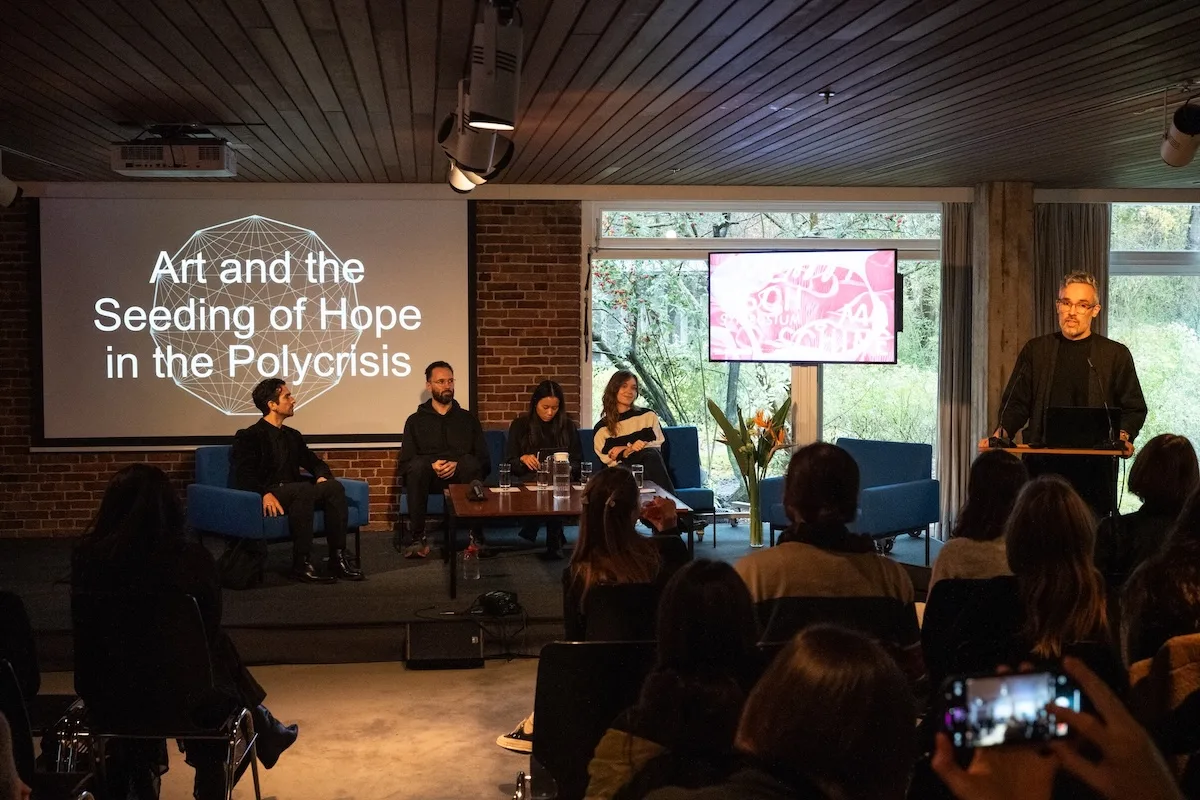
After lunch there was a panel on “Art and the Seeding of Hope in the Polycrisis” with Human Machine Fellows Maithu Bùi, Assem Hendawi, Viktor Brim & Emerson Culurgioni and Sonya Isupova, moderated by Wesley Goatley.
- Wesley opened on compost computers, art amidst polycrises, the proliferation of data centres and poetic spaces for refusal.
- Sonya spoke about how colonial infrastructures reshape landscapes and her work mapping ecological dynamics in war-ravaged Ukraine.
- Assem spoke about how his work engages with AI in contexts of militarisation and arms races - and reimagining it as a force for decolonial transformation.
- Viktor and Emerson spoke about their video work on extraction and data centres in Southeast Asia.
- Maithu spoke about her work on how life forms are enlisted as agents of bomb detection and disposal of war-related pollutants - drawing on personal and family experiences in Vietnam.
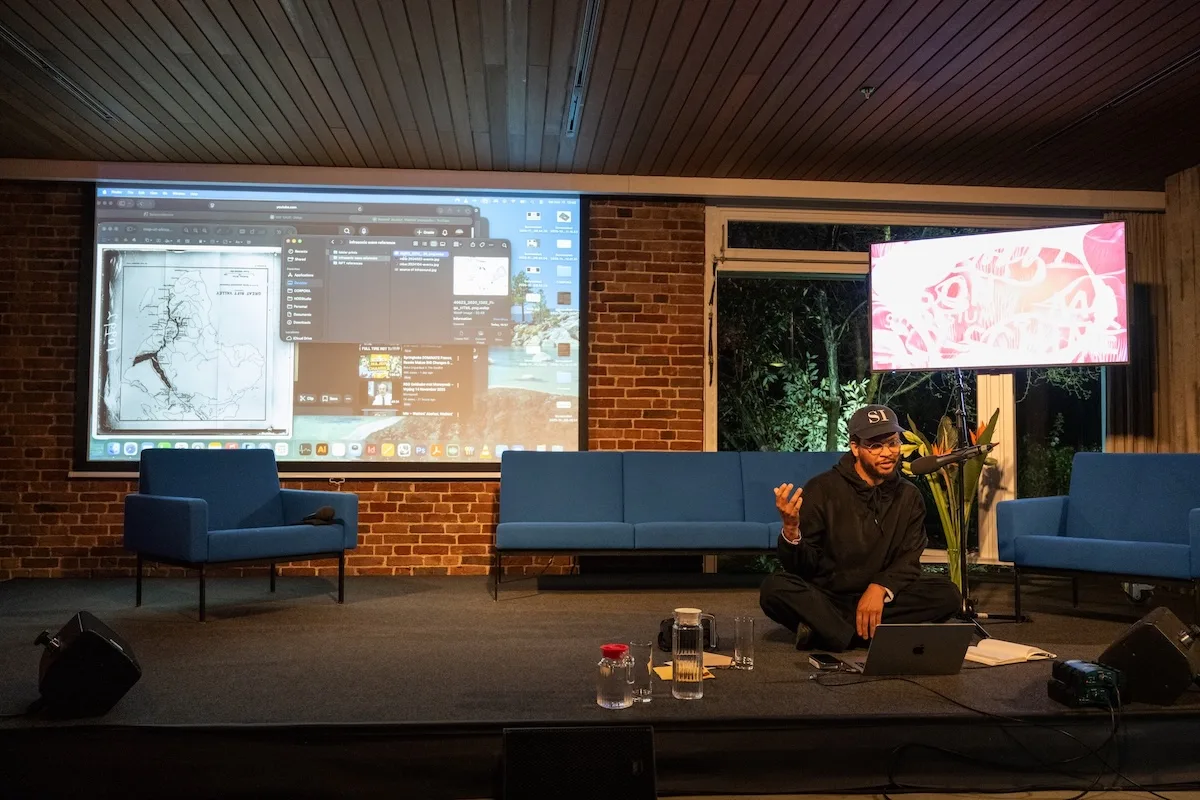
After a break, there was a lecture performance by Nolan Oswald Dennis exploring the more-than-scientific significance of scientific earth observation data. This drew on his engagements with geological formations, slow planetary transformations and rocks-in-motion in contexts of anti-colonial protests, political mobilisations and meteorites.
The performance explored embodied rituals for unsettling the taken-for-grantedness of everyday experience and collectively tuning into “the constant noise of the world that we describe as silence” - including of the movements of continental plates in Africa being torn apart and the slow unfolding of catastrophe (in contrast to punctuated events).
I was honoured that Nolan drew connections between our interventions - and I felt many resonances between how we approach the capacities of data as cultural material and in relation to the collective articulation of alternative planetarities, which we continued to discuss afterwards.
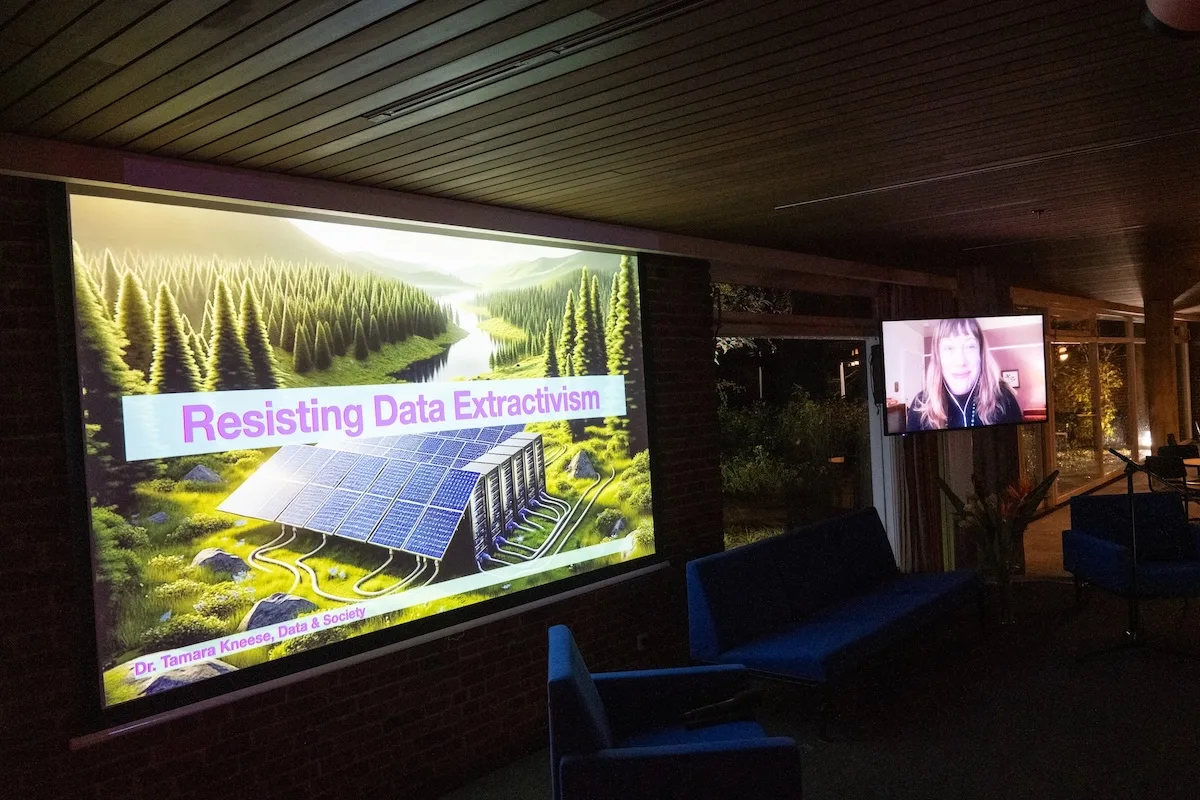
Tamara Kneese gave a keynote on “Resisting Data Extractivism” drawing on her Death Glitch book and work with Data & Society.
This examined the social and ecological costs of AI and data centres, as well as viewing resistance and tech worker organising in relation to longer contexts of environmental activism, often led by disproportionately affected marginalised communities.
She shared organising guides such as The People Say No: Resisting Data Centers in the South and The Cost of Data Centers to Our Communities — And How to Fight Back.
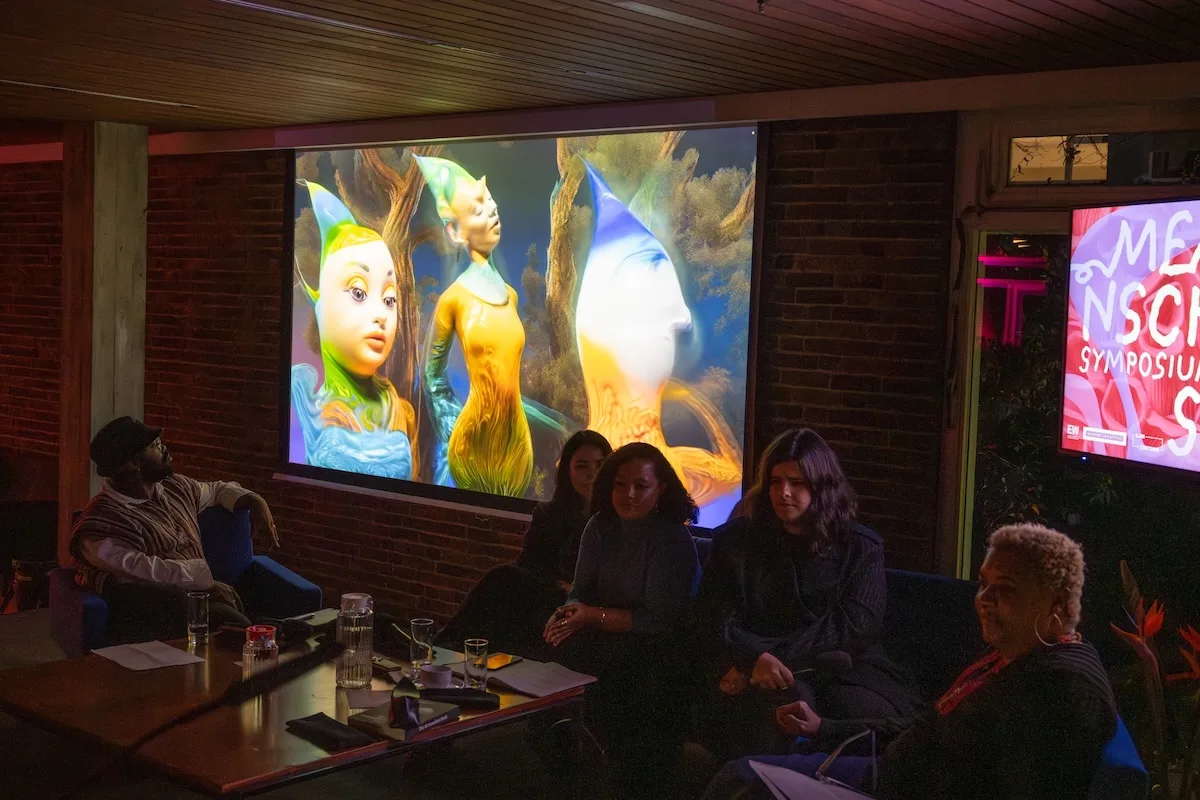
Helen Starr chaired a panel on “Uwani: Recursion, Relation, and the Three Movements of Life” with hn. lyonga, Safiya Seedmother, Kira Xonorika, Diva and Thuy-Han Nguyen Chi.
- Safiya Seedmother and hn. lyonga discussed their Ancestral Memory Lab, a living archive and space to centre Indigenous African technologies.
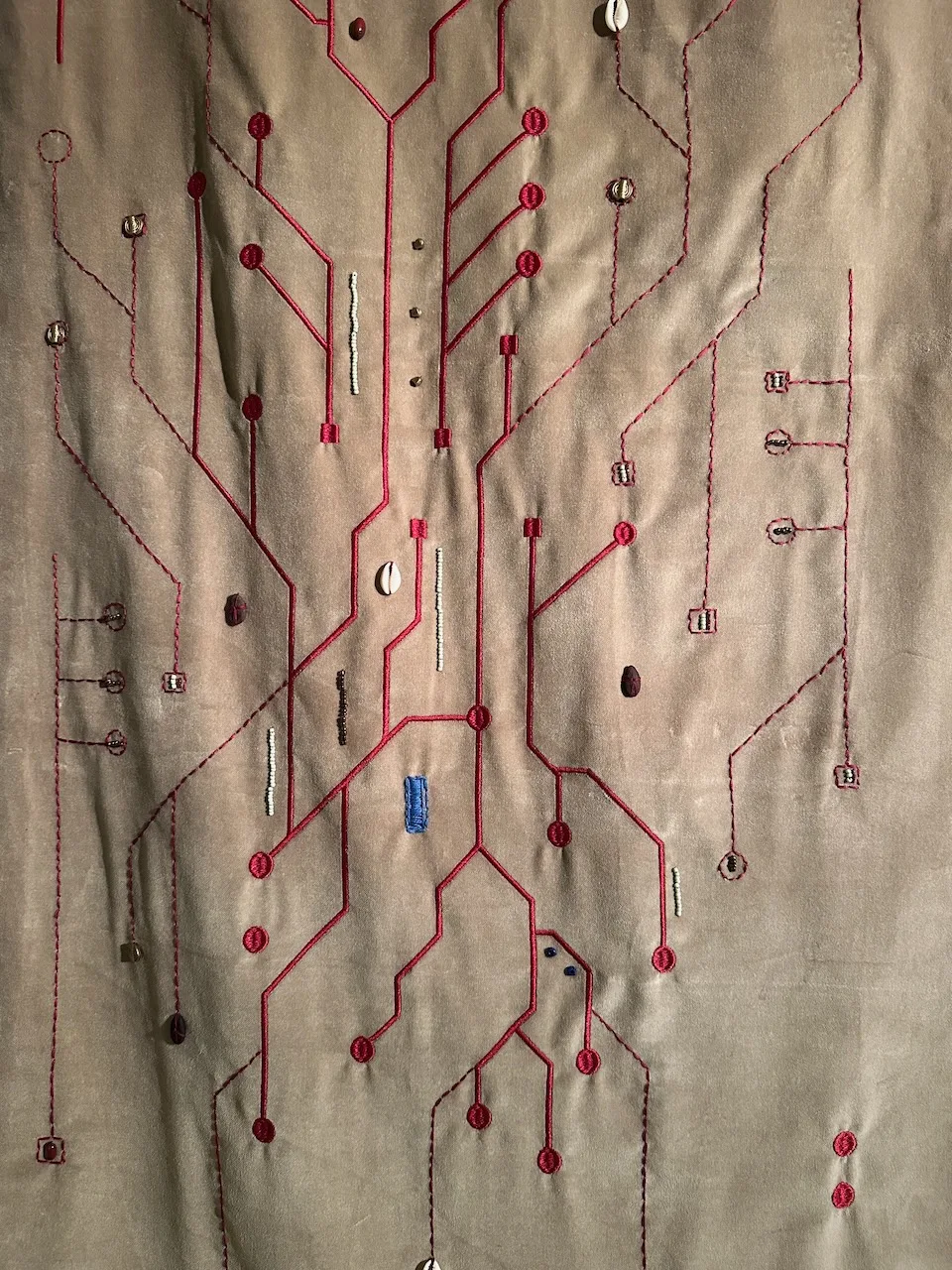
- Safiya talked about two different types of memory devices from the Congo: mnemonic memory devices to record ancestral memory and iPad tablets with minerals from the Congo. She spoke of weaving and beading as knowledge practices, and her “Lineage Prayer” interweaving her Tamil, Indonesian, and Indigenous South African ancestors, connecting with her work as a therapist.
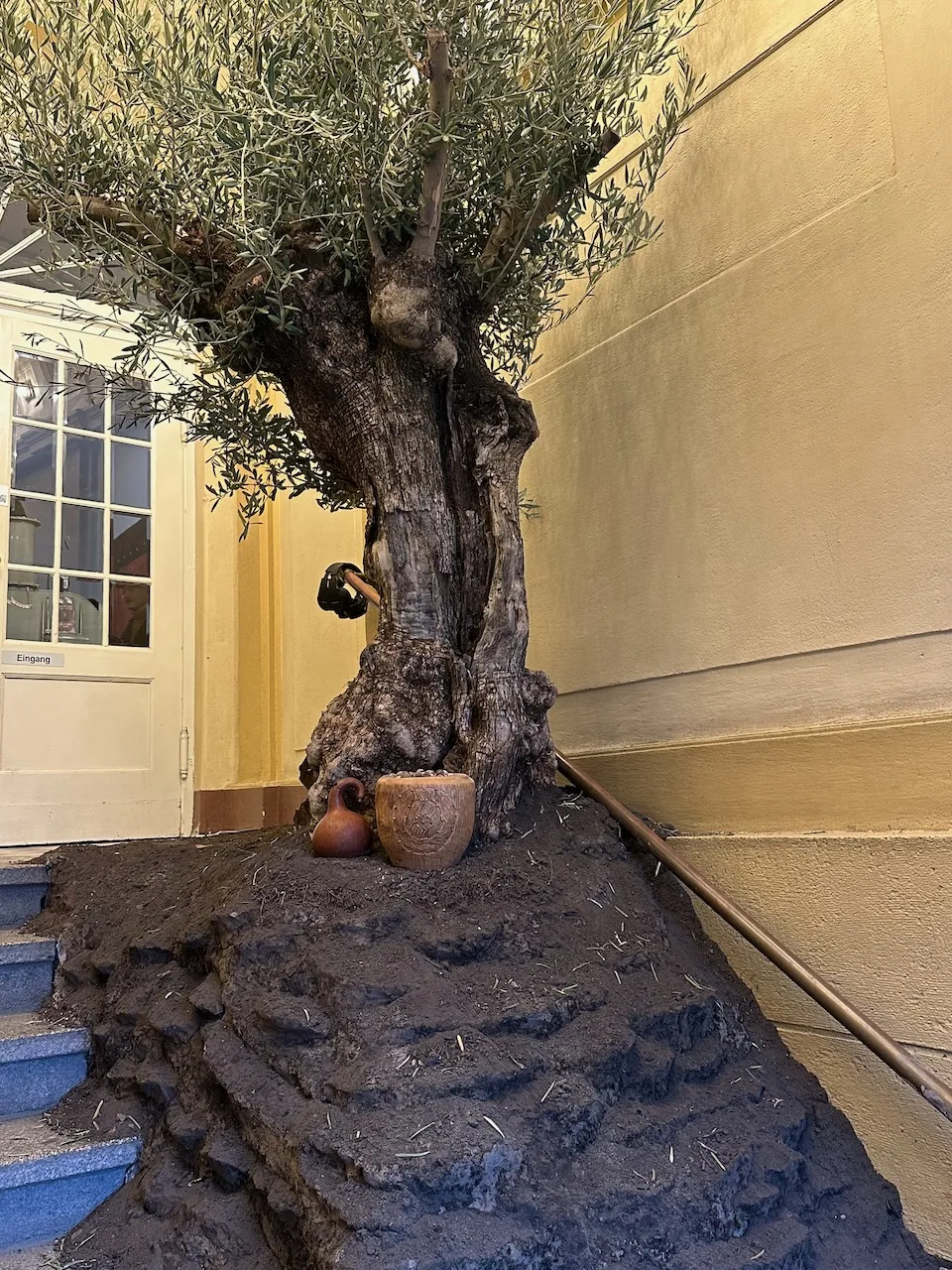
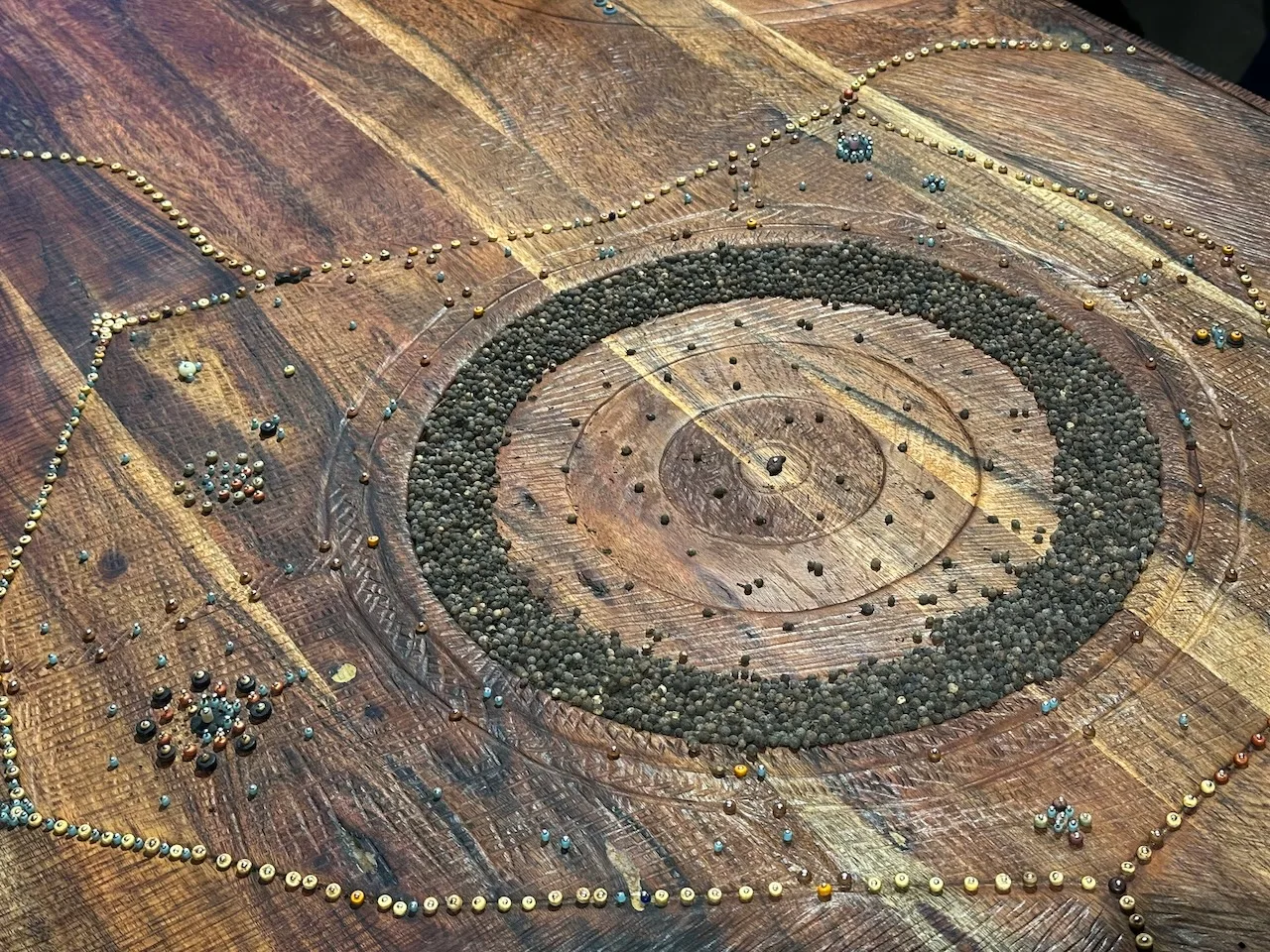
- hn. lyonga spoke about his work “At the Foot of the Tree” which involved placing an olive tree in the exhibition with an audio essay, lullabies and pots of spices. Marking humanitarian and ecological crises in Cameroon and olive trees in Gaza, the piece honours the dead as living spirits. hn. lyonga spoke of trees as data and as cultural technologies.
- Thuy-Han Nguyen-Chi spoke about her work on feminist imaginative technologies and embodied historical inventories to understand yourself in relation to others. She spoke about her video work with her father on 1960s Vietnam.
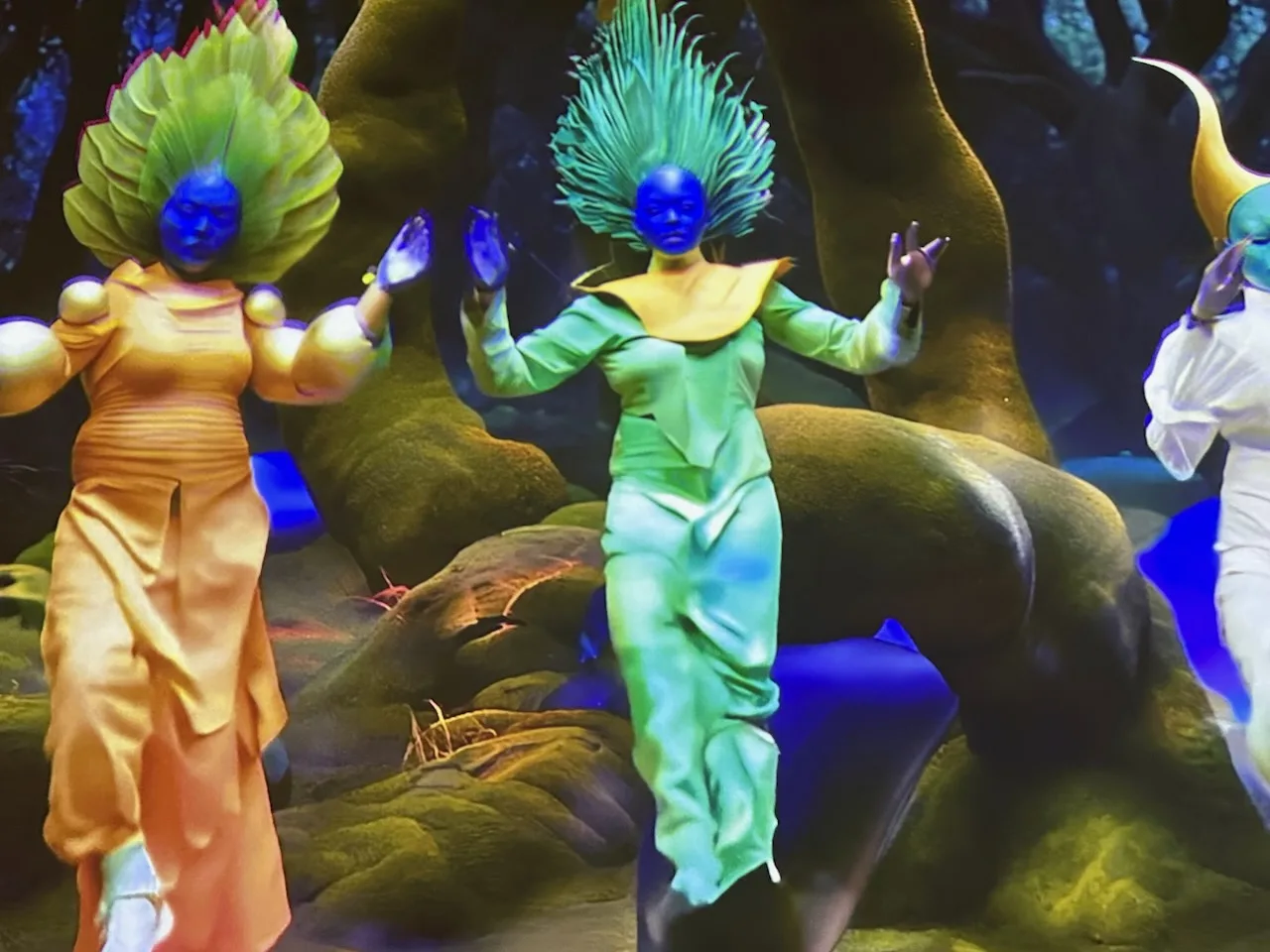
- Kira Xonorika spoke about her “Deep Time Dance” in the context of legacies of colonisation, Indigenous communities in North and South America and ancestral intuitions and inter-generational information.
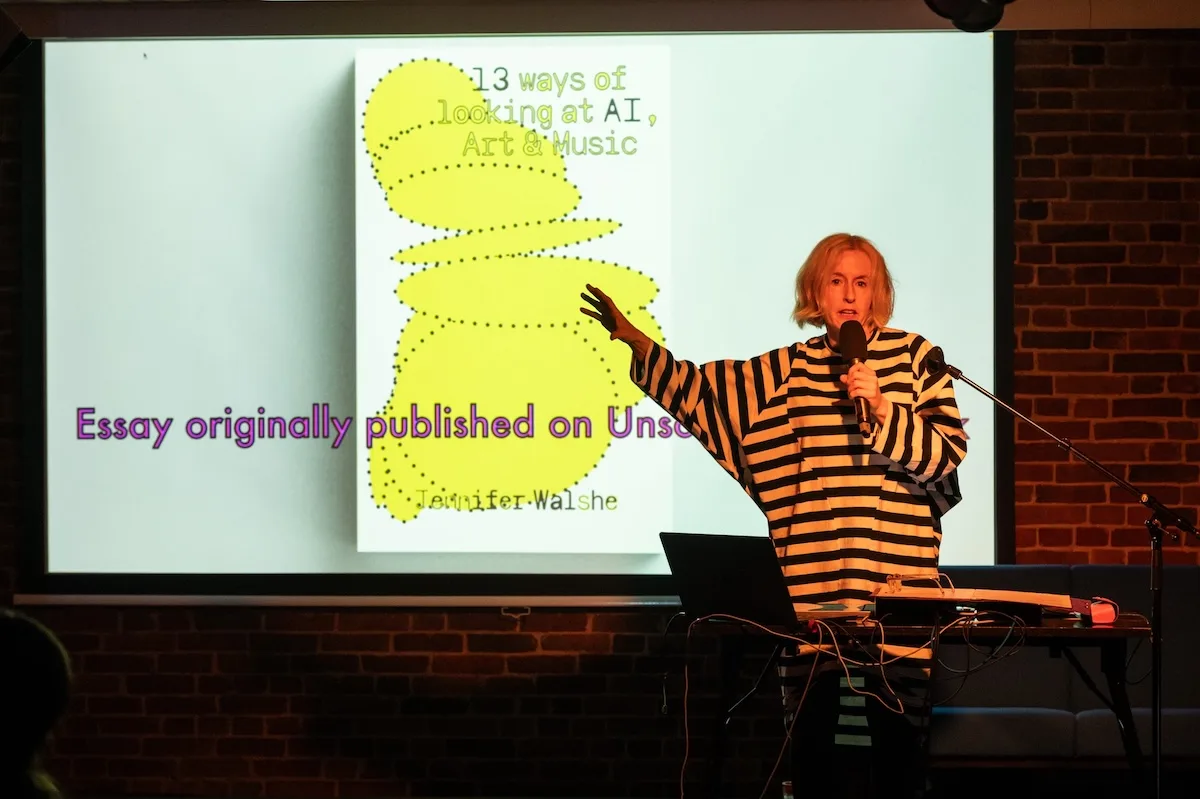
For the last talk, Jennifer Walshe spoke about her “13 Ways of Looking at AI, Art & Music” - before doing a performance of “Art & Music & A Late Anthology of Early Music, Vol. 1: Ancient to Renaissance”.
The event closed with a concert from Egyptian synth-pop artist Juno.
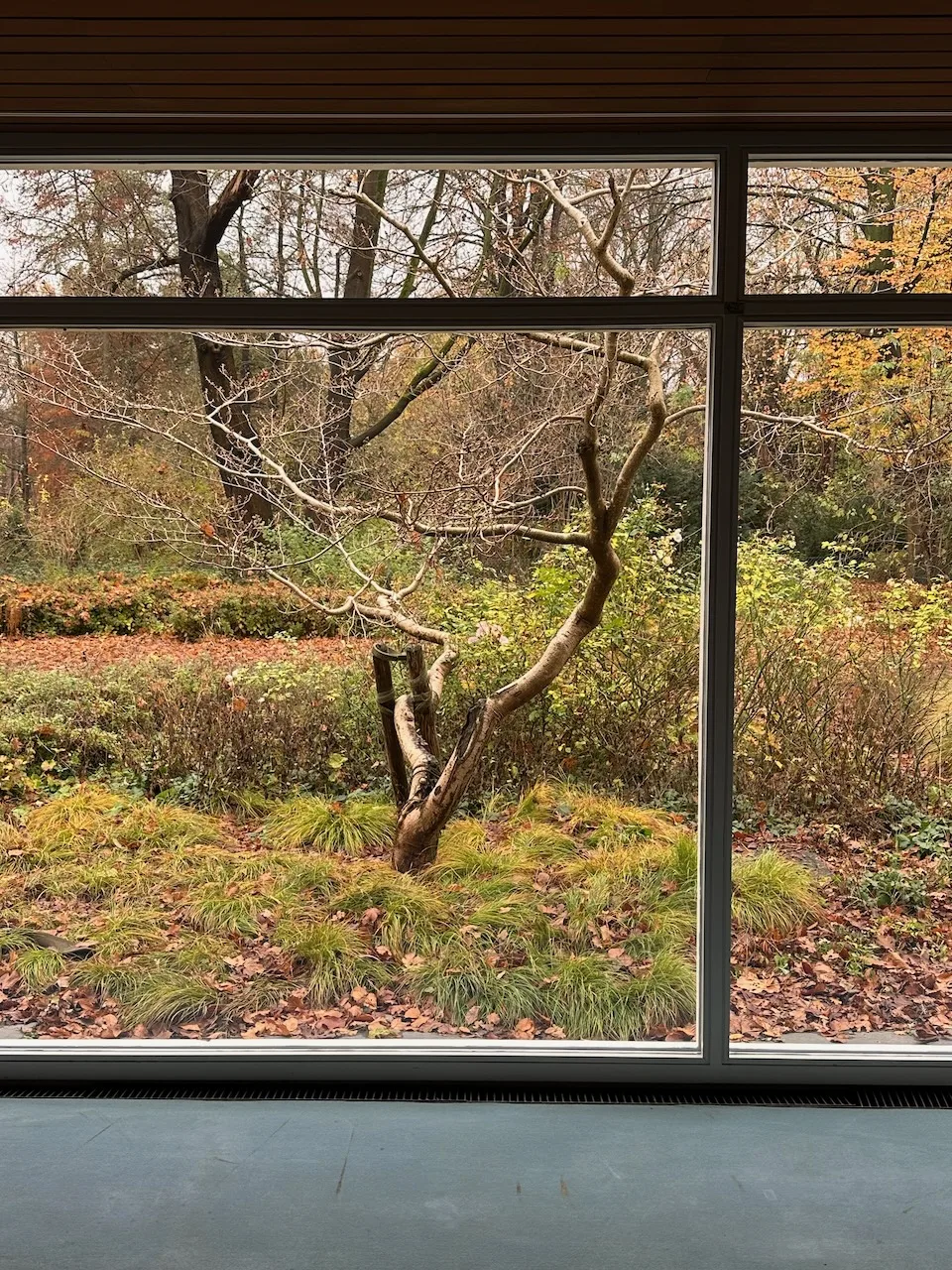
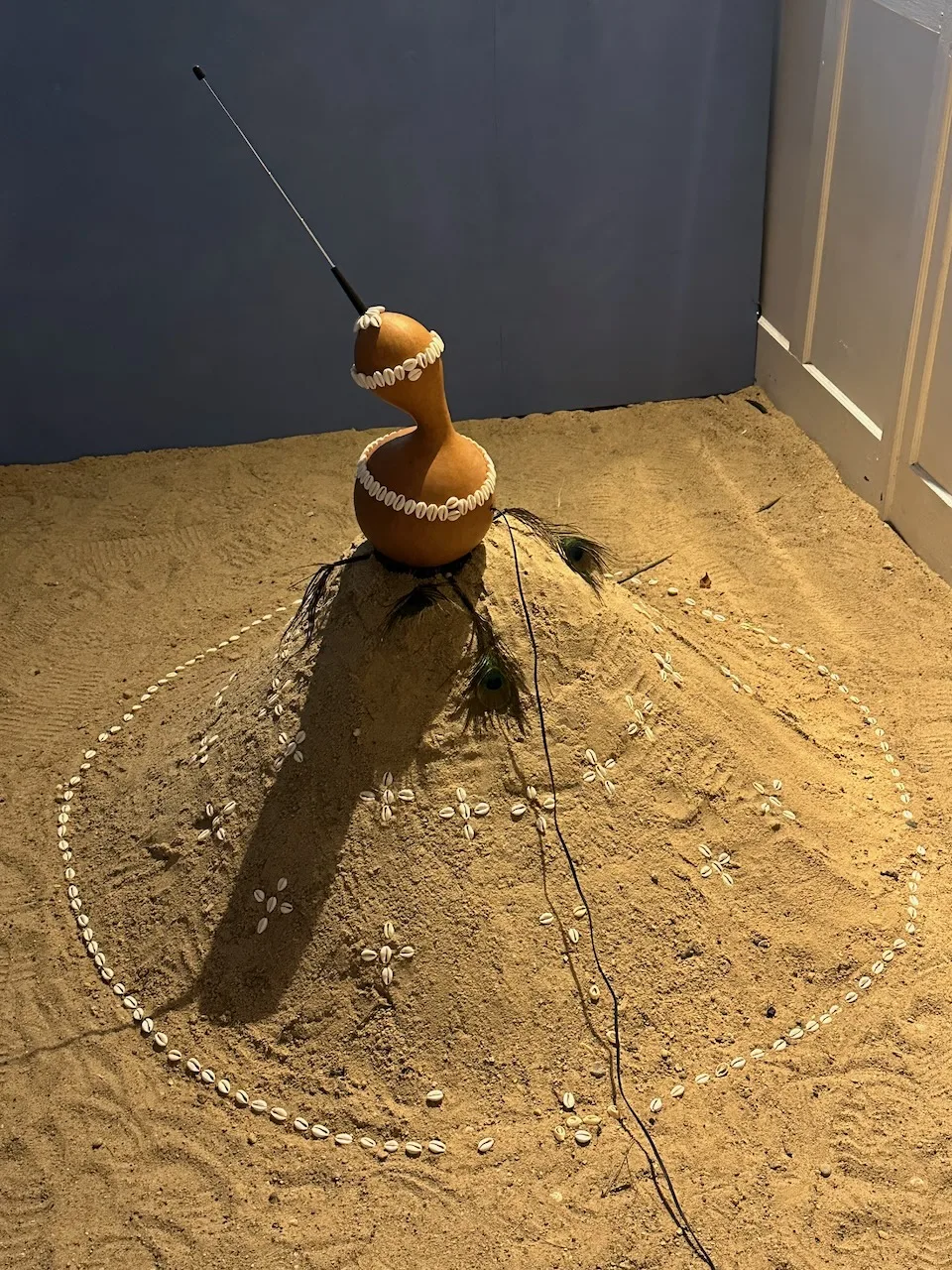
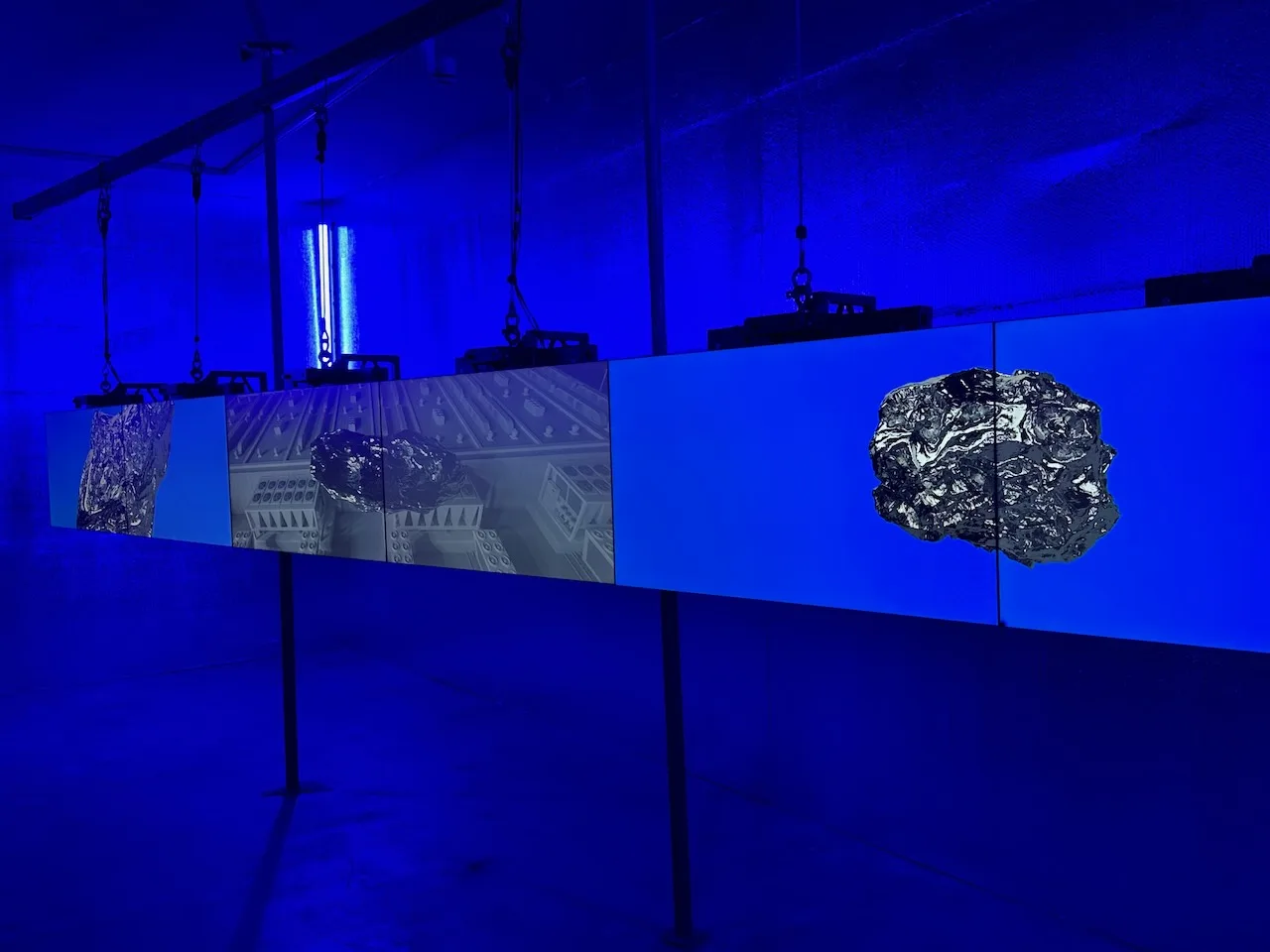
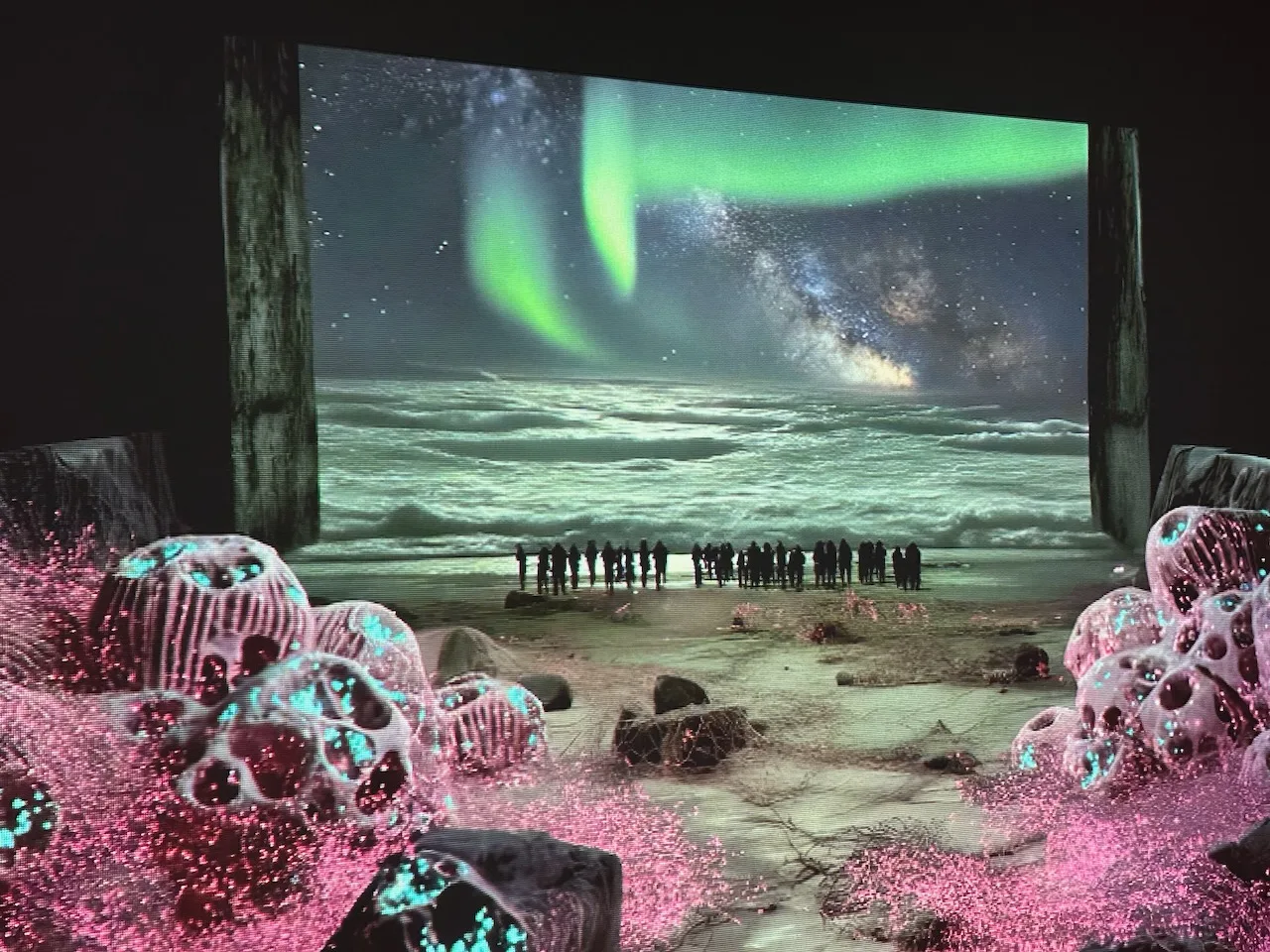
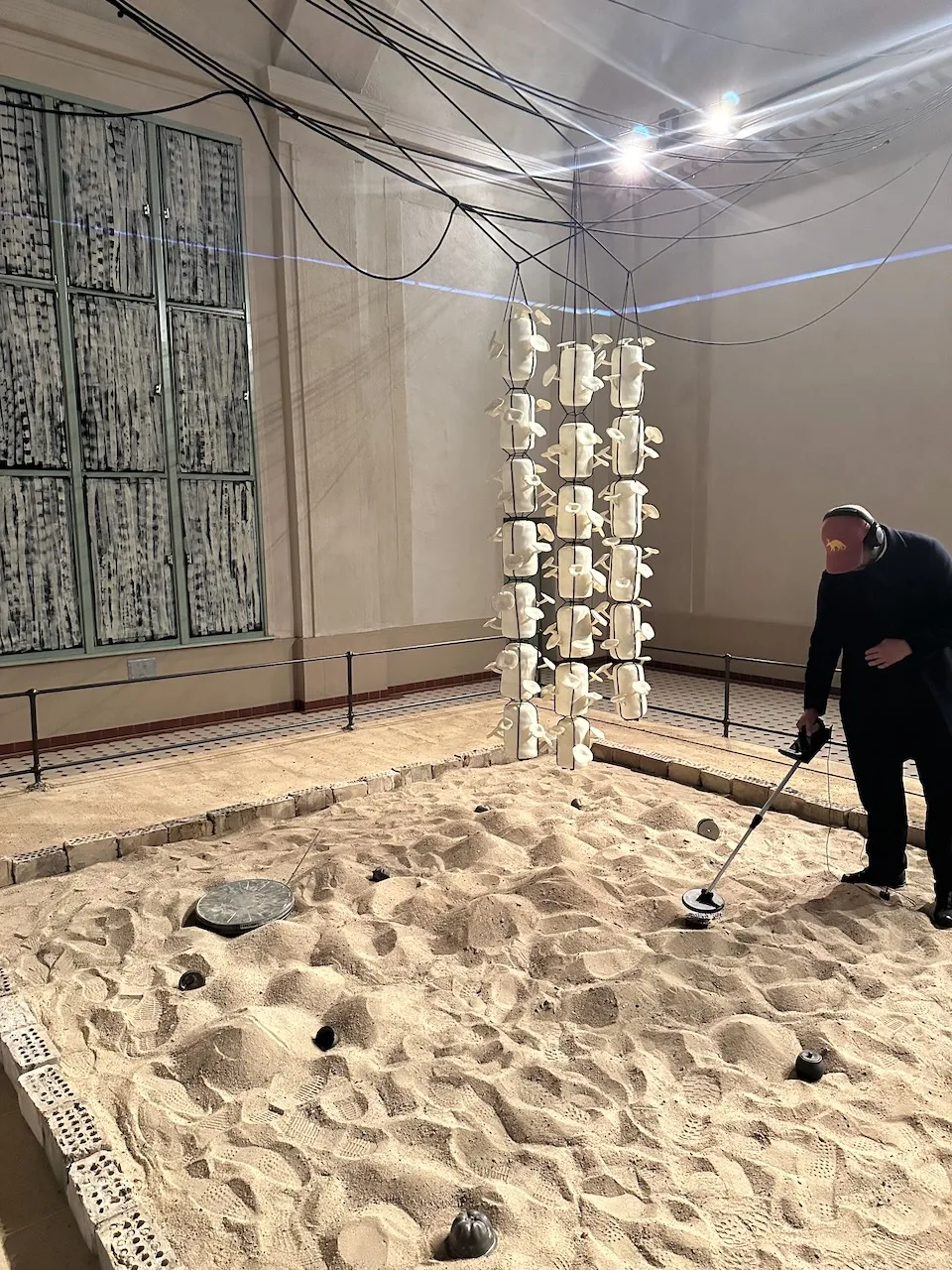
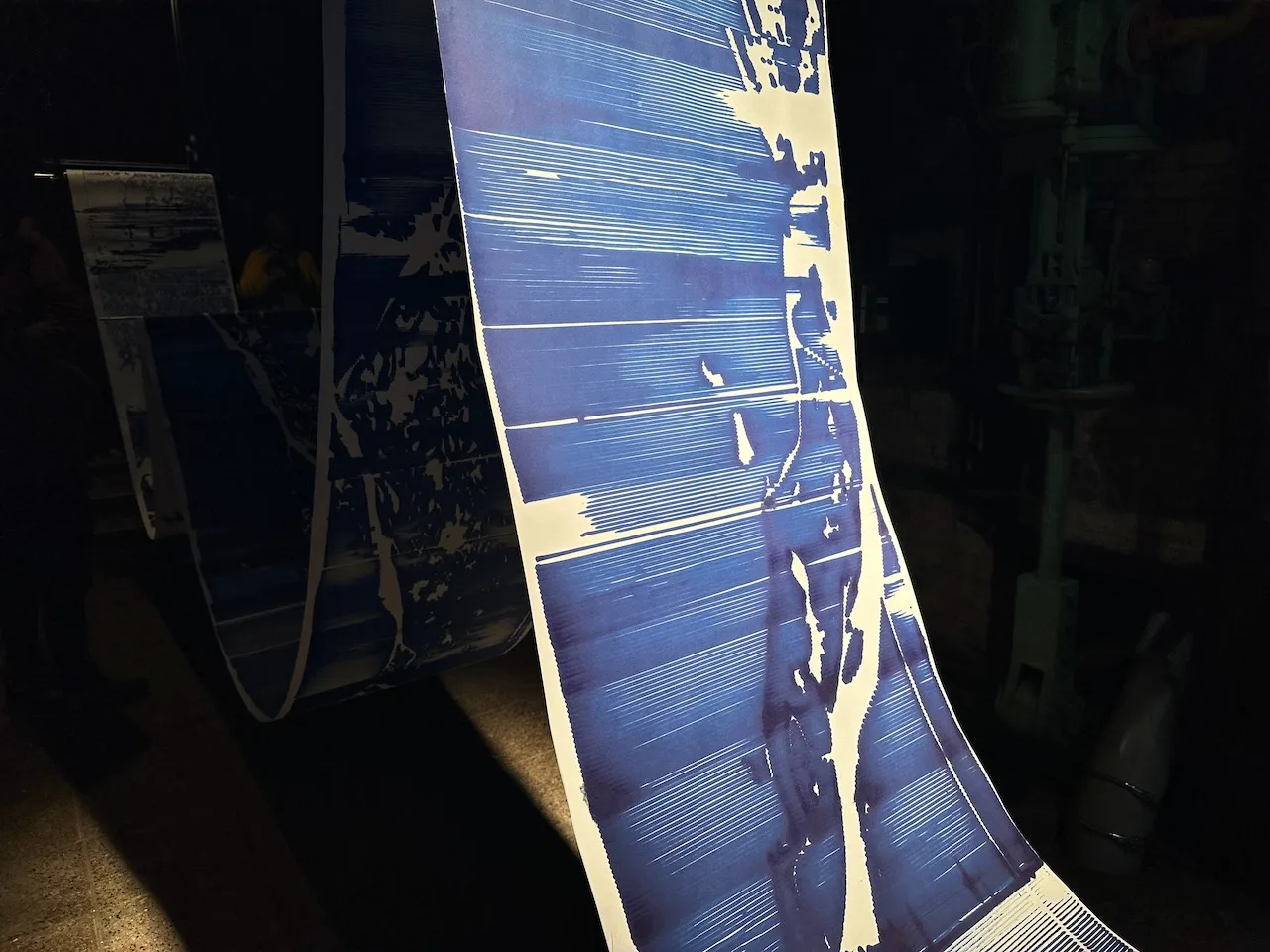
The next day we took a group bus trip to see the works at the Human Machine: Return to Earth exhibition. 🚌 A few pictures from this are copied below.
It was such a generous series of exchanges which surfaced many overlapping commitments and curiosities. I really appreciated being invited to join this event and look forward to keeping in touch with everyone who was part of it.
The Mensch Maschine/Human Machine Soil, Sound Memory symposium took place at Akademie der Künste on 15th November 2025. The full symposium programme can be found here. The Human Machine: Return to Earth exhibition runs from 20th September 2025 to 22nd February 2026. Notes on the exhibition can be found here. Photos above are by Marcus Lieberenz, those below were taken with my phone.