new partnership with KAIST (Korea Advanced Institute of Science & Technology) on digital research and technological cultures
June 30, 2026
We have set up a new partnership with the Korea Advanced Institute of Science & Technology (KAIST) to develop research collaborations and exchanges, with an initial focus on digital methods, digital culture and science and technology in society. 🎊✨
This grew out of the K-Platforms project with Liliana Bounegru (King’s College London), Chamee Yang (Seoul National University) and June Jeon (KAIST).
More in this announcement and copied below.
King’s College London and Korea Advanced Institute of Science & Technology form new partnership on digital research and technological cultures
King’s College London and Korea Advanced Institute of Science & Technology (KAIST) have signed a Memorandum of Understanding (MoU) to develop new international research collaborations with an initial focus on digital research methods, digital culture and science and technology in society.
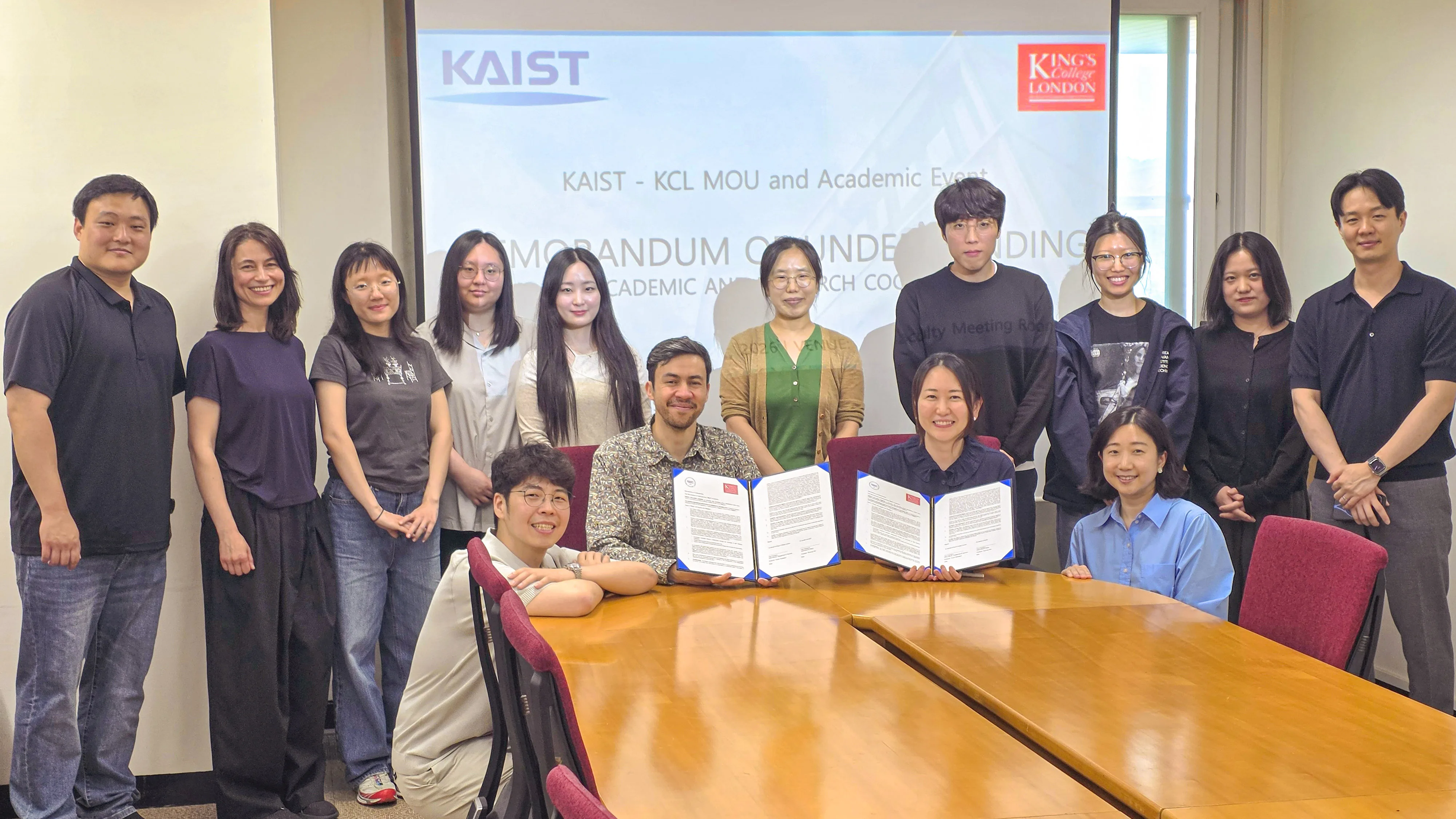
The MoU grew out of exchanges between the Department of Digital Humanities and Centre for Digital Culture at King’s College London and the School of Digital Humanities and Computational Social Sciences at KAIST.
Researchers at King’s and KAIST have been collaborating on an international research project on Korean platforms, to develop tools and methods for studying South Korean digital media landscapes and how they are being shaped by the development of apps, platforms and AI.
The collaboration with KAIST and Seoul National University through the K-Platforms project creates exciting opportunities for researchers and students across our institutions to advance, enrich and diversify global understandings of digital platforms, infrastructures, economies and cultural production. We hope the MoU with KAIST will help strengthen connections between our academic communities and support future collaborations across departments and faculties. - Liliana Bounegru, Senior Lecturer in Digital Media, Culture and Society in Department of Digital Humanities
Both KAIST and King’s are dedicated to combining tools, methods and critical theoretical lenses to deepen our understanding of digital cultures and societies. This partnership will support us in learning from each other and in developing socially impactful research together. - June Jeon, Assistant Professor of Sociology in the School of Digital Humanities and Computational Social Sciences, KAIST
The partnership between King’s and Korea Advanced Institute of Science & Technology reflects our shared belief that collaboration drives progress, uniting diverse expertise, disciplines and perspectives to expand knowledge and shape a better future for communities locally and globally. This alliance will foster new international research collaborations in digital methods, culture and the societal dimensions of technology, and create transformative opportunities for students through shared teaching, curriculum development, and exchanges between both institutions. - Professor ‘Funmi Olonisakin, Vice President (International, Engagement & Service)
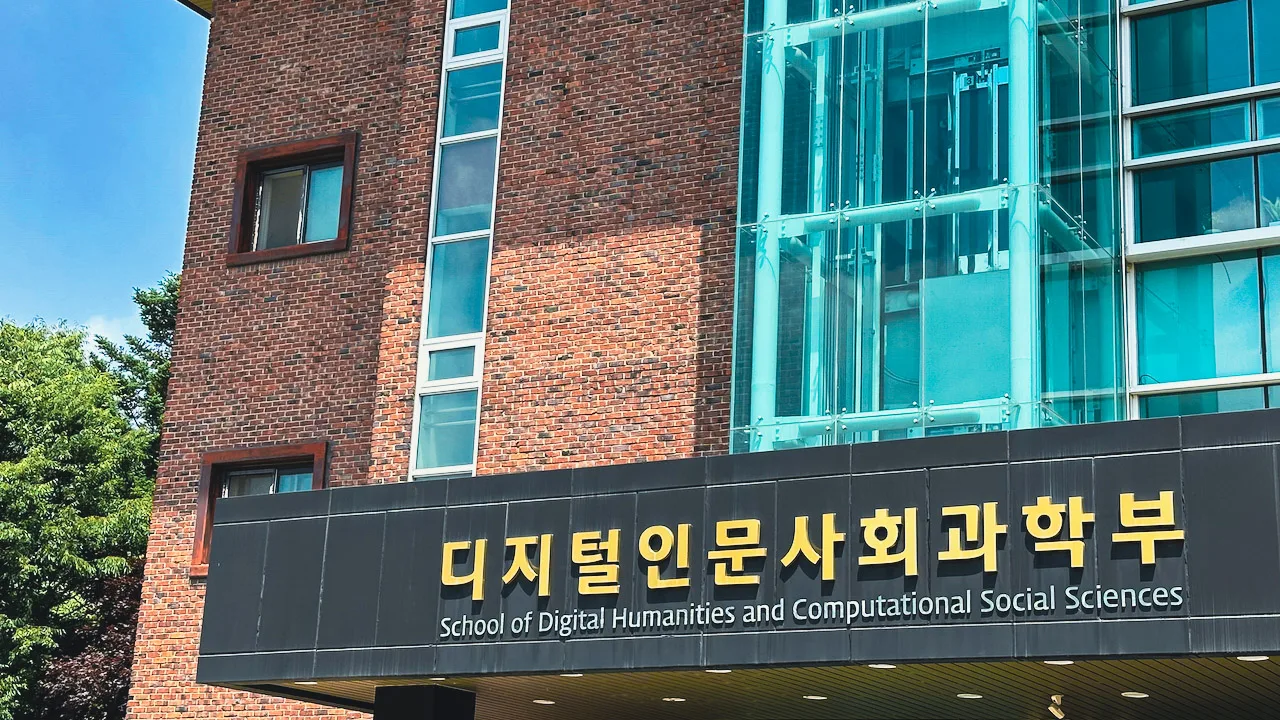
Lanu Kim, associate professor of Digital Humanities and Computational Social Sciences; Joint professor of School of Computing and Graduate School of Data Science commented on the partnership:
We are excited to establish this international partnership between KAIST and King’s College London. We hope it fosters active research collaboration across disciplines and borders, bringing together graduate students and faculty across generations to build lasting global networks. Together, we look forward to deepening our understanding of our globalised, digital world through diverse perspectives and data.
Taegyoon Kim, Assistant Professor in the School of Digital Humanities and Computational Social Sciences and Joint Professor in the Graduate School of Data Science, said:
We are excited about the opportunities this partnership creates for faculty and students to collaborate, exchange ideas, and learn from one another. We hope it fosters meaningful research across disciplines and helps build lasting connections among scholars across generations. Through these interactions, we look forward to gaining new perspectives on the social and technological changes shaping our world!
Seohyon Jung, assistant professor of English in the School of Digital Humanities and Computational Social Sciences, jointly appointed in the School of Computing. Co-director of the Center for DHCSS, noted:
As a literary scholar working at the intersection of literature and technology, I am truly excited about this collaboration. I look forward to learning a great deal and fostering a healthy research culture together.
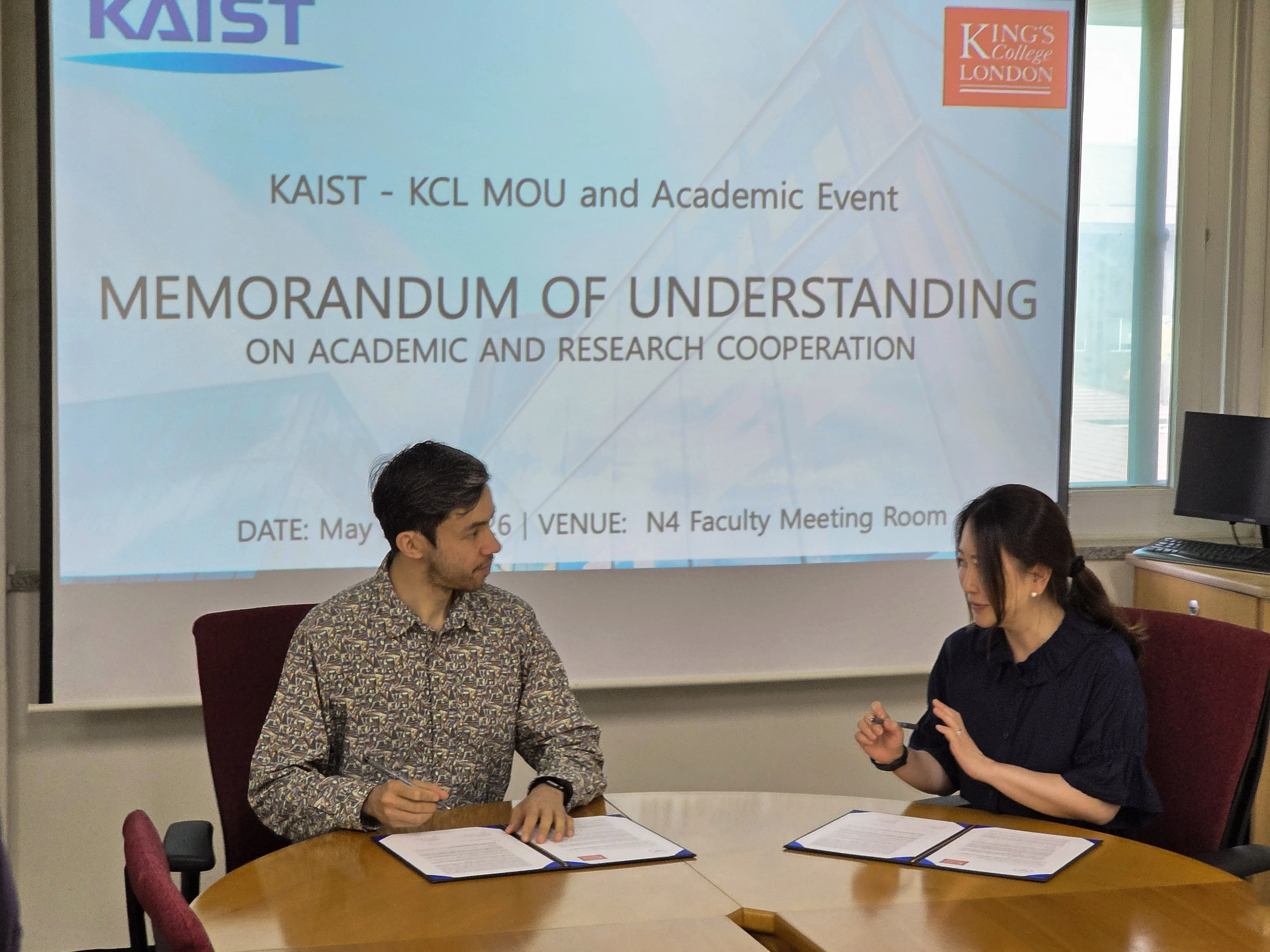
We much look forward to growing connections with KAIST, including around digital research methods and creative and participatory approaches for studying digital cultures and societies. - Jonathan Gray, Reader in Critical Infrastructure Studies and Co-director of Centre for Digital Culture at King’s College London
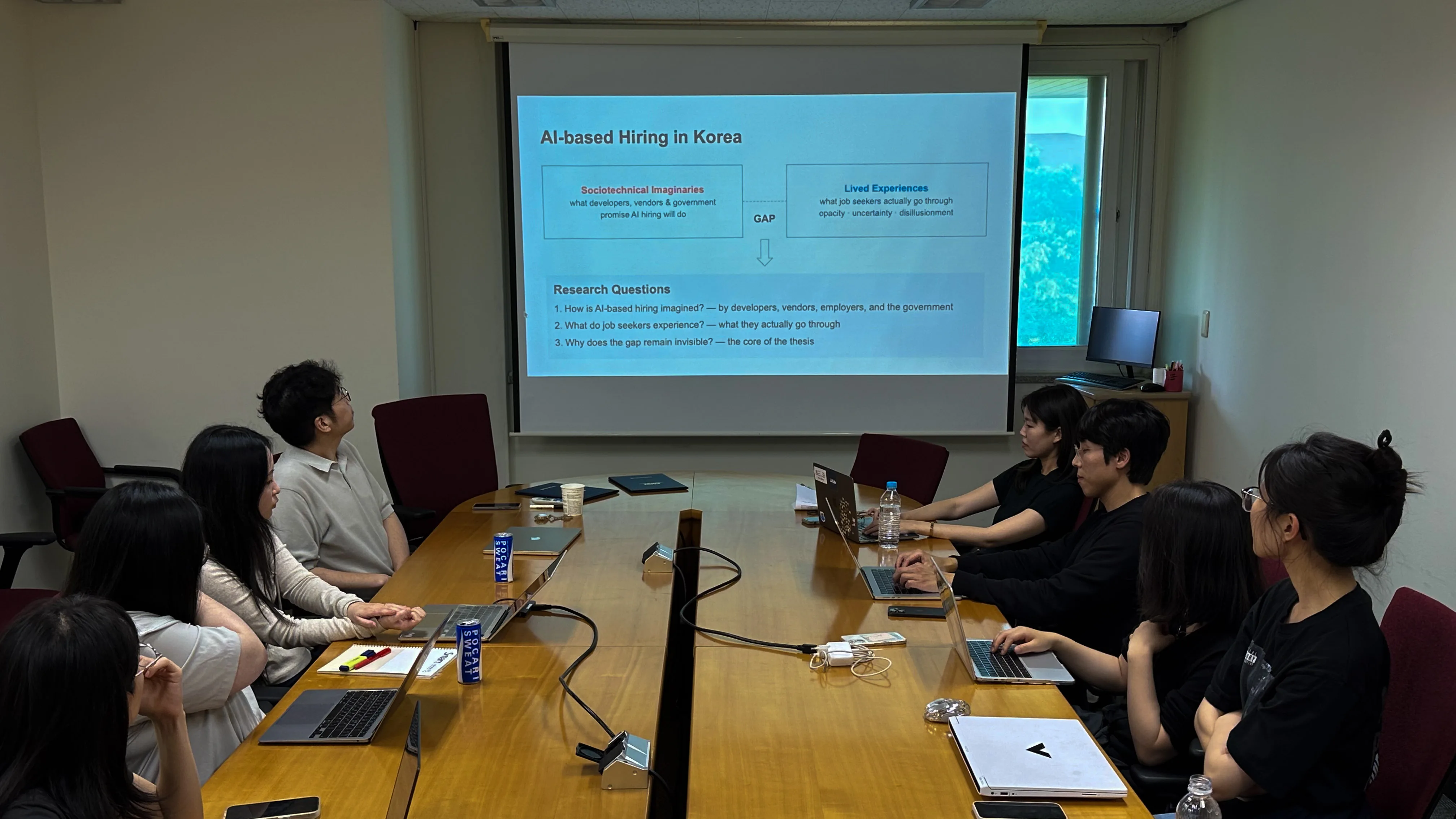
In this partnership KAIST and King’s will also build on their respective research expertise in Science and Technology Studies, including other departments and centres such as KAIST’s Center for Anthropocene Studies and King’s College London’s Department of Global Health & Social Medicine.
Chihyung Jeon, Head of the Graduate School of Science and Technology Policy at KAIST comments:
The new partnership between KAIST and King’s College London will offer an exciting opportunity for collaboration across disciplines and programs at the two leading institutions, especially those concerned with human and social dimensions of science, technology, and innovation. I look forward to meeting and working with superb colleagues at King’s.
Anne Pollock, Professor of Global Health and Social Medicine and past president of the Society for Social Studies of Science (4S) commented on the partnership:
The prospect of fostering deeper links across King’s College London and KAIST is extraordinarily exciting. As a researcher and educator in the interdisciplinary domain of science, technology, and society, I look forward to opportunities to be in conversation and collaboration with counterparts at an institution so renowned for its global leadership in technological innovation in the service of human flourishing.
As well as research collaborations, the partnership will create new opportunities for students through knowledge sharing and co-developing teaching resources, bringing expertise in digital humanities, digital cultures and science and technology studies from both institutions into classes through curriculum development, guest lectures and exchanges between UK and Korea.