notes from Sonic Acts 2026: Melted for Love, Amsterdam
February 15, 2026
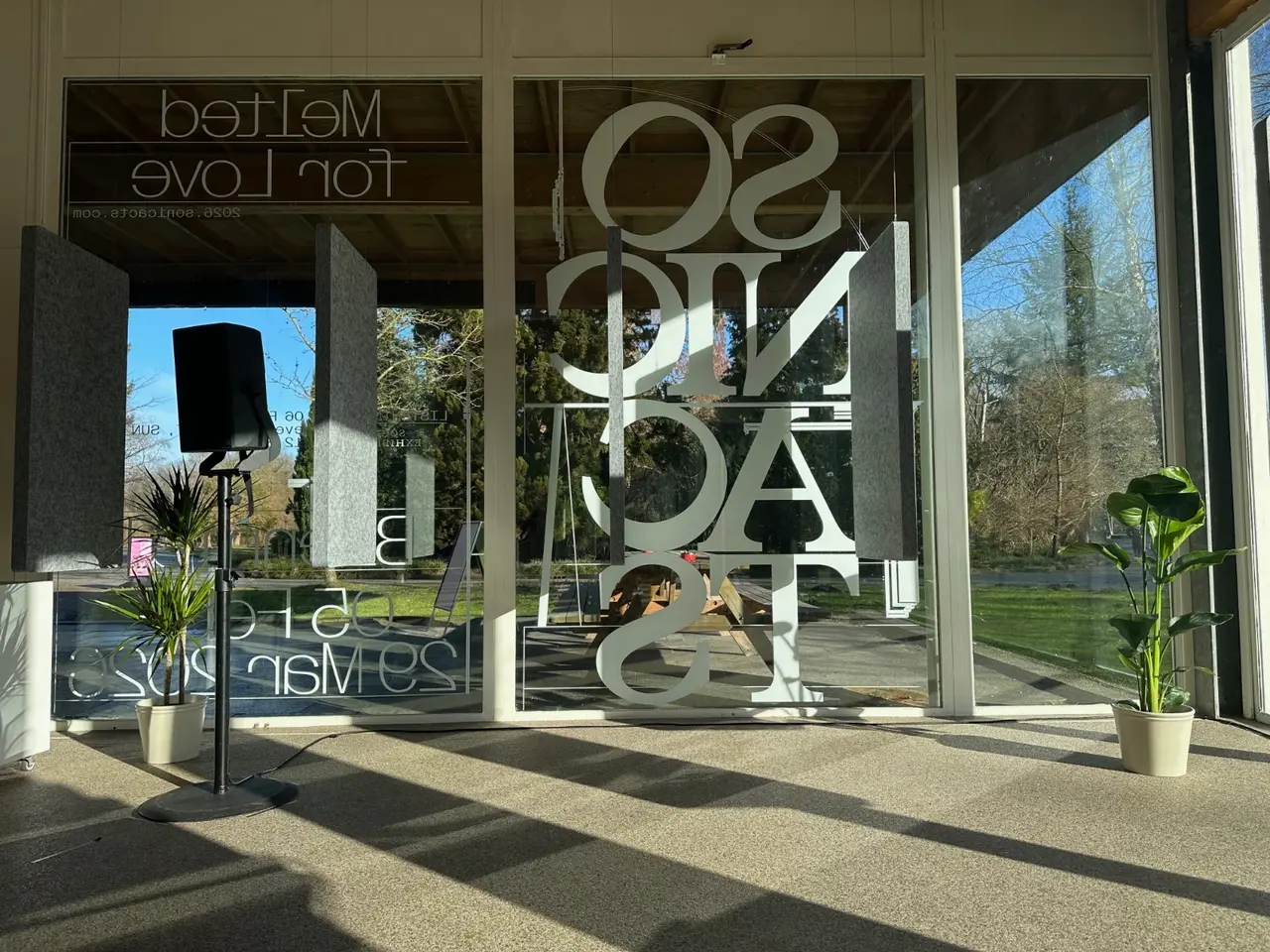
Ahead of book events at the Internet Archive Europe and Utrecht University, I joined several of the opening events of Sonic Acts Biennial 2026 in Amsterdam last weekend.
This edition’s theme is Melted for Love, which explores “sounds of home” and aims to support “friendly ways of feeling (at) home, technologies of welcoming, and open-ended invitations to participate in hospitality”. It “embraces the world as a mesh of souls” and “foregrounds communities that work in solidarity”.
I joined for the openings of exhibitions at W139, Arti et Amicitiae and Rozenstraat. I also really enjoyed the Listening Room at Zone2Source.
Following are a few highlights which I took notes on and pieces which resonated with things I’m working on or thinking about at the moment.
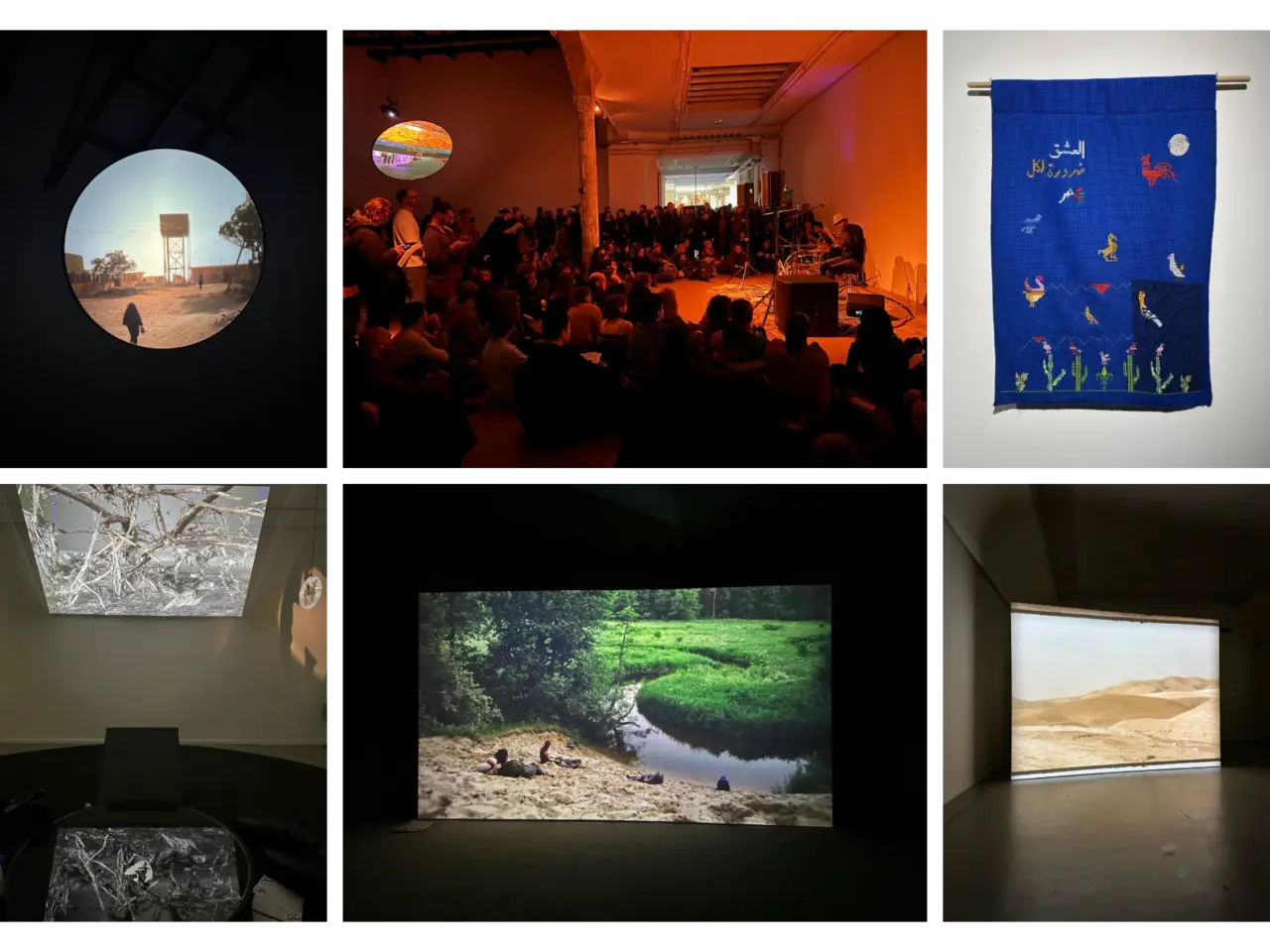
At W139, Adelita Husni-Bey’s Like a Flood took the form of a circular film installation combining archives and performance to explore how colonisation affected Libya’s water supply, as well as relations between climate change and colonialism. In Maeve Brennan’s Deep Storage (Early Matter) a pair of slide projectors slowly rotated through silver halide photographs of salt mine extraction processes. Alina Schmuch’s Underpasses “traces the continuous transformation of water as it passes through landscapes, infrastructures, and human labour” with a video installation.
At Arti et Amicitiae, Nour Shantout’s Love Poems uses Palestinian embroidery to share messages of love and resistance. HUNITI GOLDOX’s Mangrove Intelligence is a speculative installation exploring how mangrove ecologies might inspire “regenerative ways of being”. Arjuna Neuman’s Fever Dream traces the cultural histories and social lives of Californian wildfires.
At Rozenstraat, Christian Nyampeta’s Whispers is an absorbing video essay combining footage of everyday scenes from Senegal with readings of the poem Spirits by Birago Diop - with repeated refrains of “the dead are not really dead” and “listen to things”. Eliana Otta’s Asking Trees, Birds and Ghosts about Future Images and Sounds incorporates 360-degree video into a speculative exploration of the Peruvian Amazon. Eglė Budvytytė’s Warmblooded and Earthbound is a video installation exploring interconnections between bodies and landscapes in Lithuania.
The Listening Room setup at Zone2Source was fantastic. I went to four hour-long sessions there. Each session was such a well-curated blend of different pieces incorporating field recordings, voices, archival material, analogue electronics, experimental instruments, tape machines, live streams, radio signals, bubbles, creatures, organs, bells, loops, pipes, textures, autonomous agents and more. I felt like I could have stayed in there for many more sessions. It was good inspiration for forestscapes listening labs.
Much to ruminate on for those interested in the entanglements between ecologies, technologies and infrastructures, and other ways of living together.
More about the festival can be found here. Below is an excerpt from the blurb.
Attentiveness, respect, and care are essential expressions of love, and this is what we enact each time we listen closely. The voice has long been a force for liberation and resistance, and in a time when free speech is under threat and empty noise abounds, our task is to cultivate spaces of openness - blueprints for the institutions yet to come.
We share the sense of slowly losing home, as solid ground - our public institutions and familiar cultures - tumbles under the pressures of populism. The Sonic Acts Biennial builds on the legacy of collectivism, free spirit, and experimentation that defined previous editions of the festival, investigating how radical listening and making can open new pathways of communication and togetherness.
The curatorial process, shaped by five distinct voices, has been guided by collective listening. Inspired by the verses of Palestinian national poet Mahmoud Darwish - echoed in the Biennial’s title - the programme offers listening prompts for times of war, transition, and exile. To be ‘melted for love’ is to dissolve into gentleness, to stand against violence, and to open ourselves to vulnerability. The questions that follow chart this horizon: How can sound bring us closer to home? What is a folk song, and can it be liberated? Can grief be censored, and what is the history of lament songs? Can we learn the importance of listening from Indigenous practices? How might we rethink musical legacies to include those who have been excluded? What can rituals teach us, and how can they be staged through sound? How can radio transmission become a tool of solidarity in exile? How is sound used in warfare? What is the sound of space, of territory? Who gets to have a voice, and how does voice translate to music? And how might listening together open us to unconditional hospitality, to love - even in conditions of lovelessness?