A networked forest park: Exploring online engagement with Queen Elizabeth Forest Park in Scotland
April 15, 2025

What can the Internet and social media tell us about the life of a forest park?
As part of our SUPERB project, we have been studying online engagement to understand more about the social and cultural contexts of forests and forest restoration efforts across Europe.
This includes looking at how the Internet and social media are involved in different ways of relating to the site known as Queen Elizabeth Forest Park (QEFP) in Scotland.
forest names
QEFP is known by many names. To understand how these names are used online, we looked at how search results for place names associated with QEFP suggest other place names.
Just as a snowball gathers snow when rolling down a hill, through an approach known as “query snowballing” we gathered 195 names from following the recommendations of search results pages. When searching for each of these names you can find different kinds of pages, pictures and media. Each of these names and associated search results reflect different ways of articulating relations with this place.
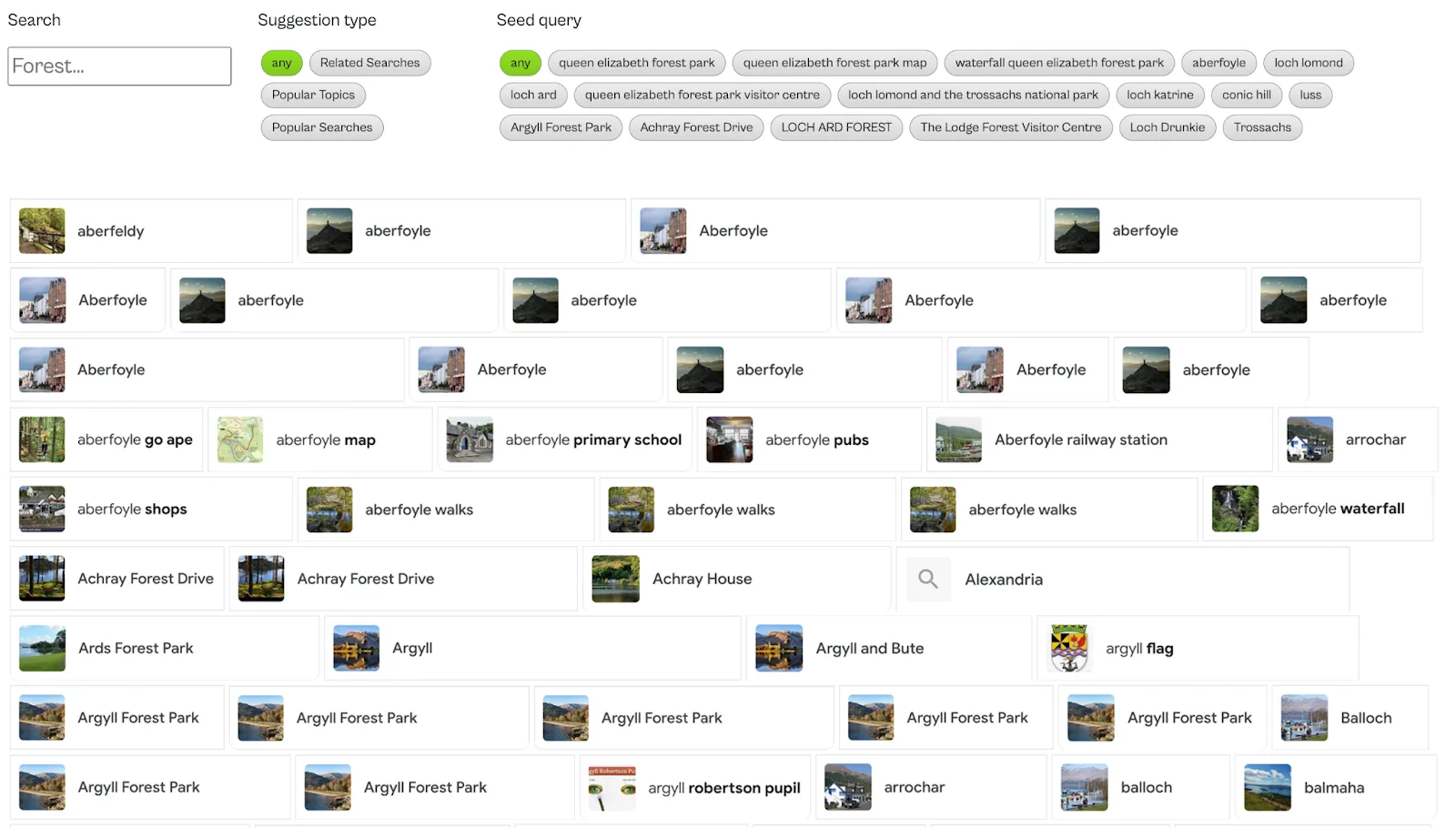
195 forest names: Snowballing place names with Google Related Searches
forest relations
The web pages of search results show how people relate to the park in different ways, including as hikers, cyclists, canoeists, campers, drivers, fishers, photographers, horse riders, bird watchers, dog walkers, foragers, swimmers, artists, tourism workers, hotel owners and local history enthusiasts.
We find pages of reviews, ratings, recommendations, discussions of climate change policy, weather reports, lists of park creatures, and blog posts on foraging to make nettle soup.
To explore how the web invites different kinds of relations with this site, we made a speculative account of forest park life composed of texts from search results.
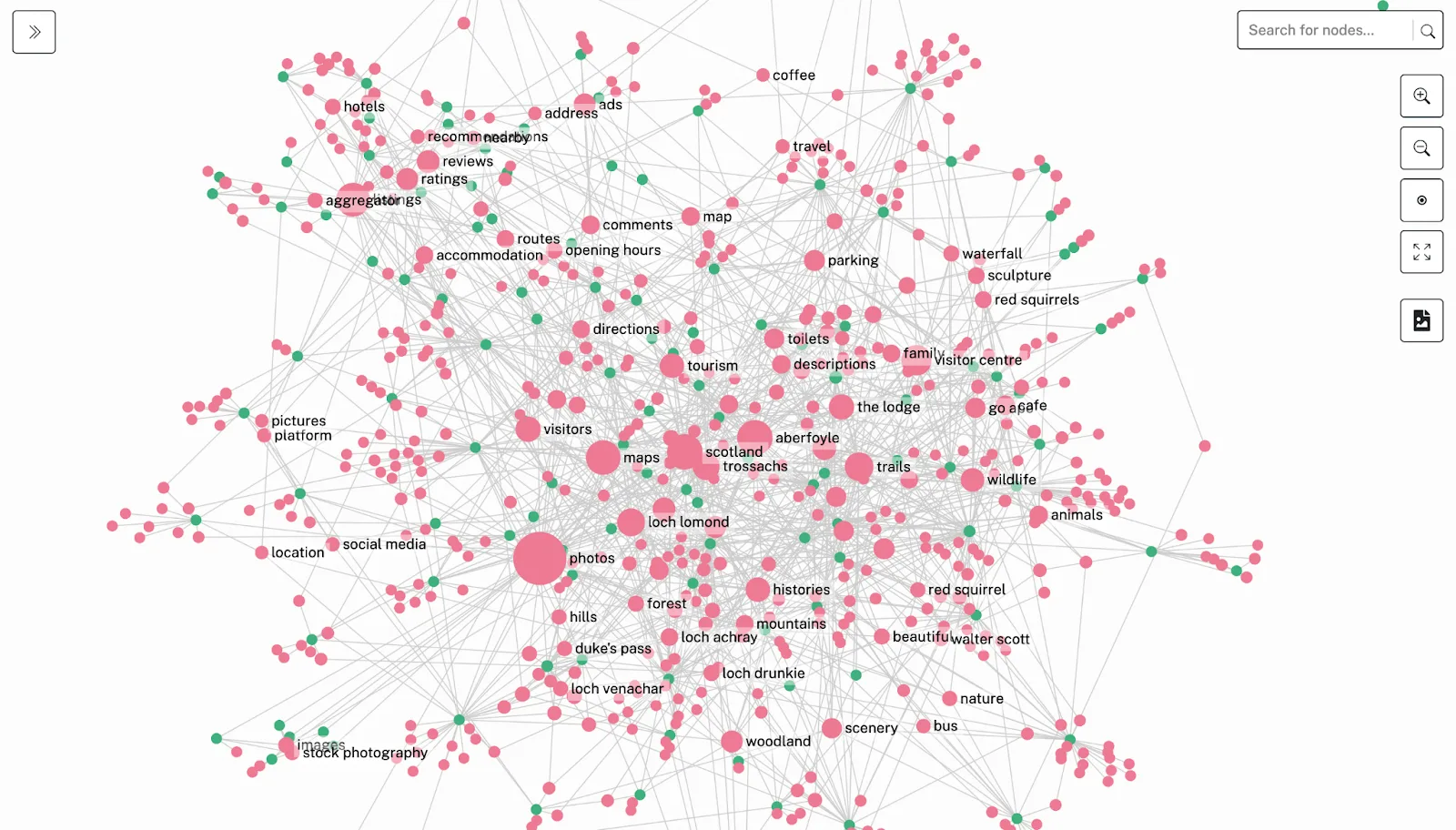
A network graph of search results showing web pages (green nodes)
and the themes associated with them (red nodes).
forest infrastructures
Image search results also show different ways of relating to the forest park. As well as beautiful landscapes and touristic snaps, they also show things which are involved in inviting relations with forests – such as signs for navigating, bridges for walking, rental homes for staying, guide books for learning, and watermarked pictures for selling.
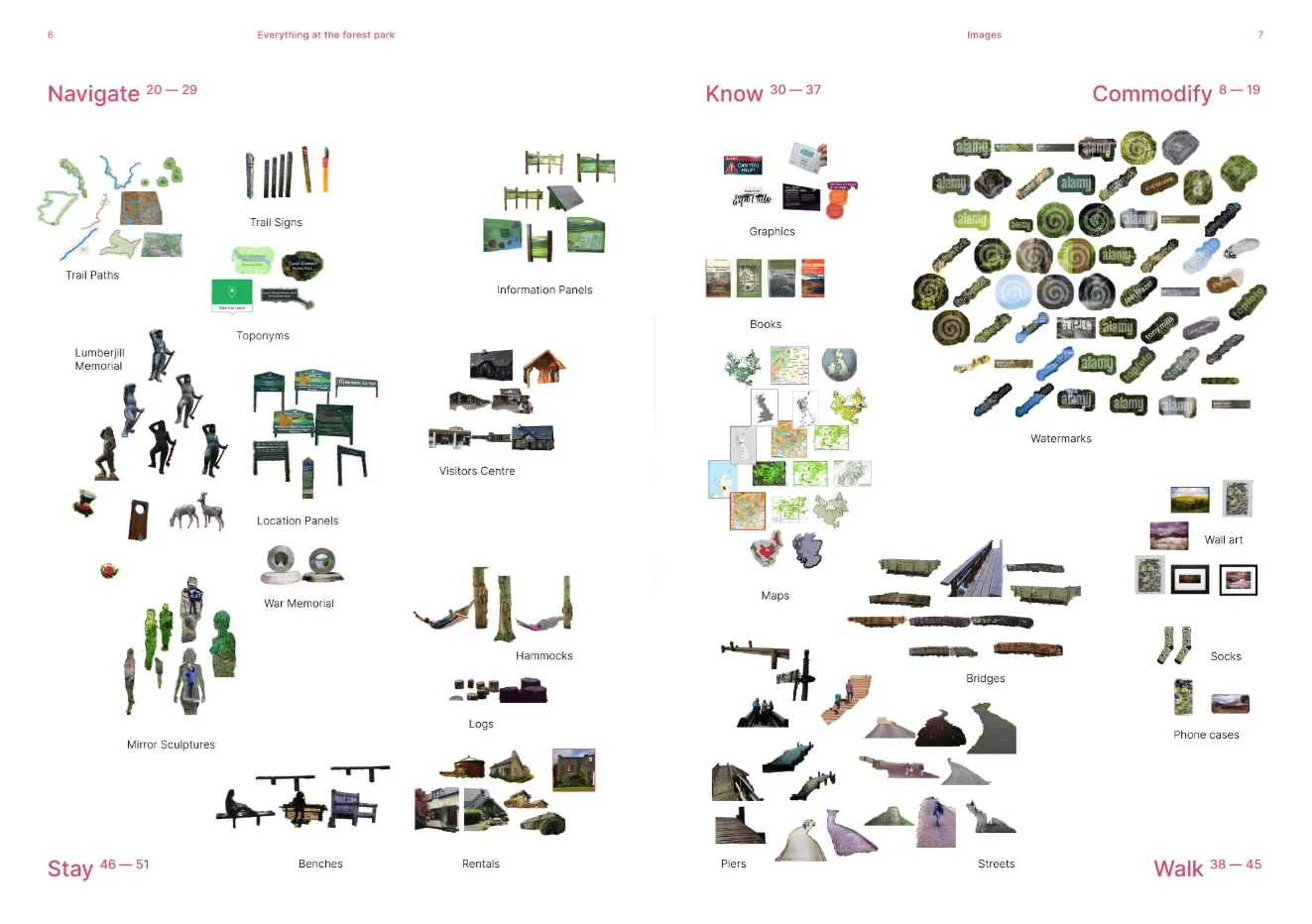
A selection of Google Search image results grouped according to how they invite relations with the forest park.
forest news
Looking at online news search shows headlines associated with the forest park. As well as articles about tourism and recreation, there are stories about rewilding and reintroducing animals such as lynxes, and the consequences this might have for sheep farming.
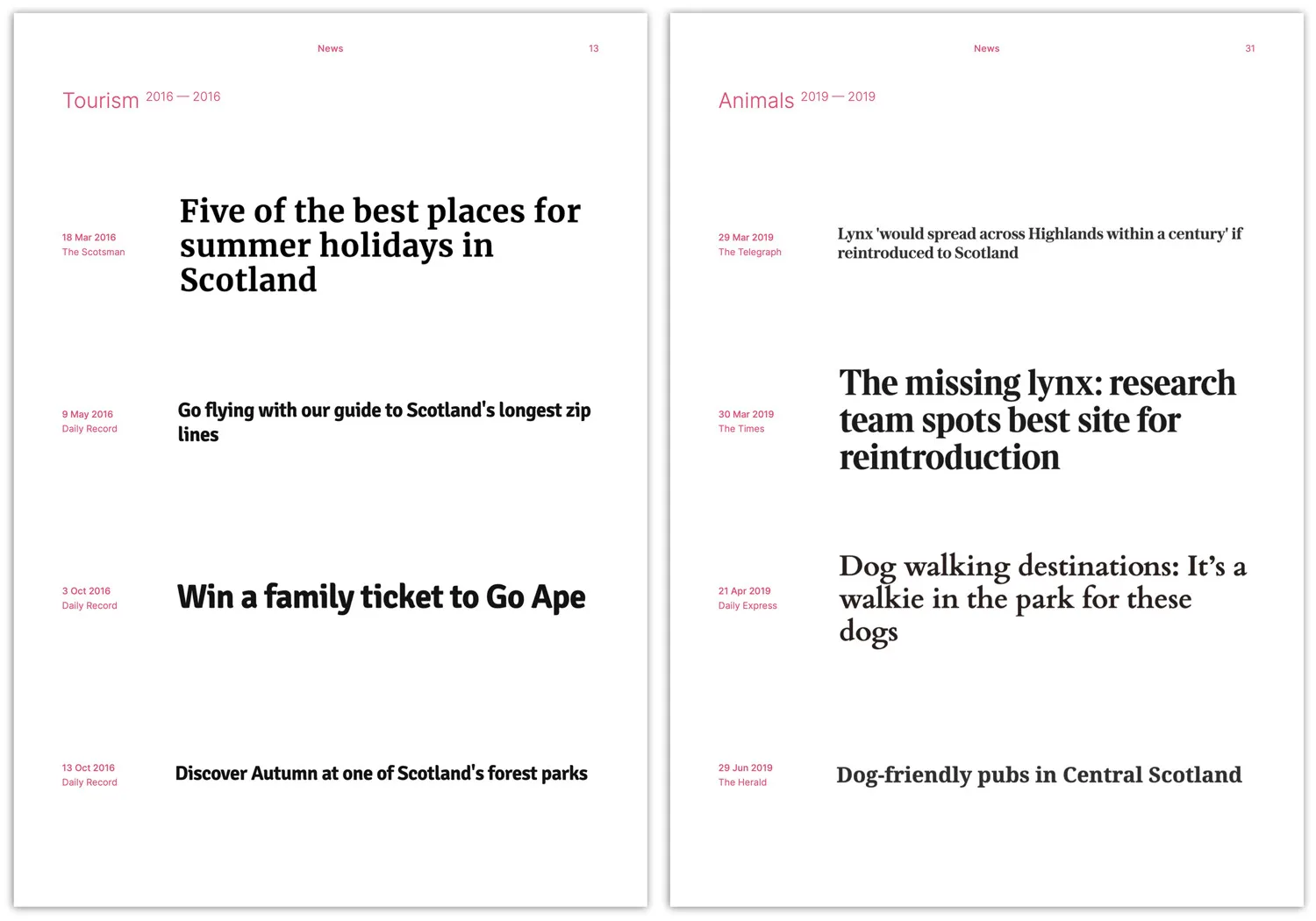
A selection of news headlines grouped according to how they invite relations with the forest park.
forest videos
There are also many videos in search results. Looking at some of the most engaged with videos associated with the forest park, we find vlogs (video logs), listings, landscape footage and forest park drive through videos.
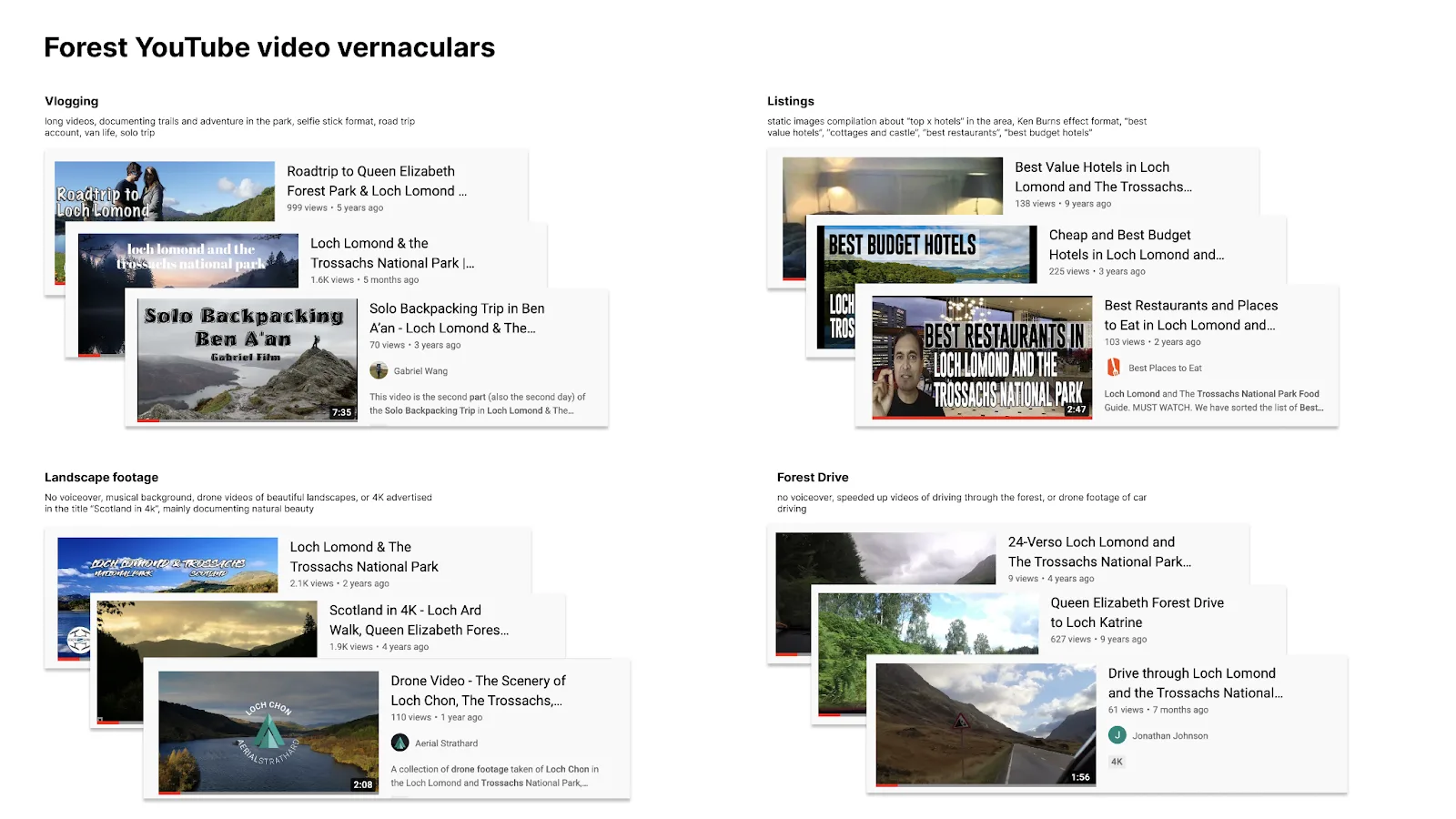
A selection of engagement formats in YouTube videos.
forest posts
Social media posts show different ways in which the park is engaged with. In some of the most engaged with Facebook posts we encounter the forest park as a site of archaeology (e.g. distillery ruins), recreation (e.g. wellbeing retreats with forest bathing) and decarbonisation (e.g. through government investments).
Other posts discuss beavers as agents of forest biodiversity restoration, wildlife corridors to support ecosystem restoration, peatlands for climate resilience and tree mythology.
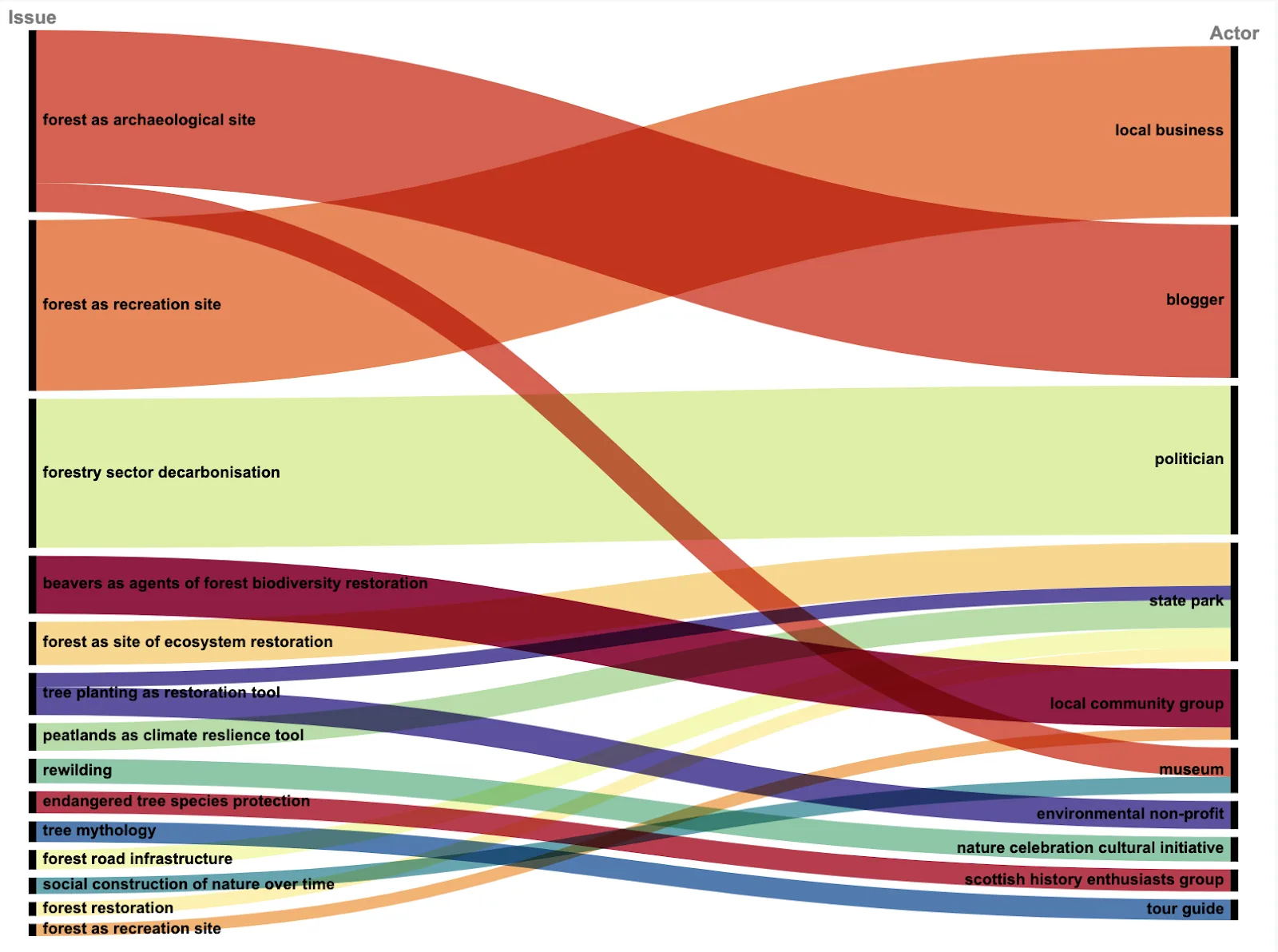
Alluvial diagram showing associations between themes and actors in most engaged with Facebook posts.
forest hashtags
Social media posts mentioning the park also contain hashtags which tell us how people relate to it. For example, on Twitter/X we found recreation (e.g. #birdwatching, #cycling, #wildswimming, #painting), campaigning (e.g. #savelochlomond) and media engagement (e.g. #bbcwildlifepotd).
Beyond the most popular, we found hashtags about climate change (#cop27, #climateemergency), health (#naturetherapy, #ournaturalhealthservice) and accessibility (#wheelchair).
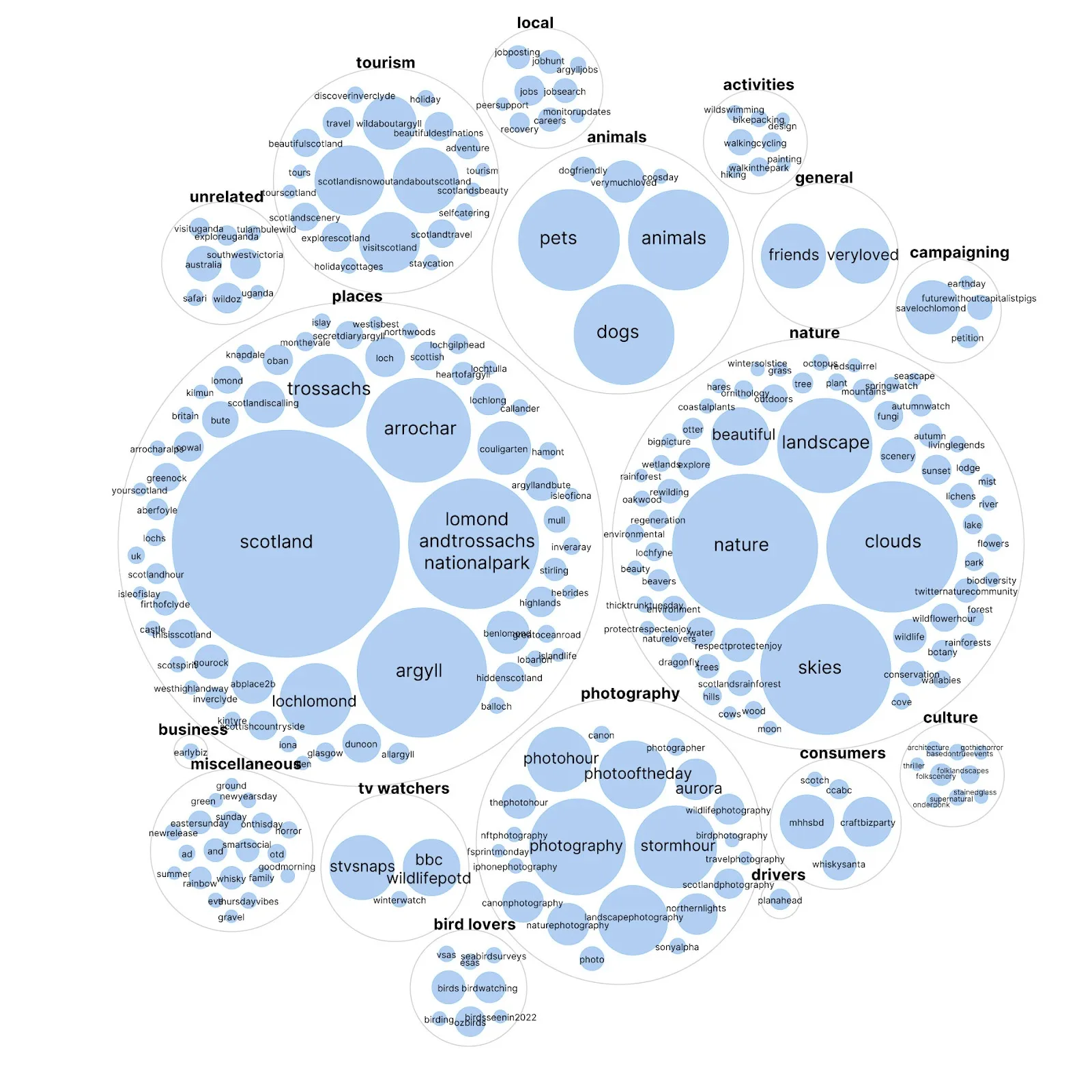
A selection of popular hashtags grouped by theme.
forest sounds
There are also many sounds on posts, pages and videos associated with the forest park. As part of the forestscapes project we have been creating soundscapes from these different kinds of online sounds – from birdsong, wind and waterfalls, to cycling, songs and stories.
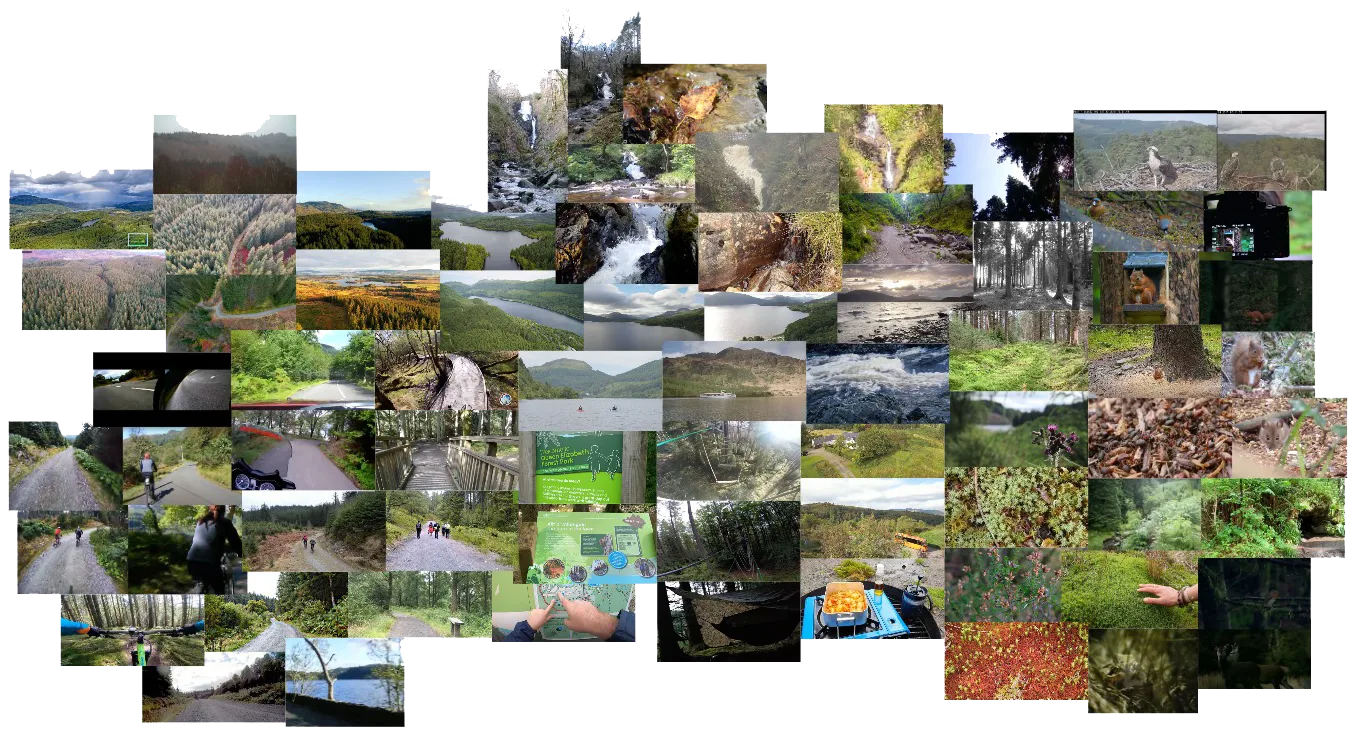
A selection of videos with sounds of creatures, elements, voices and movement in the park.
forest futures
What can we learn from these kinds of online materials? In a world in which many forests are increasingly networked and digitalised, we can learn about them not only by following paths and counting plants, but also by following links and counting posts.
Online materials show how forests are digitally mediated and how they come to matter in different ways. We can see how across online spaces some ways of mattering become more visible, while others are less visible, or missing.
As well as studying its plants and creatures, we can also pay attention to other kinds of cultures and relations, issues and infrastructures, economies and experiences that make up the park.
Taking these into account can offer valuable insights to support ecosystem restoration plans. They can also help us to reconsider what more inclusive, equitable and sustainable forest futures could look like.
find out more
Co-authored by Liliana Bounegru, Jonathan W. Y. Gray and Rina Tsubaki. Cross-posted from forest-restoration.eu. This post draws on collaborative research undertaken by Jonathan W. Y. Gray, Liliana Bounegru, Rina Tsubaki and Gabriele Colombo as part of our SUPERB project.